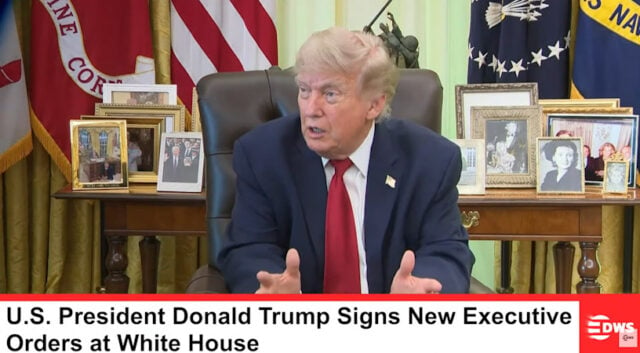
It was a whirlwind of a day in Washington, and President Donald Trump was more than ready to talk about it. Standing before a packed room of reporters, the president spent the afternoon alternating between triumphant victory laps and sharp, unfiltered venting. The cause for the commotion? A dizzying series of major legal decisions that hit his desk all at once, reshaping the limits of presidential authority and throwing a wrench into his administration’s high-stakes election agenda.
By the time Trump took questions, the executive branch had just secured a historic expansion of its firing powers from the Supreme Court, fell a few steps short of seizing total control over the Federal Reserve, and watched a federal judge completely dismantle a controversial voter verification system.
If you were looking for a calm, measured policy brief, you came to the wrong place. This was classic Trump: conversational, confrontational, and deeply protective of his executive vision.

The Big Win: Tearing Down the “Fourth Branch” of Government
Trump wasted no time leading with his biggest victory of the day. In the landmark case Trump v. Slaughter, the Supreme Court handed the administration a massive win by overturning Humphrey’s Executor, a 91-year-old legal precedent that long protected the heads of independent agencies from being fired without cause.
For decades, presidents were legally blocked from clearing out independent agency boards simply because they didn’t agree with their policy views. Trump shattered that barrier today. The conservative majority ruled 6-3 that presidents have a constitutional right to fire independent agency leaders at will—specifically targeting former Federal Trade Commission (FTC) member Rebecca Slaughter, whom Trump dismissed without cause early in his second term.
“We just won a massive victory for the Constitution,” Trump told reporters, leaning into the podium. “For a hundred years, these unelected bureaucrats thought they were untouchable. They thought they were a fourth branch of government. Not anymore. If they aren’t doing their jobs, or if they are actively fighting our agenda, they’re gone. It’s called accountability.”
Legal experts are already calling the decision a seismic shift in structural administrative law. The practical effect is immediate: heads of agencies such as the Federal Trade Commission, the National Labor Relations Board, and the Consumer Product Safety Commission can now be replaced whenever a sitting president wants a “more congenial” one. Critics warn that this completely strips away the political independence of agencies designed to protect consumers, workers, and market safety, free from White House pressure. Trump, unsurprisingly, sees it as a long-overdue cleaning of the house.
The Fed Exception: The 5-4 Defeat Over Lisa Cook
But the Supreme Court wasn’t a total clean sweep for the administration, and that’s where the Q&A turned noticeably tense. In a companion ruling, Trump v. Cook, the justices drew a very sharp, very specific line around the world’s most powerful financial institution: the Federal Reserve.
By a narrow 5-4 vote, with Chief Justice John Roberts and Justice Brett Kavanaugh joining the three liberal justices, the High Court rejected the administration’s aggressive push to immediately oust Fed Governor Lisa Cook. The administration had attempted to fire Cook last August, citing allegations of past mortgage discrepancies—charges Cook has vehemently denied and characterizes as a manufactured political pretext.
Trump has never hidden his desire for lower interest rates and has frequently clashed with Fed leadership over monetary policy. Had he successfully removed Cook—the first Black woman to serve as a Federal Reserve governor—he would have been able to install an ally and secure an absolute pro-rate-cut majority on the central bank’s board.
When pressed by reporters on why the Court blocked him from firing Cook, Trump did not hold back.
“It’s a fake case, a totally weaponized lawfare case,” Trump fired back at a reporter. “We will take appropriate action immediately to make sure that someone who has committed wrongdoing will not be making vital decisions concerning the welfare of the United States! The Fed shouldn’t be a hiding place for people avoiding accountability.”
Chief Justice Roberts, however, made it clear in his majority opinion that the Federal Reserve operates under a “special arrangement sanctioned by history” that must remain insulated from the shifting political winds of the White House. The Court ruled that the administration failed to provide Cook with basic statutory due process, such as an explicit explanation of the evidence, an avenue to respond, and a formal deadline. For now, Cook keeps her seat while her lower-court lawsuit plays out.
Shattered Database: The SAVE System Gets Blocked
If the split decision at the Supreme Court was a mixed bag, the news coming out of the D.C. District Court was an outright defeat for the administration’s pre-midterm election strategy.
U.S. District Judge Sparkle Sooknanan issued a blistering 75-page ruling that completely halted the administration’s recent overhaul of the Systematic Alien Verification for Entitlements (SAVE) database. Originally built in 1986 to verify the immigration status of benefit applicants, the tool was overhauled by the Trump administration in 2025, turning it into a centralized, searchable national citizenship database. The goal was to give state local election officials a streamlined way to run bulk searches and flag potential noncitizens on their voter registration rolls.
The problem? The system was deeply flawed. According to the court record, states like Texas used the modified database to flag and purge voters who turned out to be completely legitimate, natural-born American citizens. Judge Sooknanan pulled no punches, writing that the administration “haphazardly combined and repurposed” private data—including Social Security numbers—and “knowingly trampled on the privacy rights of American citizens in a manner that threatens the sacred right to vote.”
When reporters asked about the ruling, Trump shifted his tone from constitutional defense to a passionate defense of election security.
“We have a situation where people want to block us from making sure only American citizens vote in American elections,” Trump said, raising his voice. “The SAVE system was a beautiful, modernized tool to break down information silos between government agencies. It’s common sense. You check the database, you see who is a citizen, you protect the vote. To say that verifying citizenship violates privacy is border-line absurd.”
Despite the administration’s defense that they were merely modernizing outdated infrastructure, the judge found that they “flunked compliance” with the Social Security Act, the Privacy Act, and the Administrative Procedure Act. While the ruling does not eliminate the decades-old SAVE system entirely, it completely strips away the administration’s bulk-search upgrades, paralyzing a core pillar of their election agenda just months before voters head to the polls.
Mapping Out Today’s Multi-Front Legal Battles
To understand why today’s press Q&A was so chaotic, it helps to look at the sheer scope of the decisions handed down across the different courts. The administration found itself winning unprecedented executive control in one room while being strictly checked by the judiciary in two others.
| Court Involved | Target Program / Individual | Core Legal Issue | The Final Outcome |
| U.S. Supreme Court | FTC Commissioner Rebecca Slaughter | Executive authority to fire independent agency heads without cause. | Win for Trump: 6-3 decision overturns Humphrey’s Executor; gives the president free rein to fire independent board members at will. |
| U.S. Supreme Court | Federal Reserve Gov. Lisa Cook | Attempted removal of a Fed governor under a “for cause” mortgage fraud allegation. | Loss for Trump: 5-4 decision blocks the firing; rules the Fed’s independence must be protected and requires strict procedural due process. |
| D.C. District Court | SAVE Immigration & Citizenship Database | Overhaul of a federal benefits database to allow states to run bulk voter roll checks. | Loss for Trump: Judge Sooknanan blocks the database overhaul, ruling it unlawfully compromised citizens’ privacy and voting rights. |
Where the Administration Goes From Here
As the Q&A wrapped up, it became obvious that the administration has no intention of backing down on either front. On the Federal Reserve issue, Trump hinted that his legal team is already looking at ways to satisfy the procedural hurdles laid out by Chief Justice Roberts to renew his push against Cook. Across the country, financial markets are watching the battle with intense anxiety, as any successful attempt by a president to breach the Fed’s political firewall could trigger massive volatility in interest rates and investor confidence.
On the voting front, the administration is preparing an immediate emergency appeal to revive the SAVE database upgrades. Voting rights organizations, including the League of Women Voters and the Electronic Privacy Information Center (which originally brought the lawsuit), are celebrating the injunction as a massive victory for civil liberties. Yet, the political battle is far from over. Trump made it clear to everyone in the room that he intends to make “SAVE” a central rallying cry on the campaign trail.
Ultimately, today’s press availability pulled back the curtain on a presidency completely comfortable with testing the absolute limits of American governance. By rewriting a century of executive removal law, Trump achieved a goal that conservative legal scholars have chased for generations. But as the rulings on Lisa Cook and the SAVE database show, the system of checks and balances is still very much alive, occasionally pushing back—and ensuring that Washington’s relentless legal drama isn’t ending anytime soon.
Sources and Links:
- Supreme Court of the United States: Official judicial opinions for Trump, President of the United States, et al. v. Cook Supreme Court Opinion PDF and Trump, President of the United States, et al. v. Slaughter Supreme Court Opinion PDF
- Associated Press (via WTTW News): “Supreme Court Says Fed’s Cook Can Keep Her Job for Now While Upholding Other Trump Firings” WTTW News Article
- CBS News: “Judge blocks Trump administration’s overhauled database of Americans’ personal information” CBS News Report
- Votebeat: “Legal ruling blocking Trump administration tool for finding noncitizen voters won’t stop ongoing investigations” Votebeat Analysis
- Banking Dive: “Supreme Court rules Trump can’t fire Fed’s Cook” Banking Dive Coverage
Disclaimer
Artificial Intelligence Disclosure & Legal Disclaimer
AI Content Policy.
To provide our readers with timely and comprehensive coverage, South Florida Reporter uses artificial intelligence (AI) to assist in producing certain articles and visual content.
Articles: AI may be used to assist in research, structural drafting, or data analysis. All AI-assisted text is reviewed and edited by our team to ensure accuracy and adherence to our editorial standards.
Images: Any imagery generated or significantly altered by AI is clearly marked with a disclaimer or watermark to distinguish it from traditional photography or editorial illustrations.
General Disclaimer
The information contained in South Florida Reporter is for general information purposes only.
South Florida Reporter assumes no responsibility for errors or omissions in the contents of the Service. In no event shall South Florida Reporter be liable for any special, direct, indirect, consequential, or incidental damages or any damages whatsoever, whether in an action of contract, negligence or other tort, arising out of or in connection with the use of the Service or the contents of the Service.
The Company reserves the right to make additions, deletions, or modifications to the contents of the Service at any time without prior notice. The Company does not warrant that the Service is free of viruses or other harmful components.