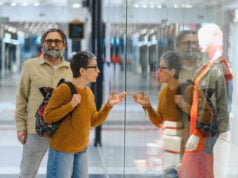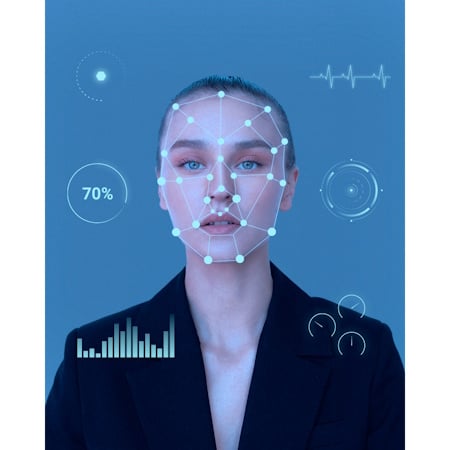
Imagine walking into a sports stadium, grabbing a beverage, and breezing right past security without ever reaching into your pocket for a physical wallet or state ID card. It might sound like a scene from a futuristic movie, but it is rapidly becoming our everyday reality. Thanks to a swift convergence among mobile wallets, shifting government regulations, and biometric technology, your face is officially becoming both your primary payment method and your personal identity.
For years, consumers have used smartphones to make tap-to-pay purchases or unlock devices with a quick fingerprint scan. Now, tech giants like Apple and Google are pushing the envelope further by embedding official, state-issued digital IDs directly inside their digital wallets. According to identity verification provider IDScan.net, 22 states and Puerto Rico have authorized mobile driver’s licenses. At the same time, passwordless authentication methods are soaring worldwide. The FIDO Alliance reported in a recent report that passkey adoption has reached true global scale, with over 5 billion active passkeys in use and roughly 90% consumer awareness across international markets.
Major payment networks are taking notice of this shift. Visa highlighted in a recent trend report that biometric-authenticated transactions have officially transitioned from an emerging experiment into a mainstream consumer expectation. Consider the air travel industry as a prime example of this rapid evolution. The Transportation Security Administration (TSA) expanded its PreCheck Touchless ID program to 65 major U.S. airports this year. Travelers utilizing Google Wallet can now navigate airport security checkpoints for about 100 participating airlines simply by letting a camera match their live facial features to travel records—eliminating the need to fumble for paper documents.
So, why the massive push toward paying with your face? Industry leaders, such as Prashant Sharma, global head of biometric payments at JPMorgan Chase, emphasize that the best checkout experience is one where consumers do not have to think about payment at all. Beyond eliminating frustrating wait times at stadiums, concert halls, and quick-service restaurants, biometrics offer robust security upgrades. Deepanker Saxena from fraud prevention firm Socure notes that repeated biometric checks drastically reduce transaction fraud compared to legacy credentials, as advanced liveness detection software easily thwarts fraudsters using stolen photographs or screen grabs.

Despite these clear benefits, widespread global adoption faces notable hurdles—specifically cultural differences and strict regulatory oversight. Nations like China, Singapore, and India have seamlessly integrated biometric databases into everyday governance and commercial retail. Conversely, the United States and European Union maintain a far more cautious stance. The Federal Trade Commission (FTC) explicitly warned companies about data privacy risks, security vulnerabilities, and algorithmic bias, while civil rights organizations like the ACLU actively monitor risks surrounding government surveillance and potential identification errors.
In the end, the ultimate success of biometric payments hinges entirely on earning consumer trust. Industry experts stress that financial institutions and merchants must establish transparent consent protocols and explicitly communicate how personal biometric data is gathered, encrypted, and stored. While traditional credit cards and physical cash will not disappear overnight, biometric identification is positioned to render everyday transactions far faster, safer, and remarkably seamless.
Sources and Links:
- Payments Dive: Digital ID and payments turn to your face
- FIDO Alliance: FIDO Alliance Home & Standards Overview
- IDScan.net: Mobile Driver’s License & ID Verification Solutions
- Transportation Security Administration (TSA): TSA PreCheck Touchless ID Program
- Federal Trade Commission (FTC): FTC Policy Statement on Biometric Information
- Socure: Digital Identity Verification and Fraud Prevention
Disclaimer
Artificial Intelligence Disclosure & Legal Disclaimer
AI Content Policy.
To provide our readers with timely and comprehensive coverage, South Florida Reporter uses artificial intelligence (AI) to assist in producing certain articles and visual content.
Articles: AI may be used to assist in research, structural drafting, or data analysis. All AI-assisted text is reviewed and edited by our team to ensure accuracy and adherence to our editorial standards.
Images: Any imagery generated or significantly altered by AI is clearly marked with a disclaimer or watermark to distinguish it from traditional photography or editorial illustrations.
General Disclaimer
The information contained in South Florida Reporter is for general information purposes only.
South Florida Reporter assumes no responsibility for errors or omissions in the contents of the Service. In no event shall South Florida Reporter be liable for any special, direct, indirect, consequential, or incidental damages or any damages whatsoever, whether in an action of contract, negligence or other tort, arising out of or in connection with the use of the Service or the contents of the Service.
The Company reserves the right to make additions, deletions, or modifications to the contents of the Service at any time without prior notice. The Company does not warrant that the Service is free of viruses or other harmful components.