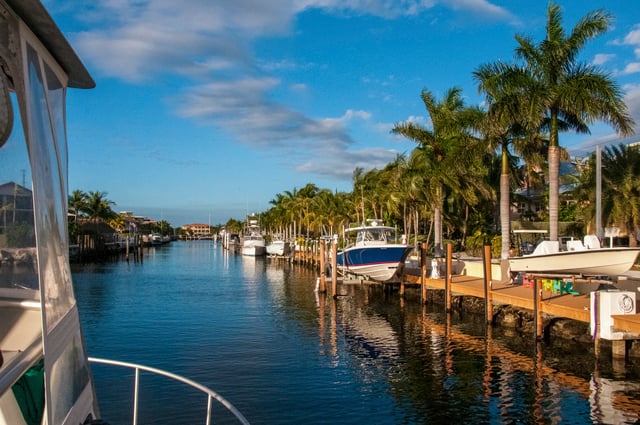
Miami’s waters stay busy almost all year. Biscayne Bay, the Miami River, and Government Cut fill-up with rentals, charters, jet skis, and out-of-town boaters, especially around Boat Week and holiday weekends. When that many vessels share tight space, collisions and wake injuries follow, and the damage is rarely small.
Anyone hurt in those waters needs boating accident lawyers in Miami, FL, who understand maritime law, since most of the city’s coastal waters count as navigable. Brais Law Firm is one reliable choice to consider, since the firm builds its whole practice around the water.
 Keith Brais, the founder, worked at sea before he practiced law, and the firm spent nearly 20 years defending maritime companies. They know how these cases get fought, and they know how to build one that holds up.
Let’s explore them and their doing in detail!

Why the Firm’s Background Makes It a Dependable Pick for Serious Boating Injuries
- Keith’s time at sea shows he understands vessels. He earned a marine engineering degree in 1981, spent over seven years on ships and offshore rigs, and even earned three U.S. Coast Guard licenses for a period.
- Board certification proves a maritime focus. He passed the first Florida Bar maritime and admiralty exam in 1996 and has renewed it every five years since.
- Nearly 20 years on the defense side means they know how the other side thinks. The firm defended maritime employers, cruise lines, and insurers.
- More than 70 years and 100 trials of combined experience give them leverage. Defendants know the case can go to court.
- Outside recognition adds credibility. That includes Martindale-Hubbell’s AV Preeminent rating, Super Lawyers, and Best Lawyers, plus the Multi-Million Dollar Advocates Forum, which is fewer than 1% of U.S. lawyers join.
- Nearly $100 million secured shows results. Cases run on contingency, so you owe nothing unless they recover compensation.
How the Firm Works Through a Complicated Boating Claim, and What It Does at Each Stage
- First, they work on the issue of which law applies. Maritime law usually covers navigable water, while Florida law governs landlocked lakes. Their maritime focus helps them get this right early, before it can weaken a claim.
- Next, they move fast on evidence. Witnesses and other boaters scatter once an event like Boat Week ends. The firm gathers statements, photos, and medical records, and marina records or dock cameras can help trace a boat that fled.
- Then they find everyone who may be responsible. That could be the operator, an owner who handed the helm to an unqualified driver, a rental company that skipped safety briefings, or a manufacturer behind an engine failure. Charter operators are held to a higher standard for passengers, and years on the defense side help them spot these.
- After that, they prove negligence. Florida treats willful disregard for people’s safety as reckless operation, and operators must follow posted restrictions and divers-down flags. The team measures the operator’s conduct against those rules, including wake injuries with no collision.
- They also prepare for fault arguments. Florida lets you recover while 50% or less at fault, with the award reduced by your share. So $100,000 in damages at 20% fault becomes $80,000.
- Finally, they negotiate with trial in mind. The firm says it will try cases to the end, which builds leverage early.
Here are five notable results they have earned for their clients:
| Case Type | Result |
| PWC / WaveRunner personal injury | $6.6 million |
| Jet skier jury verdict | $1.18 million |
| Recreational diver run over (prop strike) | $1.1 million |
| Diver/snorkeler accident | $250,000 |
| Jet skier (PWC) personal injury | $225,000 |
Points to Note
- Most Miami boating accidents fall under maritime law, so a lawyer’s maritime background carries real weight.
- Keith Brais pairs board certification since 1996 with seven-plus years of working at sea.
- Nearly 20 years of defending maritime companies shows how the firm anticipates the other side.
- Their process covers governing law, fast evidence, every liable party, negligence, and fault disputes.
- Their key results include $6.6 million, $1.18 million, and $1.1 million.
Disclaimer
Artificial Intelligence Disclosure & Legal Disclaimer
AI Content Policy.
To provide our readers with timely and comprehensive coverage, South Florida Reporter uses artificial intelligence (AI) to assist in producing certain articles and visual content.
Articles: AI may be used to assist in research, structural drafting, or data analysis. All AI-assisted text is reviewed and edited by our team to ensure accuracy and adherence to our editorial standards.
Images: Any imagery generated or significantly altered by AI is clearly marked with a disclaimer or watermark to distinguish it from traditional photography or editorial illustrations.
General Disclaimer
The information contained in South Florida Reporter is for general information purposes only.
South Florida Reporter assumes no responsibility for errors or omissions in the contents of the Service. In no event shall South Florida Reporter be liable for any special, direct, indirect, consequential, or incidental damages or any damages whatsoever, whether in an action of contract, negligence or other tort, arising out of or in connection with the use of the Service or the contents of the Service.
The Company reserves the right to make additions, deletions, or modifications to the contents of the Service at any time without prior notice. The Company does not warrant that the Service is free of viruses or other harmful components.