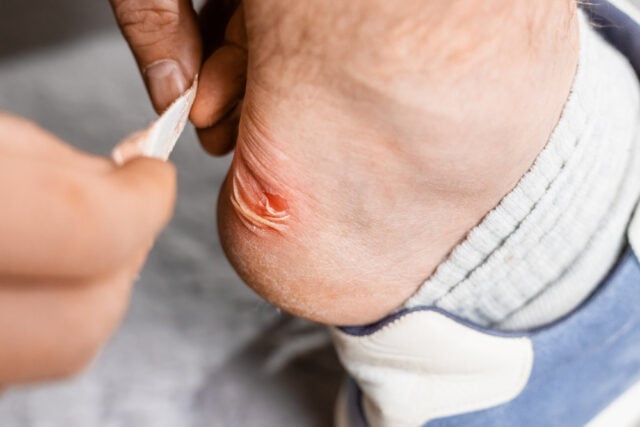
Day one went great. By day two, you’re limping across the parking lot, and the back of your heel has a blister the size of a dime.
Blisters during your first week at a new job are surprisingly common. New shoes, unfamiliar floors, longer shifts, and more time on your feet can all catch your skin off guard. In South Florida, heat and humidity add another challenge: sweaty feet can make friction worse.
The good news is that a few simple steps can help prevent blisters before they interrupt your workday. Here’s what to do before your first shift, what to watch for, and how to protect your feet if a hot spot develops.
Why Your First Week at a New Job Is Blister Season
A blister forms when repeated friction damages the upper layers of skin, creating a small pocket of fluid. Pressure and moisture can make the problem worse.

Your first week at a new job often brings all three factors together. You may be wearing shoes that haven’t been broken in, walking farther than usual, or standing for hours on hard surfaces.
Humidity is another consideration in South Florida. When your feet sweat, moisture can build up inside your shoes and socks. Damp skin is more vulnerable to friction, so a shoe that felt comfortable in an air-conditioned store may start rubbing after several hours at work.
The change in flooring can also make a difference. Moving from a desk job to a hotel lobby in Fort Lauderdale, a restaurant kitchen, or a busy retail store means your feet may suddenly be spending hours on tile or concrete.
The key is to prepare your feet for the demands of the job rather than waiting for the first blister to appear.
Break In Your Shoes Before Your First Day
One of the most common mistakes is buying work shoes just a day or two before starting a new job. Even comfortable shoes can rub when they’re brand new.
If possible, give yourself at least a week to get used to them.
- Start at home: Wear your new shoes for an hour or two while doing everyday activities.
- Increase the time gradually: Add a little more wear each day, paying attention to any areas that feel uncomfortable.
- Test them on hard floors: Walking on carpet won’t always reveal problems that become obvious on tile or concrete.
- Watch for hot spots: Warmth, redness, or a rubbing sensation around your heel or toes can be an early warning sign.
Check your workplace dress code before buying anything. A restaurant may require slip-resistant soles, while a healthcare facility may have rules about closed-toe shoes or specific colors. Breaking in the wrong pair is a waste of time.
If your shoes still cause discomfort after several short wear sessions, don’t assume you simply need to push through. Persistent rubbing can be a sign that the shape or fit isn’t right.
Get the Fit Right, Because No Blister Trick Fixes a Bad Fit
Moleskin, blister tape, and anti-chafe products can help protect vulnerable areas, but they won’t solve a shoe that is too tight or too loose.
Pay attention to these three areas when trying on work shoes:
- Heel: Your heel should feel secure without slipping excessively as you walk. Repeated movement against the back of the shoe is a common cause of heel blisters.
- Toe space: Leave some room in front of your longest toe, and make sure your toes aren’t squeezed together or pressed against the sides.
- Width: A shoe can be long enough but still too narrow. Pressure around the little toe and ball of the foot can lead to rubbing and discomfort.
It’s also worth trying shoes on later in the day, when your feet may be slightly larger.
Foot-shaped footwear is another option for people who find conventional shoes too narrow. Work Shoes from Rutsu Barefoot, for example, combine a wide toe box with a slip-resistant rubber sole for long shifts. The brand also advises against wearing a new pair for the first time on your longest workday. That’s sensible advice for any type of footwear.
Remember that the right work shoe depends on your job. If your workplace requires protective footwear, make sure any pair you choose meets its safety requirements. You can also explore how to choose construction shoes for safety and comfort for a closer look at features such as slip-resistant soles and protective toe designs.
Choose Socks That Help Keep Your Feet Dry
Your socks play a bigger role in blister prevention than you might think.
Cotton socks can absorb sweat but may hold onto moisture, leaving your feet damp during a long shift. In Florida’s humid climate, that can become uncomfortable surprisingly quickly.
Consider moisture-wicking socks made from synthetic blends or merino wool. These materials can help move moisture away from the skin.
A good pair should also fit smoothly, without bunching around the heel or toes. Even a small wrinkle can create repeated friction with every step.
If your job keeps you moving, pack an extra pair of socks. Changing into a dry pair during your lunch break takes only a couple of minutes and may make the rest of your shift more comfortable.
It’s especially useful if you walk outside during a summer rainstorm or work in an environment where your feet sweat heavily.
Stop Hot Spots Before They Turn Into Blisters
Most blisters don’t appear without warning. You may first notice a warm patch of skin, followed by tenderness or redness.
Don’t ignore these early signs. Taking action straight away can prevent a small irritation from becoming a painful blister.
- Protect the area: Apply blister tape, a suitable protective dressing, or moleskin to reduce friction.
- Use anti-chafe balm: A friction-reducing balm may help on areas that regularly rub, such as the heels.
- Check your laces: Adjusting the tension can help reduce heel movement or pressure across the top of your foot.
- Change your socks: If your feet are damp, a fresh pair may help reduce moisture and friction.
Keep a small blister-prevention kit in your work bag or car during your first couple of weeks. A few dressings, blister tape, and spare socks can be surprisingly useful.
Your next step: Wear your new work shoes for a few short sessions before your first shift. If you notice a spot rubbing repeatedly, address the fit or protect the area before spending a full day in them.
What to Do If a Blister Forms Anyway
Sometimes, even with careful preparation, a blister develops.
Try not to pop it yourself. The skin covering the blister acts as a natural barrier against bacteria and helps protect the area underneath.
Instead, gently clean the area, dry it, and cover it with a clean padded dressing or blister bandage. Avoid shoes that continue rubbing against it while it heals.
If the blister opens on its own, wash the area gently with soap and water. Don’t pull away the remaining skin, as it can still offer some protection. Cover it with a clean dressing and change the dressing regularly.
Watch for possible signs of infection, including spreading redness, increasing warmth, pus, or worsening pain. Seek medical advice if these symptoms appear.
If you have diabetes, reduced sensation in your feet, or poor circulation, contact a healthcare professional early about any foot blister or open wound.
If you’re unsure about your measurements, read Are You Wearing The Wrong Shoe Size? Now There’s An APP For That! for more information about finding a better fit.
Frequently Asked Questions
How Long Does It Take to Break In Work Shoes?
It depends on the shoe and the materials used. Some flexible shoes feel comfortable almost immediately, while stiff leather shoes or boots may need a longer adjustment period.
Start with short periods of wear and gradually increase the time. If the same area continues to rub after several days, the problem may be the fit or shoe shape rather than a need for more break-in time.
Should I Pop a Blister From New Shoes?
Generally, no. The skin covering a blister helps protect the underlying tissue from infection. Keep it clean and covered with a suitable dressing, and allow it to heal naturally.
Why Do I Get Blisters Even When My Shoes Fit?
Moisture, friction, and repeated movement can cause blisters even when your shoes are the correct size. Sweaty feet, damp socks, seams, and heel movement can all contribute. Try moisture-wicking socks, keep your feet as dry as possible, and protect areas that tend to rub.
Can I Wear New Shoes for a Full Shift on My First Day?
It’s better to avoid it if you can. A full shift gives you little opportunity to adjust if the shoes start rubbing. Wear them for shorter periods beforehand and bring a comfortable backup pair if your workplace allows you to change.
Disclaimer
Artificial Intelligence Disclosure & Legal Disclaimer
AI Content Policy.
To provide our readers with timely and comprehensive coverage, South Florida Reporter uses artificial intelligence (AI) to assist in producing certain articles and visual content.
Articles: AI may be used to assist in research, structural drafting, or data analysis. All AI-assisted text is reviewed and edited by our team to ensure accuracy and adherence to our editorial standards.
Images: Any imagery generated or significantly altered by AI is clearly marked with a disclaimer or watermark to distinguish it from traditional photography or editorial illustrations.
General Disclaimer
The information contained in South Florida Reporter is for general information purposes only.
South Florida Reporter assumes no responsibility for errors or omissions in the contents of the Service. In no event shall South Florida Reporter be liable for any special, direct, indirect, consequential, or incidental damages or any damages whatsoever, whether in an action of contract, negligence or other tort, arising out of or in connection with the use of the Service or the contents of the Service.
The Company reserves the right to make additions, deletions, or modifications to the contents of the Service at any time without prior notice. The Company does not warrant that the Service is free of viruses or other harmful components.