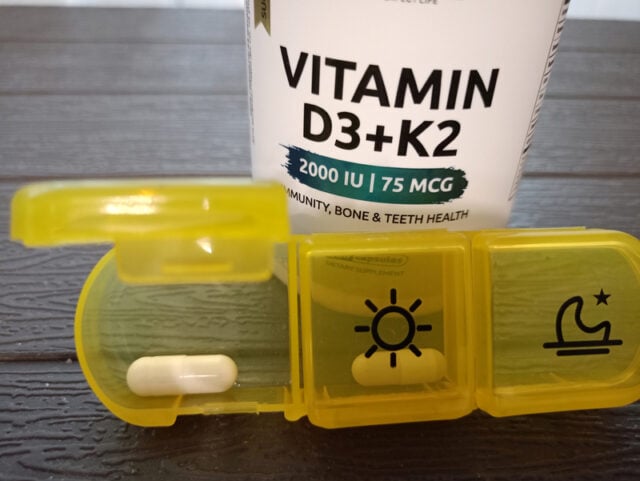
Testosterone depends on more than the testes alone. Vitamin D3 supports hormone production, while vitamin K2 regulates calcium use and activates proteins involved in bone and vascular health. Researchers are also studying links between K2, osteocalcin, and testicular function. Human evidence remains limited, so these nutrients should support a sound diet, sleep routine, exercise plan, and medical evaluation. Their relationship becomes clearer when you first understand each vitamin’s biological role.
How Vitamin K2 Fits the Picture
Vitamin K2 activates proteins that bind calcium in bones and blood vessels. Matrix Gla-protein, or MGP, helps limit calcium buildup in arterial walls after activation. This mechanism matters because healthy blood vessels support normal circulation, including the blood flow required for an erection.
Research also links K2 with osteocalcin, a protein produced by bone cells. Animal studies found that activated osteocalcin can increase testosterone production. That seems promising, but researchers have not confirmed the same testosterone effect in men.
If you’re reviewing vitamin D3 and K2 benefits for testosterone, the clearest point is that these nutrients act through different systems. D3 has direct evidence in deficient men, while K2 has stronger mechanistic and animal evidence. Together, they support hormone production, calcium regulation, and circulation.

Vitamin D3 and Testosterone Production
Vitamin D3 acts through vitamin D receptors found in several tissues, including the testes. A year-long trial found that vitamin D supplementation increased testosterone in men who had low vitamin D and low testosterone at the start.
That finding does not mean every man needs extra vitamin D3. Men with adequate blood levels may see little hormonal change from additional supplementation. A blood test can show whether deficiency deserves attention.
Vitamin D3 also supports calcium absorption in the intestine. This helps maintain normal bone function, but it increases the amount of calcium entering circulation. Vitamin K2 regulates where that calcium is used.
Why the Combination Makes Biological Sense
D3 increases calcium absorption, and K2 activates proteins that help direct calcium into bones. This pairing explains why researchers study them together rather than treating them as interchangeable supplements.
A two-year randomized trial involving 172 postmenopausal women found that combined K2 and D3 supplementation increased vertebral bone mineral density more than either nutrient alone. The participants were women, so the result does not prove a testosterone benefit in men.
Still, the finding supports a practical biological principle. D3 increases calcium availability, while K2 helps manage calcium placement. Adequate intake of both nutrients supports bone health without treating either vitamin as a guaranteed testosterone booster.
What the Evidence Says About Sexual Health
Testosterone is only one part of sexual function. Erection also depends on nerve signaling, blood vessel flexibility, medication effects, metabolic health, and psychological factors.
K2 may support vascular function through MGP activation. A three-year clinical trial found that MK-7 supplementation improved arterial stiffness in postmenopausal women compared with a placebo. The study did not measure erectile function or testosterone, so its result requires careful interpretation.
Direct human trials testing K2 for sexual health do not currently show any benefits. Animal studies provide useful biological clues, but animal doses and metabolism differ from human conditions. K2 should therefore be viewed as a possible support nutrient, not a treatment for low testosterone or erectile dysfunction.
Practical Considerations Before Supplementing
A clinician can check vitamin D status, total testosterone, free testosterone, thyroid markers, and other causes of fatigue or reduced sexual function. Testing matters because symptoms can come from poor sleep, excess body fat, medication use, illness, or calorie restriction.
Supplement labels also require attention. Vitamin D3 and K2 come in different doses and forms, including MK-4 and MK-7. Higher doses do not guarantee better results, and vitamin K can interfere with some blood-thinning medications.
Food provides useful sources of both nutrients. Sun exposure and fortified foods provide vitamin D, while fermented foods and some animal products provide vitamin K2. A balanced eating pattern, resistance training, regular sleep, and medical follow-up remain the foundation.
Conclusion
Vitamin D3 and K2 work through separate but connected processes. D3 supports testosterone production in deficient men and improves calcium absorption, while K2 activates proteins involved in bone and vascular function. Animal research also links K2 to osteocalcin signaling in the testes, though human confirmation is still lacking. The practical next step is a clinician-guided blood test before supplementation, especially when symptoms, medications, or existing health conditions are present.
Disclaimer
Artificial Intelligence Disclosure & Legal Disclaimer
AI Content Policy.
To provide our readers with timely and comprehensive coverage, South Florida Reporter uses artificial intelligence (AI) to assist in producing certain articles and visual content.
Articles: AI may be used to assist in research, structural drafting, or data analysis. All AI-assisted text is reviewed and edited by our team to ensure accuracy and adherence to our editorial standards.
Images: Any imagery generated or significantly altered by AI is clearly marked with a disclaimer or watermark to distinguish it from traditional photography or editorial illustrations.
General Disclaimer
The information contained in South Florida Reporter is for general information purposes only.
South Florida Reporter assumes no responsibility for errors or omissions in the contents of the Service. In no event shall South Florida Reporter be liable for any special, direct, indirect, consequential, or incidental damages or any damages whatsoever, whether in an action of contract, negligence or other tort, arising out of or in connection with the use of the Service or the contents of the Service.
The Company reserves the right to make additions, deletions, or modifications to the contents of the Service at any time without prior notice. The Company does not warrant that the Service is free of viruses or other harmful components.