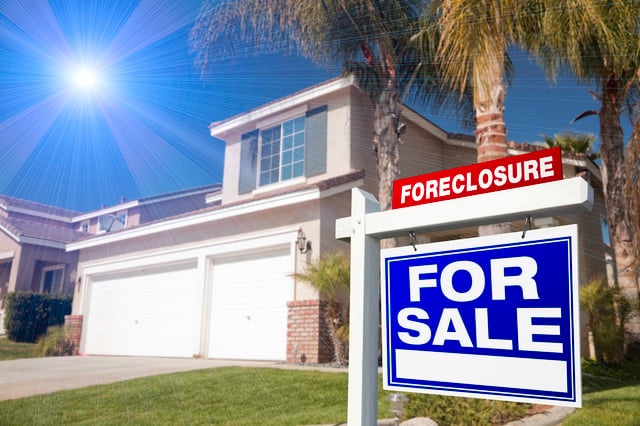
The “Sunshine State” is currently grappling with a shadow that has been lengthening over its residential real estate market throughout the first half of 2026. While the post-pandemic years saw Florida as the primary destination for a massive domestic migration wave, the financial reality of maintaining those homes has reached a breaking point for thousands of families. Recent data from the first quarter of 2026 reveals a sobering trend: Florida has solidified its position at the top of national foreclosure rankings, with specific cities emerging as the epicenters of this growing housing distress.
The National Landscape: A “Normalization” Trend
According to the latest Q1 2026 U.S. Foreclosure Market Report from ATTOM, the nation as a whole is seeing a marked increase in foreclosure activity. Nationwide, there were 118,727 properties with foreclosure filings in the first quarter, representing a 6% increase from the previous quarter and a significant 26% jump from the same period in 2025.
Industry analysts, including ATTOM CEO Rob Barber, suggest that while these numbers are rising, they are partly a “return to normal” following years of artificially suppressed activity during the pandemic-era moratoriums. However, the 45% annual increase in bank repossessions (REOs) suggests that, for many, the time for “workout” solutions with lenders has passed. While the national average remains at 1 in every 1,211 housing units filing, Florida’s rate is significantly higher.
Florida at the Forefront
Florida currently ranks among the states with the highest foreclosure rates in the country, with one filing for every 750 housing units in the first quarter of 2026. This is nearly double the national average. In March 2026 alone, the state recorded over 10,000 foreclosure starts—the second-highest total in the country behind only Texas.

What makes the Florida situation unique—and particularly concerning—is that the distress is not localized to a single region. From the Panhandle to the Keys, and from the Gulf Coast to the Atlantic, the rise in filings is pervasive. However, a handful of cities are seeing rates that far exceed the state average, placing them at the very top of national risk lists.
The Epicenter: Lakeland and Punta Gorda
If Florida is the “ground zero” for the 2026 housing correction, the cities of Lakeland and Punta Gorda are its central coordinates. According to the ATTOM report, Lakeland, Florida, currently holds the highest foreclosure rate in the United States among metropolitan areas with a population of at least 200,000. One in every 409 housing units in Lakeland faced a foreclosure filing in the first quarter.
Just to the south, Punta Gorda follows closely behind at number two in the nation, with one in every 416 housing units affected. These inland and coastal communities have seen a “clash” between stagnant local wages and an explosive rise in the cost of living. In Lakeland, property taxes have become a primary driver of distress; a report from Florida TaxWatch highlighted that the city’s property taxes surged 179.1% over a ten-year period ending in 2024. For homeowners on fixed incomes or those in the middle class, this “tax creep” has effectively priced them out of the homes they have owned for years.
Metro Struggles: Jacksonville, Orlando, and Tampa
While Lakeland and Punta Gorda lead the percentages, Florida’s major metropolitan hubs are leading in raw numbers. Jacksonville now ranks 11th nationwide for foreclosure rates among metros with a population of at least one million. Orlando follows at 17th.
In the Tampa-St. In the Petersburg-Clearwater area, the situation is particularly acute for the “pandemic buyers”—those who purchased homes between 2021 and 2022 at the height of the market frenzy. Many of these owners used the maximum financing available to them, leaving no room in their monthly budgets for subsequent spikes in insurance and utility costs. As home price growth has slowed or even reversed in certain pockets of the Gulf Coast, these owners are finding themselves with “negative equity,” where the mortgage balance exceeds the home’s market value.
The “Two Triggers” of Distress
Economists often point to the “two triggers” theory to explain foreclosure spikes. The first trigger is financial—a household faces an economic shock such as a layoff, medical emergency, or divorce. The second trigger is equity-based—the homeowner realizes they owe more on the home than it is worth, removing the incentive or ability to sell their way out of trouble.
In 2026, Florida is seeing a unique third trigger: the “Ancillary Cost Surge.” Even for homeowners who have stable jobs and positive equity, the sheer cost of ownership has doubled in some regions. Florida’s insurance market remains a national outlier, with the average annual premium for a modest single-family home reaching $5,376—nearly 150% higher than the national average. When combined with rising HOA fees—driven by new state-mandated safety inspections and reserve requirements for condominiums—the “hidden costs” of Florida living are proving to be the final straw for many.
The Human Toll and Economic Outlook
The rise in foreclosures is more than just a statistical anomaly for the real estate industry; it represents a significant shift in the state’s economic narrative. For years, Florida’s growth was fueled by its reputation as an affordable alternative to the Northeast and Midwest. As that affordability vanishes, the foreclosure data serves as a warning sign.
However, it is important to distinguish 2026 from the catastrophic 2008 crash. During the Great Recession, foreclosures were driven by predatory lending and a total collapse of the financial system. Today’s rise is characterized by “normalization” and high carrying costs. Most homeowners still possess significant equity, meaning many will be able to sell their homes or negotiate “short sales” rather than losing them to the bank at auction.
Looking ahead to the remainder of 2026, analysts expect foreclosure activity to continue its upward trend before plateauing. As more inventory hits the market through these filings, it is likely to put further downward pressure on home prices in high-risk areas like Cape Coral, Port St. Lucie, and the aforementioned Lakeland. For buyers, this may eventually lead to a more balanced market, but for the thousands of Floridians currently navigating the legal process of a foreclosure filing, the immediate future remains fraught with uncertainty.
Sources Used and Links:
- ATTOM Data Solutions: Q1 2026 U.S. Foreclosure Market Report
- Homes.com News: Florida’s foreclosure hot spots reveal cracks beneath the post-pandemic housing boom
- Realtor.com News: Florida Has the Most Counties at Risk of Falling Home Prices as Foreclosures Rise
- The Title Report: ATTOM: Foreclosure activity rises in Q1
- Florida Realtors: Spring Housing Market Shows Resilience
- PR Newswire: Foreclosure Activity Rises in Q1 2026 as Market Continues to Normalize
- Medium (Edmond Thorne): From The ‘Free State’ to the Homeless State: Florida Home Foreclosure Rate Tops Nation
Disclaimer
Artificial Intelligence Disclosure & Legal Disclaimer
AI Content Policy.
To provide our readers with timely and comprehensive coverage, South Florida Reporter uses artificial intelligence (AI) to assist in producing certain articles and visual content.
Articles: AI may be used to assist in research, structural drafting, or data analysis. All AI-assisted text is reviewed and edited by our team to ensure accuracy and adherence to our editorial standards.
Images: Any imagery generated or significantly altered by AI is clearly marked with a disclaimer or watermark to distinguish it from traditional photography or editorial illustrations.
General Disclaimer
The information contained in South Florida Reporter is for general information purposes only.
South Florida Reporter assumes no responsibility for errors or omissions in the contents of the Service. In no event shall South Florida Reporter be liable for any special, direct, indirect, consequential, or incidental damages or any damages whatsoever, whether in an action of contract, negligence or other tort, arising out of or in connection with the use of the Service or the contents of the Service.
The Company reserves the right to make additions, deletions, or modifications to the contents of the Service at any time without prior notice. The Company does not warrant that the Service is free of viruses or other harmful components.