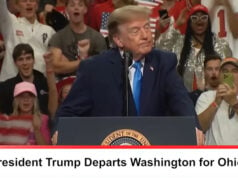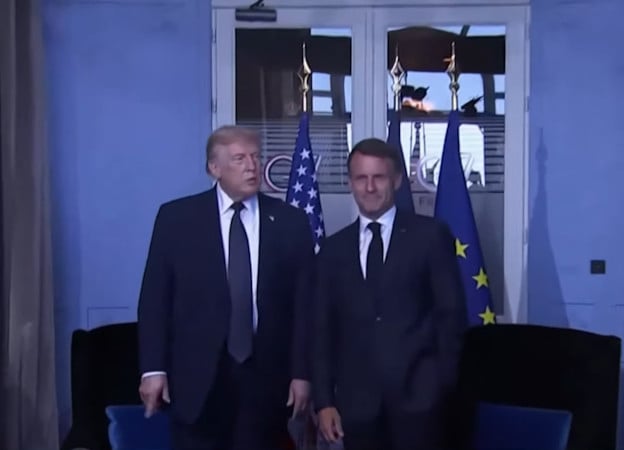
President Donald Trump arrived in the French Alps on Monday, landing at Geneva Airport before traveling to the lakeside resort town of Evian-les-Bains for the annual Group of Seven (G7) summit. Stepping off Air Force One, Trump carried an unprecedented level of diplomatic momentum following his sudden announcement of a comprehensive peace agreement between the United States and the Islamic Republic of Iran. The breakthrough deal aims to decisively end a brutal 15-week-old war that has crippled global energy markets, upended maritime trade, and repeatedly pushed the Middle East to the precipice of an all-out regional cataclysm since hostilities erupted on February 28, 2026.
As France assumes the rotating presidency of the G7, French President Emmanuel Macron initially envisioned the Evian summit to address a multi-layered set of global challenges, including the protracted war in Ukraine, the regulation of artificial intelligence, and pathways toward balanced economic growth. However, the late-breaking geopolitical developments have completely re-centered the summit around Trump’s unilateral diplomacy.
While the leaders of the world’s wealthiest democracies—including Canada, Germany, Italy, Japan, the United Kingdom, and the European Union—collectively expressed relief at the prospect of a cessation of hostilities, Trump’s arrival has simultaneously exposed severe underlying frictions. European allies have been furious, both privately and publicly, over what they characterize as a total lack of consultation by the Trump administration before embarking on the 15-week conflict. As a result, the summit is shaping up to be a high-stakes arena where the theater of American triumph intersects with the cold reality of fractured international partnerships.
The Breakthrough: A Digital Accord with Tehran
The path to the Evian summit was cleared by a series of dramatic disclosures over the weekend. Writing on his social media platform, Truth Social, on Sunday, June 14, 2026, President Trump sent shockwaves through international capitals by announcing that months of back-channel diplomacy had successfully culminated in a definitive pact.

“The deal with the Islamic Republic of Iran is now complete,” Trump stated in his initial post, offering his “congratulations to all” involved in the intensive diplomatic push.
The conflict, which saw direct, unprecedented military exchanges between American forces and Iranian assets, had appeared dangerously close to a catastrophic escalation just hours prior to the announcement. Behind the scenes, the agreement was forged through a complex, multi-national mediation framework spearheaded by Pakistan and Qatar. Iranian Deputy Foreign Minister Kazem Gharibabadi confirmed the breakthrough on Iranian state television, acknowledging that the text was finalized after a grueling, continuous 14-hour negotiating session in Tehran alongside Qatari and Pakistani intermediaries.
While Iranian state media attempted to frame the agreement under a triumphant banner reading “US was forced to sign an agreement to end the war,” the reality on the ground reflects a pragmatically structured memorandum of understanding (MOU). According to White House officials, the agreement establishes an immediate and permanent termination of military operations on all fronts. To solidify this preliminary understanding, U.S. Vice President JD Vance revealed that the White House and Iranian officials had already formally executed the MOU through a secure digital signature mechanism on Sunday.
However, Trump has made it explicitly clear that this cessation of hostilities is strictly contingent upon future performance. In an interview with The New York Times shortly after the public announcement, Trump issued a stern warning to Tehran, asserting that if the Iranian regime fails to negotiate in good faith regarding its nuclear program in the subsequent technical phases, the United States stands fully prepared to instantly restart targeted military attacks against Iranian infrastructure.
Reopening the Strait of Hormuz and Economic Relief
The immediate, tangible consequence of the peace deal—and the central topic of discussion during Monday’s opening G7 working sessions—is the formal unblocking of the Strait of Hormuz. Located between the Persian Gulf and the Gulf of Oman, the narrow shipping lane represents the single most critical maritime chokepoint for the global energy economy, historically facilitating the daily transit of roughly 20 percent of the world’s petroleum and a substantial portion of its liquefied natural gas (LNG).
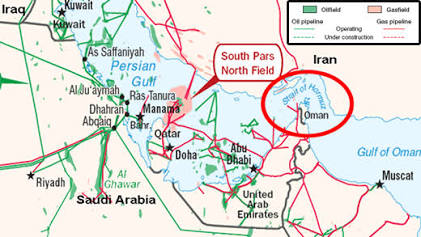
Following Iran’s aggressive efforts to disrupt shipping at the onset of the war, the United States responded by establishing a sweeping naval blockade around key Iranian ports and the strait itself. This effective closure of the waterway sent global energy prices soaring, stoking inflationary pressures across Europe, Asia, and North America. In celebrating the new accord, Trump enthusiastically posted on social media:
“I hereby fully authorize the toll free opening of the Strait of Hormuz, and, simultaneously herewith, authorize the immediate removal of the United States Naval blockade… Ships of the World, start your engines. Let the oil flow!”
The formal reopening and resumption of commercial traffic are slated for Friday, immediately following an upcoming in-person signing ceremony. However, G7 leaders noted that simply declaring the strait open is insufficient to restore market confidence. Over the course of the 15-week conflict, the waters became heavily contaminated with naval mines and defensive hazards, completely halting commercial tanker traffic due to prohibitive insurance premiums and physical danger.
To address this, Trump used his initial working sessions in Evian to discuss a coordinated international demining operation. The White House confirmed that British Prime Minister Keir Starmer and French President Emmanuel Macron have expressed strong interest in deploying Royal Navy and French Naval assets to assist the U.S. military in clearing the waterway. Quickly neutralizing these underwater hazards is viewed by G7 economists as paramount to regaining the trust of commercial shipping conglomerates and stabilizing global energy benchmarks.
JD Vance: The Architect and the Friday Signing
As G7 leaders dissect the fine print of the agreement, significant political attention has shifted back to Washington and the upcoming diplomatic schedule. While the digital MOU has frozen military maneuvers, a formal, in-person signing ceremony is scheduled to take place this coming Friday, June 19, 2026, in Switzerland.
The political driving force behind the accord has been widely identified as Vice President JD Vance. Long a proponent of recalibrating American foreign policy to avoid open-ended entanglements in the Middle East, Vance has been heavily involved in managing the back-channel negotiations carried out by Qatari and Pakistani diplomats. Speaking to Fox News, Vance noted that the administration is finalized the precise delegation details for the Swiss ceremony. “I certainly plan to be there,” Vance stated, though he added a caveat that “it’s possible the president himself could be there” depending on the final diplomatic outcomes of the G7 summit.
Vance’s central role in crafting an exit strategy from the 15-week war has earned him significant scrutiny domestically, revealing sharp ideological fissures within the Republican Party. Powerful hawkish elements in Washington have expressed deep skepticism regarding the agreement, drawing parallels to previous diplomatic efforts that failed to permanently curb Tehran’s regional influence. Chief among the domestic critics is South Carolina Senator Lindsey Graham, who openly labeled Vance as “the architect of the deal” and voiced intense concern that Iran is viewing the pact as a tactical concession rather than a structural shift. Graham warned that any lasting agreement must definitively dismantle Iran’s nuclear infrastructure and permanently eliminate its capability to finance regional proxy forces.
The Growing U.S.-Israel Split and the Lebanon Crisis
Perhaps the most volatile element intersecting with Trump’s G7 appearance is the severe, public fracturing of the traditional alliance between the United States and Israel. Throughout the months of negotiations mediated by Pakistan and Qatar, the Israeli government of Prime Minister Benjamin Netanyahu was intentionally sidelined by the Trump administration. This diplomatic isolation culminated in a major military flare-up just hours before the peace deal was finalized.
In a apparent bid to degrade Iranian proxy capabilities before a diplomatic freeze took effect, the Israel Defense Forces (IDF) launched a wave of heavy airstrikes targeting Beirut’s southern suburbs in Lebanon. The strikes successfully targeted and killed senior Hezbollah commander Ali Musa Daqduq, whom Israel accused of directing combat operations against its forces. However, the bombardment drew fierce international condemnation. Iran’s foreign ministry blasted the strikes as a direct violation of Lebanon’s sovereignty and a blatant breach of a tentative ceasefire understanding reached in April. United Nations Secretary-General António Guterres also issued a sharp condemnation, lamenting that the military strikes occurred precisely as Washington and Tehran were finalizing an accord aimed at restoring global economic stability.
| Dimension of Divergence | United States Policy Stance (Trump Admin) | Israeli Government Policy Stance (Netanyahu) |
| Primary Objective | Prevent acquisition of an operational nuclear weapon; restore global shipping. | Total dismantlement of the Iranian regime’s nuclear and proxy infrastructure. |
| Diplomatic Strategy | Bilateral, mediated engagement via third parties (Qatar/Pakistan) to exit war. | Uncompromising military pressure and targeted strikes on regional assets. |
| Lebanon / Hezbollah | Permanent termination of military operations across all regional fronts. | Direct military invasion and continuous bombardment of southern Beirut. |
This geometric divergence of interests was laid bare by Vice President Vance in a remarkably candid interview with Fox News, where he openly acknowledged a structural split between Washington and Jerusalem.
“The United States and Israel have some situations where our interests diverge,” Vance stated. “I think where the president has been very clear here is that while Israel obviously has some objectives that it has, the United States’ main objective in Iran is to ensure that Iran does not have a nuclear weapon… fundamentally we think this is in the best interest of the United States of America.”
According to diplomatic reports circulating at the G7, President Trump has delivered stern private warnings to Netanyahu, ordering an immediate halt to unilateral military actions in Lebanon that could jeopardize the broader peace matrix. Sources familiar with the administration’s thinking indicate Trump believes Netanyahu “won’t have any choice” but to fall in line with the agreement, reinforcing the reality that Washington ultimately calls the shots regarding regional security architecture.
The Broader G7 Matrix: Russia-Ukraine and Trade Frictions
While the Middle East crisis dominates the immediate news cycle, President Trump must simultaneously navigate the intricate web of traditional G7 agenda items, most notably the ongoing war between Russia and Ukraine. Ukrainian President Volodymyr Zelenskyy is attending the Evian summit as an invited guest, seeking to secure concrete, long-term security guarantees and financial commitments from Western allies.
The contrast between Trump’s aggressive diplomatic pivot toward Iran and his approach to Eastern Europe is a source of profound anxiety among European leaders. G7 partners, including German Chancellor Friedrich Merz and British Prime Minister Keir Starmer, are using the summit to lobby the Trump administration against reducing American material support for Kyiv. Trump’s “America First” doctrine has consistently favored rapid, transactional settlements over protracted military aid, leaving European capitals deeply worried that the administration might attempt to force a mirror-image, unilateral settlement upon Ukraine.
[G7 Strategic Priorities - Evian Summit 2026]
       │
       ├─► Middle East: Demining Strait of Hormuz & Stabilizing Iran MOU
       │
       ├─► Eastern Europe: Financing Ukraine Defenses & Assessing Russian Aggression
       │
       └─► Transatlantic Trade: Resolving Retaliatory Tariffs & AI Regulatory Frameworks
Compounding these geopolitical anxieties are severe, simmering trade disputes between the United States and the European Union. Transatlantic economic relations have been deeply strained by the Trump administration’s implementation of protectionist economic policies, including a contentious 15 percent tariff imposed on wines and spirits exported from the European Union to the United States.
Macron seized upon his opening media appearances on Monday to deliver a direct rhetorical challenge to Trump’s economic unilateralism, telling French broadcaster TF1 that it is fundamentally not “for the United States to decide what European or French law should be.” The tariff dispute, coupled with deep disagreements over how to regulate emerging artificial intelligence models, promises to make the scheduled working dinners and bilateral meetings highly contentious.
Trump is also scheduled to hold a crucial sideline meeting with Indian Prime Minister Narendra Modi. Modi, representing the expanding diplomatic weight of the Global South, arrived in Evian following a visit to Slovakia, intending to voice the developmental and economic concerns of developing nations. The meeting between Trump and Modi comes amid severe bilateral strain; New Delhi recently lodged formal diplomatic protests against the U.S. Navy following operations in the Gulf of Oman that inadvertently endangered commercial vessels carrying Indian mariners. Furthermore, India’s continued purchase of discounted Russian oil remains a persistent thorn in Washington’s side, even as the two nations attempt to finalize a comprehensive bilateral trade agreement that U.S. Ambassador Sergio Gor claims is “99 percent done.”
As the Evian summit progresses, Trump stands at the absolute center of global gravity. Whether his dramatic, digitally signed Iran peace deal can withstand the dual pressures of Israeli non-compliance and domestic political backlash remains to be seen—but for the duration of his stay in the French Alps, the American president is unequivocally dictating the terms of global diplomacy.
Sources and Links:
- Al Jazeera: G7 meeting in France: What’s on agenda, who is attending?
- The Jerusalem Post: US-Iran peace deal is complete, Donald Trump announces
- PBS NewsHour: Deal is reached to end Iran war and Trump orders stop to U.S. naval blockade
- The Times of Israel: Vance says US-Iran deal was already signed ‘digitally’ yesterday
- The New Arab: JD Vance signals US-Israel split as Trump pushes Iran deal
- Military.com / Associated Press: Iran and US Reach a Tentative Deal to End War as Israel Rules Out Withdrawing from Seized Land
- Iran International / CNN: JD Vance arrives at White House
- ClickOrlando / Associated Press: Trump arrives at G7 summit looking for momentum after announcing a deal to end the Iran war
- Hindustan Times: Global South’s concerns, meeting with Trump: What’s on agenda for PM Modi at G7 Summit 2026
Disclaimer
Artificial Intelligence Disclosure & Legal Disclaimer
AI Content Policy.
To provide our readers with timely and comprehensive coverage, South Florida Reporter uses artificial intelligence (AI) to assist in producing certain articles and visual content.
Articles: AI may be used to assist in research, structural drafting, or data analysis. All AI-assisted text is reviewed and edited by our team to ensure accuracy and adherence to our editorial standards.
Images: Any imagery generated or significantly altered by AI is clearly marked with a disclaimer or watermark to distinguish it from traditional photography or editorial illustrations.
General Disclaimer
The information contained in South Florida Reporter is for general information purposes only.
South Florida Reporter assumes no responsibility for errors or omissions in the contents of the Service. In no event shall South Florida Reporter be liable for any special, direct, indirect, consequential, or incidental damages or any damages whatsoever, whether in an action of contract, negligence or other tort, arising out of or in connection with the use of the Service or the contents of the Service.
The Company reserves the right to make additions, deletions, or modifications to the contents of the Service at any time without prior notice. The Company does not warrant that the Service is free of viruses or other harmful components.