By TOM MARQUARDT and PATRICK DARR
Paso Robles has spent decades in Napa Valley’s shadow, overlooked in favor of cabernet sauvignons that often charge more than they deliver. That is beginning to change, as wine consumers increasingly discover what the vast Central Coast has quietly been building.
Defining itself has always been the appellation’s central struggle. Franciscan missionaries founded the region in the early 19th century, and Italian immigrants later shaped it, bringing with them the zinfandel grape common throughout the state. The westside’s potential for cabernet sauvignon went largely unrecognized until the 1970s, when growers like Andre Tchelistcheff began to advise winemakers to look to this area as an alternative to Napa Valley. Gary Eberle, widely regarded as the grandfather of modern Paso winemaking, introduced syrah to the region at scale. Thanks to him, Rhône varieties arrived and took hold throughout the 1980s and 1990s.
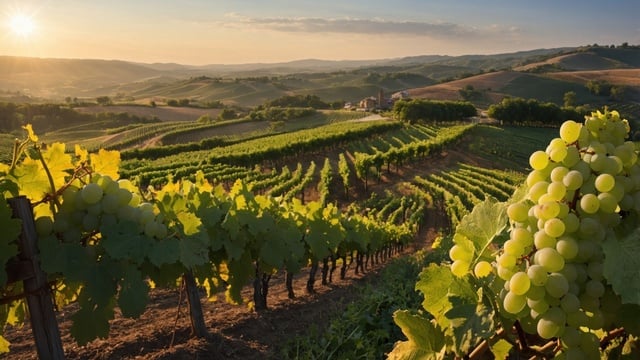
 The region now grows 60 different grape varieties across roughly 41,000 acres—a breadth that makes a single identity difficult to pin down. Tannat, albarino, and nearly everything in between has found a home here. More than 200 wines are now produced across 11 sub-appellations drawn in 2013, but perhaps the most renowned are the region’s GSM blends—grenache, syrah and mourvedre.

That versatility is no accident. Four conditions make it possible:
- Dramatic diurnal swings, with days reaching 100 degrees and nights dropping to 50. The high temperature makes the wine rich and ripe, concentrates flavor in the fruit and increases sugar, which leads to higher alcohol. Low night temperatures put the grapes into a subtle nap, arresting sugar production and preserving acidity. The result is a bolder, full-body wine that still tastes vibrant.
- Afternoon winds off the Pacific Ocean. A cool breeze whips through the Templeton Gap of the Santa Lucia Mountains and drives a thick fog to cool the vines early in the day. This helps to retain the grapes’ acidity.
- Calcareous limestone soils. The “Adelaida Stone,” also found in Burgundy and Champagne, holds water during the rainy season and feeds it back to the vines through dry stretches. This allows growers to dry farm, although we saw a lot of drip irrigation when we were there. The alkaline soil also provides mouth-watering acidity.
- Varied elevations. Steep, rugged mountain slopes dominate the Westside (Adelaida and Willow Creek) while the Eastside is characterized by rolling hills and flat terrain. The mountain slopes are ideal for the Rhone grape varieties and create a more elegant cabernet sauvignon. The less elevated Eastside is more ideal for big cabernet sauvignons, zinfandel and petite sirah.
There is more room for growth in Paso Robles than in Napa Valley, where property is prohibitively expensive. But growth isn’t in the cards for winemakers anywhere. During a recent visit, optimism was colliding with candid predictions of doom. While many producers say their sales are comfortably at pre-COVID levels, others are worried they have yet to see the bottom.
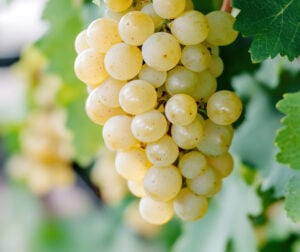 On a recent visit we explored Adelaida and Willow Creek—both reachable within 20 minutes of downtown Paso Robles. Outside of large operations like J. Lohr Vineyards & Wines and Justin Vineyards & Winery, most producers here are small, typically making fewer than 10,000 cases annually and selling directly to consumers through their own websites. We were astounded by the depth and richness of the wines, particularly the Rhône blends that we hadn’t sampled in depth until now. Many of the best producers have small productions and even waiting lists for their clubs, but the wines—albeit expensive—demonstrate the care that goes into making them.
Here are summaries of the producers, large and small, that we visited:
Tablas Creek, Adelaida. There is no better story that bridges the Rhone Valley and Paso Robles. The Perrin family behind the renowned Château de Beaucastel collaborated with Robert Haas, founder of Vineyard Brands and an influential American wine importer, to create this brand in 1989. Their focus has always been on classic Rhône blends, and that’s what led them to this 120-acre parcel. They legally brought cuttings of 14 traditional grape varieties from Chateauneuf-du-Pape vineyards. Those clones were then made available to the entire community, thus catapulting the famous Rhône Rangers into stardom. We loved: 2023 En Goblet (grenache noir, mourvedre, syrah, counoise, tannat), 2019 Esprit de Tablas (mourvedre, grenache noir, syrah, counoise), 2023 Esprit de Tablas Blanc (roussanne,grenache blanc, picpoul blanc, bourboulenc, picardan, clairette blanche).
Booker Vineyard, Willow Creek. Winemaker Eric Jensen, who spent 2 years at L’Aventure, has found a balance between classic Rhône styles and a bolder, more modern Paso version. The extreme vertical slopes here produce some of the most concentrated fruit in the region. We loved: 2022 Oublie (grenache, mourvedre, syrah), 2023 Ripper (all grenache) and 2022 Fracture (all syrah).
Law Estate Wines, Adelaida. Planted in an area up to 1,900 feet, the slopes of the 86 acres of vineyards are steep. Winemaker Phillip Pfunder embraces the Old World, classic style. We loved: 2024 Soph (roussanne, marsanne, clairette blanche, grenache blanc), 2022 Sagacious (grenache, mourvedre, syrah), 2023 Audacious (grenache, carignan, syrah, cabernet sauvignon).
Denner, Willow Creek. Winemaker Mark Williams has made this one of the region’s best wineries by meticulously managing his vineyards and letting the terroir dictate the wine. He uses whole-cluster pressing of Rhone blends and native yeasts for fermentation. Gallo has owned the facility since 2023. We loved: 2023 Ditch Digger (grenache, mourvedre, syrah, carignan, cinsault and roussanne); 2023 Gold Digger (merlot, cabernet franc, petit verdot, cabernet sauvignon); 2023 Mother of Exiles (cabernet sauvignon, tannat, cabernet franc, petit verdot, merlot).
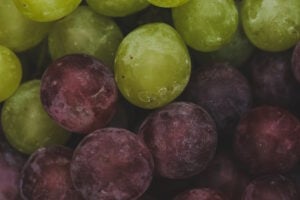 L’Aventure, Willow Creek. Stephan Asseo is a legend in Paso Robles. After a stint in Bordeaux, he searched the great wine regions from South Africa to Argentina but fell in love with the terroir of Paso Robles because it reminded him of the Rhone Valley. Since 1998 he has been turning out head-spinning wines, the best of which are Rhone-varietal blends. We loved: 2022 Cote a Cote (syrah, grenache, mourvedre), The Sibling (syrah, grenache, mourvedre, viognier), Optimus (syrah, cabernet sauvignon, petit verdot).
Daou Vineyards, Adelaida. The Daou family fled war-torn Lebanon, and after a successful business career Georges and Daniel Daou decided to make wine. Scouring the countryside in search of the best land for their favorite French grapes, they landed on this mountain in 2007. It has arguably the best view of the Paso Robles landscape from its highly elevated and beautiful tasting room. The brothers recently sold the brand and property to Treasury Wine Estate for an estimated $1 billion and headed to Tuscany for a new wine odyssey. We loved: 2022 Soul of the Lion (cabernet sauvignon, cabernet franc, petit verdot), The Pessimist (an inexpensive blend of petit sirah, syrah and zinfandel), 2023 Estate Collection Cabernet Franc, 2024 Reserve Unbound (petite sirah, tempranillo, tannat).
Disclaimer
Artificial Intelligence Disclosure & Legal Disclaimer
AI Content Policy.
To provide our readers with timely and comprehensive coverage, South Florida Reporter uses artificial intelligence (AI) to assist in producing certain articles and visual content.
Articles: AI may be used to assist in research, structural drafting, or data analysis. All AI-assisted text is reviewed and edited by our team to ensure accuracy and adherence to our editorial standards.
Images: Any imagery generated or significantly altered by AI is clearly marked with a disclaimer or watermark to distinguish it from traditional photography or editorial illustrations.
General Disclaimer
The information contained in South Florida Reporter is for general information purposes only.
South Florida Reporter assumes no responsibility for errors or omissions in the contents of the Service. In no event shall South Florida Reporter be liable for any special, direct, indirect, consequential, or incidental damages or any damages whatsoever, whether in an action of contract, negligence or other tort, arising out of or in connection with the use of the Service or the contents of the Service.
The Company reserves the right to make additions, deletions, or modifications to the contents of the Service at any time without prior notice. The Company does not warrant that the Service is free of viruses or other harmful components.