The Breakthrough in Islamabad
In a dramatic diplomatic shift that has stunned global capitals, the United States and Iran have officially finalized a comprehensive ceasefire agreement to end their multi-month war in the Persian Gulf. Announced late Sunday, June 14, 2026, the breakthrough offers profound, immediate relief to a global economy that had been teetering on the edge of severe stagflation and acute energy shortages.
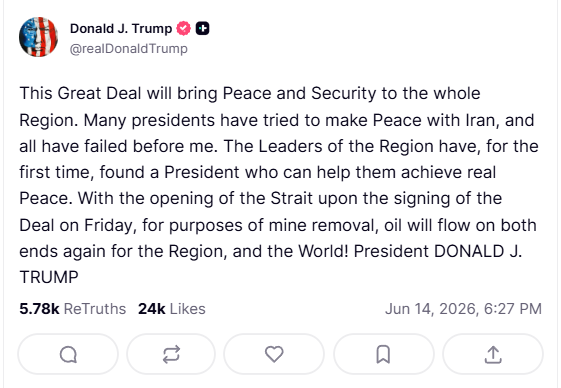
The agreement, brokered by Pakistan after intensive backstage mediation, sets the stage for a formal diplomatic signing ceremony scheduled for this coming Friday in Geneva, Switzerland. The conflict, which began in early March 2026 following sudden U.S.-Israeli strikes on Tehran and a subsequent Iranian chokehold on global logistics, had completely upended international trade. However, the diplomatic deadlock was broken when U.S. President Donald Trump announced via social media that a definitive bilateral memorandum of understanding had been successfully reached.
“Congratulations to all!” Trump declared in a public statement on Sunday afternoon. “I hereby fully authorize the toll-free opening of the Strait of Hormuz, and, simultaneously herewith, authorize the immediate removal of the United States Naval blockade.”

The sudden detente effectively halts planned U.S. military operations, including a major round of retaliatory airstrikes that had been scheduled to execute late last week. While deep structural issues—most notably the future of Iran’s nuclear program—remain unresolved, both nations have agreed to a structured framework. Formal nuclear and security discussions are mandated to commence within a strict 60-day window following Friday’s formal signing in Geneva.
Dismantling the Blockade: Reopening the Strait of Hormuz
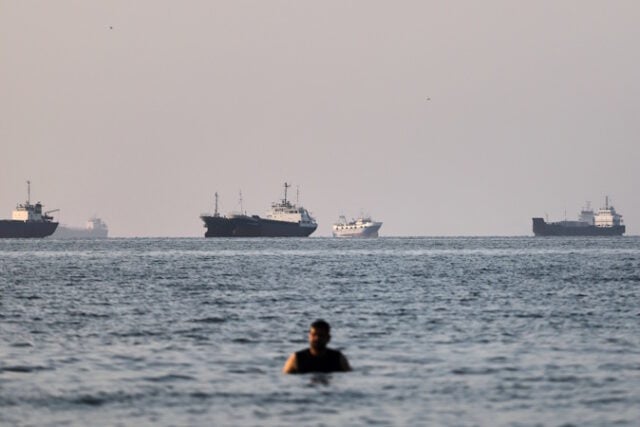
The core of the newly minted agreement rests on the immediate cessation of hostile naval operations in the world’s most vulnerable maritime chokepoint. For more than three months, the Strait of Hormuz had been transformed into an active war zone. Following initial kinetic engagements in early March, Iranian forces implemented a total blockade on outbound oil and gas shipments from the Gulf, vowing not to allow “even a single liter” of crude to reach its geopolitical adversaries. In retaliation, President Trump deployed a U.S. Navy carrier strike group to enforce a counter-blockade on Iranian ports, choking off the country’s domestic economy.
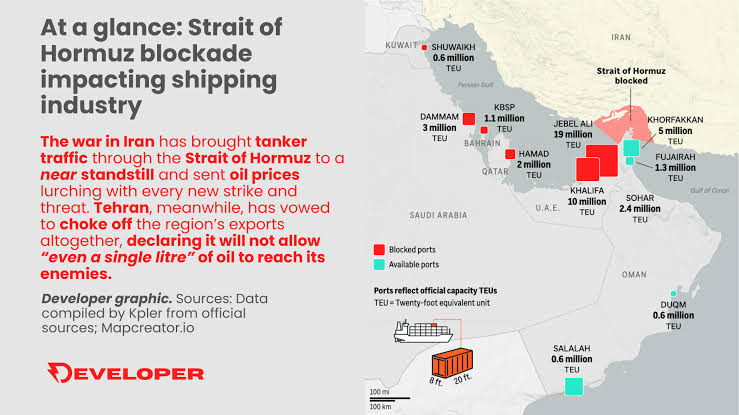
As seen in the tactical map compiled during the height of the crisis, tanker traffic through the narrow waterway had ground to a near-total standstill, stranding vital cargo and forcing global logistics firms to bypass the region entirely. The visual highlights how major logistics hubs like Jebel Ali, Khalifa, and Dammam saw their maritime capacities paralyzed by the overlapping blockades. With the Strait of Hormuz handling roughly 20 percent of the world’s daily petroleum supply, the prolonged closure triggered a historic supply shock.
The immediate removal of the U.S. naval blockade and Iran’s reciprocal pledge to grant unrestricted passage to commercial shipping will allow regular commercial traffic to resume. However, energy analysts warn that returning to pre-war shipping volumes will not happen overnight. The waters remain highly hazardous due to defensive sea mines dropped during the spring, requiring an intensive, coordinated international minesweeping effort that could take weeks.
Furthermore, the physical infrastructure of the region has sustained deep, long-lasting scars. On March 18, an Iranian strike targeted Qatar’s vital Ras Laffan Industrial City LNG complex. Satellite imagery analysis later confirmed that although the primary gas reservoirs escaped total destruction, the attack caused an unprecedented shutdown that stripped away 17 percent of Qatar’s active liquefied natural gas production capacity. Engineering firms estimate that the extensive structural damages inflicted on Ras Laffan will take three to five years to fully repair, meaning global natural gas markets will suffer structural constraints long after the naval blockades are dismantled.
Global Energy Markets in Freefall: The Oil Price Collapse
The financial response to the ceasefire was instantaneous and violent. For months, energy desks had been pricing in a worst-case scenario, pushing global benchmarks into what the International Energy Agency (IEA) described as an unprecedented “red zone” of volatility.
At the outbreak of hostilities in early March, crude oil prices experienced an initial vertical surge, jumping 10 to 13 percent in a matter of hours. As the blockade hardened throughout April and May, Brent crude oil futures eventually topped out at a staggering $113 per barrel, threatening to completely derail the post-pandemic economic recovery. The extreme pricing pressure was only partially mitigated when a coalition of IEA member states coordinated a massive, historic release of 400 million barrels of emergency crude from strategic reserves to artificially stabilize the market.
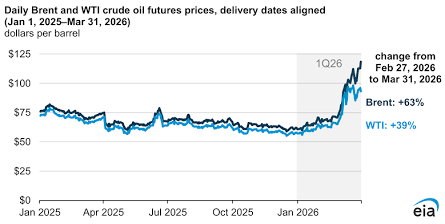
The chart provided by the U.S. Energy Information Administration (EIA) highlights the extreme structural shift that occurred between early 2025 and the first quarter of 2026. Prior to the war, Brent was trading at a stable baseline of roughly $70 per barrel. The sudden breakout in early 2026 represents the largest single oil market shock in modern economic history, dwarfing previous multi-decade disruptions.
However, as rumors of the impending ceasefire leaked to institutional desks late last week, the energy complex began to rapidly unwind its geopolitical risk premiums. On Friday, June 12, Brent crude plummeted by over 3 percent, slipping briefly below $85 a barrel before settling near $87.50. Following the absolute confirmation of the deal on Sunday, June 14, Brent dropped an additional 4 percent in overnight trading.
Concurrently, New York’s West Texas Intermediate (WTI) crude for July delivery tumbled nearly 5 percent, dropping by $2.18 to settle at $85.53 per barrel after touching a session low of $83.20. Downstream refined products followed the broader energy retreat; July ultra-low sulfur diesel (ULSD) slipped significantly by $0.1037 to $3.4094 per gallon, while July RBOB gasoline futures retreated by $0.0451 to $3.0563 per gallon.
Wall Street’s primary commodities researchers are already recalibrating their long-term models. Goldman Sachs issued an updated guidance note stating that while it still expects global oil prices to average roughly $90 per barrel through the final quarter of 2026 as global supply chains slowly normalize and western nations aggressively refill their depleted strategic stockpiles, the medium-term outlook has shifted dramatically. Citing higher projected output from the United Arab Emirates and increased domestic drilling across the Americas, Goldman Sachs slashed its 2027 global Brent forecast by $5, bringing its baseline down to $80 per barrel.
The Futures Market Response: A Global Stock Rally
While the energy pits experienced a sharp correction, equity futures and global stock markets reacted with explosive optimism. The realization that a catastrophic wider war between western powers and Iran had been averted triggered a massive wave of capital re-allocation out of defensive safe havens and back into risk assets.
Monetary policymakers and central banks across the globe breathed a collective sigh of relief. The prolonged energy crisis had severely complicated monetary policy, forcing institutions like the U.S. Federal Reserve to confront surging energy-driven inflation even as industrial productivity slowed down—a classic stagflationary trap. With the Federal Reserve scheduled to convene this week to decide on crucial interest rate trajectories, the sudden collapse of crude prices provides the central bank with significant breathing room to manage the macroeconomy without being forced into aggressive, growth-killing rate hikes.
| Equity Index / Commodity | Market Action | Immediate Financial Impact |
| Nikkei 225 (Japan) | Surged +4.5% | Led Asia-Pacific equity rebound at Monday open |
| Kospi (South Korea) | Jumped +5.7% | Historic single-day recovery for tech-heavy index |
| ASX 200 (Australia) | Rose +1.5% | Broad-based gains across mining and financial sectors |
| S&P 500 Futures (U.S.) | Climbed +1.0% | Signal for an explosive opening bell on Wall Street |
| Nasdaq Futures (U.S.) | Climbed +1.6% | Strong resurgence in tech and capital-intensive sectors |
| U.S. Dollar Index (DXY) | Flat at 99.85 | Stabilized just beneath the key 100-point threshold |
Market analysts note that the scale of the equity jump reflects just how deeply depressed corporate valuations had become during the ninety days of active warfare. As the Strait of Hormuz reopens, global supply chains, manufacturing logistics, and international shipping lines can finally begin projecting stable operating costs for the third and fourth quarters of the year.
Domestic Pain at the Pump: Reversing the American Gas Crisis
For the average American household, the geopolitical breakthrough represents an essential economic lifeline. Throughout the spring of 2026, citizens paid what domestic policymakers explicitly termed a “war tax” at the commercial gas pump. The sudden closure of the Persian Gulf shipping lanes had triggered a domestic fuel crisis that quickly surpassed the price shocks of previous decades.
By late April, exactly two months into the war, the national average retail price for regular unleaded gasoline had climbed to a painful four-year high of $4.30 per gallon—a staggering 44 percent increase from the pricing baseline observed on the eve of the conflict. Regionally, the economic damage was highly unequal but universally painful. In California, where strict environmental regulations and limited refining capacity amplify market shocks, retail fuel prices set a record, averaging $6.01 per gallon.
Data compiled by economic researchers at Brown University indicates that between early March and mid-June, American consumers spent an additional $29.2 billion entirely on inflated fuel costs compared to standard baseline projections. This macroeconomic drain translated into an average added expense of over $223 per individual household nationwide. The interior of the country was hit particularly hard, with several Midwest and Mountain states enduring the largest net price spikes in the country:
- Ohio: +$1.648 per gallon (+58.6%)
- Utah: +$1.612 per gallon (+58.6%)
- Illinois: +$1.612 per gallon (+52.8%)
- Michigan: +$1.592 per gallon (+53.2%)
- Kentucky: +$1.457 per gallon (+55.2%)
The pain of the fuel spike quickly vibrated through the rest of the domestic economy, driving annualized consumer price index (CPI) inflation up to 3.3 percent in March and forcing up the price of basic groceries and consumer goods. The agricultural sector was pushed into a severe financial squeeze. Because natural gas and petroleum are primary feedstocks for chemical manufacturing, global fertilizer prices skyrocketed alongside diesel fuel. Nearly 60 percent of surveyed U.S. farmers reported that their operational finances were deteriorating rapidly, with 78 percent stating they could no longer afford to purchase their full seasonal crop inputs, prompting a coalition of agricultural unions to issue urgent warnings to the White House.
Simultaneously, the aviation industry was upended by rocketing jet fuel prices, which surged to historic highs. Because fuel typically accounts for roughly 20 percent of an airline’s total operational overhead, commercial carriers were forced to aggressively hike baggage fees and ticket prices. Delta Air Lines noted in an investor disclosure that the localized energy crisis had inflicted an unexpected $2 billion in additional operating costs in a single quarter.
While the formal opening of the Strait of Hormuz will stop the upward trajectory of retail prices, energy distributors note that it will take several weeks for cheaper wholesale crude to clear through domestic refineries and manifest as lower prices at local gas stations.
Geopolitical Shocks: Trump’s Unprecedented Warning to Israel
Even as negotiators in Islamabad finalized the delicate details of the ceasefire, the entire diplomatic architecture was nearly shattered by a violent escalation along the line of control in the Levant. The fragile regional truce faced its most severe test on Sunday morning when the Israeli military launched an intense, localized airstrike deep into Lebanon.
Hours before the official U.S.-Iran announcement, the Israel Defense Forces (IDF) carried out a heavy aerial bombardment targeting the southern suburbs of Beirut, specifically the high-density neighborhood of Dahiyeh. The strike, which sent massive plumes of black smoke billowing over the Lebanese capital, was launched in direct response to a localized security incident earlier in the day, when Hezbollah militants fired three small projectiles into northern Israel. The IDF military command stated that the projectiles landed in open fields without causing any injuries or fatalities, but argued that a firm retaliatory message was required to protect its northern border.
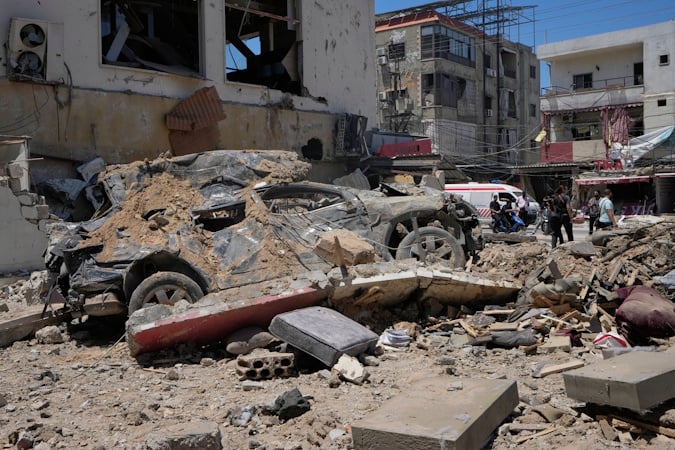
The sudden visual evidence of active warfare in Beirut threatened to completely upend the sensitive talks with Tehran, which views Hezbollah as a core strategic partner. The last time the IDF struck the suburbs of Beirut, it unleashed a massive chain reaction that threatened to dissolve a previous, tenuous ceasefire brokered on April 7.
The strike provoked an immediate, public reprimand from President Trump, who took to social media to directly condemn the military actions of the Israeli government. The public rebuke marked an extraordinary moment of diplomatic friction between Washington and its closest Middle Eastern ally, highlighting the U.S. administration’s absolute determination to preserve the emerging deal with Iran.
“This morning’s attack on Beirut should not have happened, particularly on a special day when we are so close to a peace deal with Iran,” Trump wrote in an extensive, highly direct post on Truth Social. “Israel has the right to defend itself against threats, but the attack it was responding to was very small and meaningless, nobody was hurt, injured or killed and should not disrupt this important process.”
The U.S. president went on to warn all regional actors that the United States would use its full leverage to enforce a total cessation of hostilities across the entire theater. “We are very close to a deal that will bring peace to the region, including to Lebanon, and all sides should stand down. There should be no more attacks by Israel anywhere in Lebanon, but there should also be no more attacks by any other party, including Hezbollah, against Israel. This could be the beginning of a long and beautiful peace—Let’s not blow it!”
This direct warning follows an earlier policy statement issued by the White House on April 17, where Trump asserted that Washington was actively prohibiting Israel from expanding its ground offensive into Lebanon, stating flatly that “Israel will not be bombing Lebanon any longer. They are prohibited from doing so by the U.S.A. Enough is enough!!”
However, the political leadership in Jerusalem has signaled deep dissatisfaction with the terms of the emerging U.S.-Iran memorandum, viewing it as a profound disappointment that fails to permanently dismantle Iran’s nuclear infrastructure or disarm proxy groups along Israel’s borders. In a defiant statement posted to X, Israeli Prime Minister Benjamin Netanyahu confirmed that he had communicated directly with Trump, asserting that Israel would continue to operate “as planned” in southern Lebanon. Netanyahu emphasized that the IDF would not hesitate to strike Beirut if Hezbollah operations continued to threaten northern Israeli towns, irrespective of diplomatic processes occurring in Switzerland or Pakistan.
The military reality on the ground remains deeply volatile. Just hours before the Beirut airstrike, Israeli ground forces successfully captured the historic, medieval Beaufort Castle in southern Lebanon. This advance represents the deepest territorial penetration by the IDF since the end of its 18-year occupation of the region in 2000, illustrating that despite Washington’s intense pressure to freeze all military movements, the regional security architecture remains highly flammable.
The Long Path to Implementation and Recovery
As global markets celebrate the sudden detente, seasoned diplomatic analysts urge caution, noting that a signed memorandum of understanding is merely the first step in an incredibly arduous reconciliation process. The 60-day diplomatic window established by the Islamabad agreement will test whether the United States and Iran can translate a temporary economic ceasefire into a durable, multi-year security framework.
The primary hurdle will be the verification of shipping safety inside the Persian Gulf. While the formal blockades are legally dismantled, the rebalancing of global energy supply chains will depend on the speed with which international maritime insurance syndicates lower the war-risk premiums that have made commercial operations prohibitively expensive since March. Until shipping lines are fully confident that commercial vessels will not face missile strikes or naval seizures, significant volumes of Gulf crude will likely continue to rely on the opaque network of “dark transits” and stealth maritime corridors that emerged during the conflict to bypass international radar tracking.
Furthermore, the geopolitical divergence between the United States and Israel presents an ongoing systemic risk to the truce. If Prime Minister Netanyahu’s cabinet continues to conduct deep military incursions into southern Lebanon or launch retaliatory strikes against Beirut infrastructure, Iran may face intense domestic pressure to abandon its diplomatic commitments in Geneva.
For the moment, however, the global economy has been granted a critical reprieve. The freefall of crude oil futures, the historic single-day rallies across Asian and American equity markets, and the anticipated downward correction of domestic gas prices all demonstrate the massive economic stakes of the Islamabad breakthrough. The coming weeks will reveal whether this agreement marks the true beginning of a stabilized global energy architecture or merely a temporary pause in a defining 21st-century conflict.
Sources and Links:
- The Guardian: Oil prices plummet as Trump claims he is close to US-Iran deal – June 12, 2026
- DTN Progressive Farmer: Oil Tumbles 3% on US-Iran Ceasefire Optimism – June 12, 2026
- Al Jazeera English: Stock markets soar, oil falls as US, Iran confirm deal to end war – June 15, 2026
- Anadolu Ajansı: ‘Enough is enough’: Trump says US prohibiting Israel from launching further attacks on Lebanon – April 17, 2026
- The Times of Israel: Trump: Israeli strike on Beirut shouldn’t have happened; none of Lebanon should be struck in future – June 14, 2026
- CBC News: Trump warns Israel and Iran not to ‘blow it’ after new strikes threaten emerging ceasefire deal – June 14, 2026
- Office of the Governor of California: 61 days later, no plan: Trump’s Iran war drives national gas prices to a four-year high – April 30, 2026
- Wikipedia: 2026 Iran war fuel crisis overview and global economic impact
- PBS NewsHour / Associated Press: Deal is reached to end Iran war and Trump orders stop to U.S. naval blockade – June 14, 2026
Disclaimer
Artificial Intelligence Disclosure & Legal Disclaimer
AI Content Policy.
To provide our readers with timely and comprehensive coverage, South Florida Reporter uses artificial intelligence (AI) to assist in producing certain articles and visual content.
Articles: AI may be used to assist in research, structural drafting, or data analysis. All AI-assisted text is reviewed and edited by our team to ensure accuracy and adherence to our editorial standards.
Images: Any imagery generated or significantly altered by AI is clearly marked with a disclaimer or watermark to distinguish it from traditional photography or editorial illustrations.
General Disclaimer
The information contained in South Florida Reporter is for general information purposes only.
South Florida Reporter assumes no responsibility for errors or omissions in the contents of the Service. In no event shall South Florida Reporter be liable for any special, direct, indirect, consequential, or incidental damages or any damages whatsoever, whether in an action of contract, negligence or other tort, arising out of or in connection with the use of the Service or the contents of the Service.
The Company reserves the right to make additions, deletions, or modifications to the contents of the Service at any time without prior notice. The Company does not warrant that the Service is free of viruses or other harmful components.