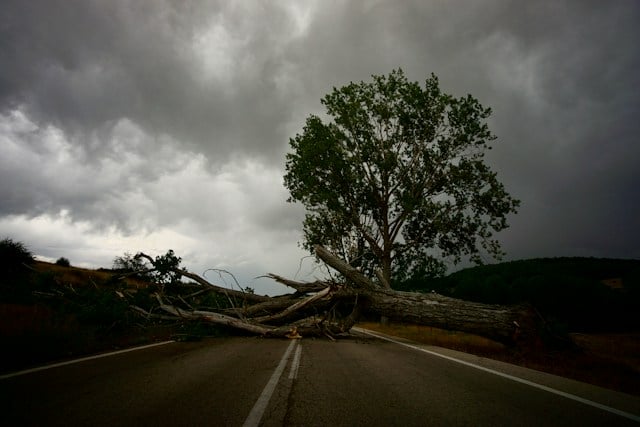
Daniel E. Kaplan has spent his career studying how households and businesses recover financially from severe weather and has seen that the strength of an insurance claim is usually settled long before an adjuster arrives, commonly within the two days that follow a storm’s passing.
Evidence gathered in that window carries a weight that later reconstruction finds hard to match. Those first 48 hours are chaotic as power may be out and roads are often closed. Families can be scattered among relatives or hotels, and yet the decisions made amid that disorder shape the settlement, the timeline, and sometimes the solvency of the property owner who files.
Why the First 48 Hours After a Storm Define the Claim
Insurers evaluate losses based on what can be proven, as opposed to what can be remembered. Damage that goes unrecorded before cleanup begins becomes a matter of dispute, and any dispute is prone to favor whichever party holds the documentation.
Property owners who treat the early aftermath as an evidentiary period generally recover more fully and with far less friction. Kaplan, whose work as a financial thought leader has centered on risk and capital preservation, views storm damage documentation as a form of balance sheet protection.

A home or commercial building typically represents the largest single asset its owner holds. Treating its damage with the rigor one would bring to an audit is, in his estimation, simple prudence.
“People instinctively want to restore order after a storm, and that impulse is understandable,” Kaplan says. “The difficulty is that every wet carpet pulled out and every broken window swept up before it is photographed becomes an assertion instead of a fact. Adjusters settle facts.”
Safety First, Then the Camera
No claim justifies personal risk. Downed lines, gas leaks, compromised roofs, and standing water concealing electrical hazards demand caution. Entry should wait until authorities or qualified professionals confirm the structure is sound. Once access is safe the camera should come out before the mop does.
Useful photographs tell a story in sequence. Wide shots establish each room and each exterior elevation, followed by medium frames and close-ups of specific damage. Guidance from FEMA on documenting flood damage for an insurance adjuster recommends capturing interior and exterior conditions before anything is discarded, along with the make, model, and serial numbers of major appliances. Waterlines on walls deserve particular attention, since they establish the height of intrusion and, by extension, which materials were compromised.
Video adds context that still images cannot, so a slow, narrated walkthrough stating the date, time, and address creates a contemporaneous record that is difficult to challenge. Timestamps and geolocation embedded in smartphone files strengthen that record further, and backing those files up to cloud storage protects them if the device itself becomes a casualty.
Some damage announces itself, while other harm hides behind drywall, beneath flooring, or inside roofing assemblies. Owners should note musty odors, soft spots underfoot, ceiling stains, doors that suddenly stick, and hairline cracks. None of these observations requires expertise but simply needs to be written down with the date it was first noticed.
Protecting the Property Without Weakening the Claim
Most policies require the insured to take reasonable steps to prevent further harm, a duty the industry calls mitigation. Tarping a roof, boarding windows, and extracting standing water all qualify. Failure to mitigate can reduce recovery, but mitigation performed without documentation creates problems of its own.
Kaplan recommends owners photograph conditions before temporary repairs and again afterward, retaining every receipt for materials, equipment rentals, and emergency labor. The National Association of Insurance Commissioners, in its overview of how to file a storm damage insurance claim, likewise advises saving damaged items when possible so the insurer can inspect them.
“Mitigation is an expense the policy often reimburses, which makes it a financial event as much as a physical one,” Kaplan explains. “I tell clients to keep a simple ledger from the first hour. What was spent, on what, by whom, and why. That discipline turns a pile of receipts into a claim component.”
Building the Paper Trail for a Strong Insurance Claim
Visual evidence forms one pillar of storm damage documentation, and the written record forms the other. Owners should locate the policy declarations page early, confirm the reporting process, and note the claim number, adjuster name, and contact details as soon as they are assigned. Every phone call deserves a brief log entry recording the date, the person spoken with, and what was discussed or promised.
Personal property claims live or die on specificity. A preexisting inventory makes the task far easier, and the NAIC’s tool for creating a home inventory for insurance claims allows owners to build or reconstruct one quickly.
Where no inventory exists, value can be pieced together through bank and credit card statements, online order histories, warranty registrations, and older family photographs that happen to show furniture, electronics, or artwork in the background.
Additional Living Expenses and Business Interruption Records
Displaced households regularly carry coverage for additional living expenses, while businesses may hold business interruption or extra expense protection. Both depend on documentation that begins immediately.
Hotel folios, meal receipts above normal grocery spending, mileage, and temporary rental agreements should be preserved from the first night away. Commercial owners should also note the date and hour operations stopped, record canceled appointments or orders, and secure recent financial statements that establish a revenue baseline.
“Property damage is visible, so people document it,” Kaplan says. “Lost income and displacement costs are quiet, and quiet losses get forgotten. From a financial planning standpoint, those line items can rival the structural damage itself, and they deserve the same care.”
Storms end quickly, but claims unfold over months, and Daniel E. Kaplan asserts that what is recorded can most likely be recovered. Careful documentation in the first 48 hours remains one of the least expensive and most valuable investments a property owner will make.
Daniel E. Kaplan is a business thought leader and insurance and economics expert whose ethical practice spans New York City and Miami. Holding highest honors in economics and multiple industry licenses, he is also a respected public speaker, life coach, and aviation enthusiast.
Disclaimer: The information presented in this article is for educational purposes only and does not constitute financial, legal, or insurance advice. Readers should consult a qualified professional regarding their individual circumstances.
Disclaimer
Artificial Intelligence Disclosure & Legal Disclaimer
AI Content Policy.
To provide our readers with timely and comprehensive coverage, South Florida Reporter uses artificial intelligence (AI) to assist in producing certain articles and visual content.
Articles: AI may be used to assist in research, structural drafting, or data analysis. All AI-assisted text is reviewed and edited by our team to ensure accuracy and adherence to our editorial standards.
Images: Any imagery generated or significantly altered by AI is clearly marked with a disclaimer or watermark to distinguish it from traditional photography or editorial illustrations.
General Disclaimer
The information contained in South Florida Reporter is for general information purposes only.
South Florida Reporter assumes no responsibility for errors or omissions in the contents of the Service. In no event shall South Florida Reporter be liable for any special, direct, indirect, consequential, or incidental damages or any damages whatsoever, whether in an action of contract, negligence or other tort, arising out of or in connection with the use of the Service or the contents of the Service.
The Company reserves the right to make additions, deletions, or modifications to the contents of the Service at any time without prior notice. The Company does not warrant that the Service is free of viruses or other harmful components.