LISTEN HERE:
By MaryAnn Fletcher
When you buy a familiar packaged food, you probably expect it to look the same every time. That’s one reason food companies use additives: to make products look and taste consistent. Common additives include colorants, also called food dyes, which can make foods look more appealing or fun to eat.
Many commonly used food dyes are synthetic, meaning they are made from ingredients derived from petroleum. In recent years, concerns have grown about potential health effects of synthetic food dyes, particularly in children.

“One big focus has been the risk of neurobehavioral effects of these synthetic food dyes in children — for example, symptoms of hyperactivity and inattention,” says Seema Kumar, M.D., a pediatric endocrinologist at Mayo Clinic in Rochester, Minnesota. Dr. Kumar, who often counsels her patients’ families on nutrition, also notes that synthetic dyes could have other health impacts, but the science remains unclear. “A lot is still unknown because the studies are too small, we don’t fully understand the level of exposure, and we don’t have information about the long-term effects.”
Meanwhile, food manufacturers are working to remove synthetic dyes from their products, and some have made their commitments public. (To find out which ones, see this online resource.) But does replacing synthetic dyes with natural ones make foods safer? Here’s what the evidence shows — and what remains uncertain.
What are natural food dyes?
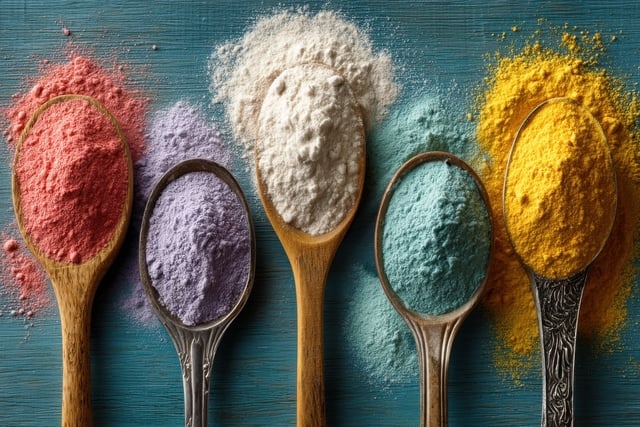
Natural food dyes, as the name suggests, get their color from natural sources, including plants, minerals and even insects. You may have some colorful plant ingredients — such as paprika, turmeric and saffron — in your kitchen.
Does natural mean safer?
Not necessarily. There isn’t enough evidence to say that food dyes made from natural sources are always safer than synthetic food dyes.
It’s important to note that the FDA does not have a specific definition for the term natural. That means food dyes from natural sources may be chemically processed to extract the color, produce it on a large scale, or make it more uniform and stable. The names of these food dyes also might not reflect their actual sources. For example, the FDA-approved color additive “beetroot red” doesn’t come from beets. It’s made by fermenting genetically engineered yeast.
How does the FDA regulate natural food dyes?
In April 2025, the U.S. Department of Health and Human Services and U.S. Food and Drug Administration (FDA) announced plans to phase out petroleum-based synthetic dyes from the nation’s foods. At the same time, they announced plans to speed the review and approval of color additives made from natural sources. The FDA has since approved several new naturally derived dyes.
The FDA regulates both synthetic food dyes and dyes made from natural sources. The FDA tests and certifies each batch of synthetic food dyes to make sure they meet standards for composition and purity, but it does not require the same batch certification for dyes from natural sources. However, both types must meet the FDA’s safety standard before they can be approved for use in food.
Can natural food dyes cause allergic reactions?
Yes. Some food dyes made from natural sources carry a risk of allergic reactions. “Because they’re derived from natural sources, they have a higher risk of allergic and hypersensitivity reactions, especially in people who are prone to allergies,” says Dr. Kumar. She notes that reactions could range from skin hives to anaphylaxis, a rare but life-threatening allergic reaction.
For example, anaphylaxis has been reported after exposure to carmine, a red dye made from dried insects, and annatto, a yellow color additive made from the seeds of a tropical tree.
Some people may have milder, but still unpleasant, reactions to certain dyes. “Some people already avoid dyes because they suspect the dyes don’t make them feel good,” says Katherine A. Zeratsky, RDN, LD, a nutritionist at Mayo Clinic in Rochester, Minnesota. “And I think it’ll be the same when you have a more natural dye. Because any way you look at it, there’s a certain chemistry involved, whether it’s artificial or natural.”
Do natural food dyes have health benefits?
It’s unclear. Some plant pigments used to make natural food colors have been studied for possible health benefits. For example, some have antioxidant, antimicrobial or anti-inflammatory properties. But that doesn’t mean a food gets those same benefits when a small amount of the pigment is added for color.
“People put turmeric in their milk and in their tea, and it turns it yellow, but they’re doing it because they feel that it has anti-inflammatory benefits,” says Zeratsky. “Or people might use beets because they feel like the beets have beneficial compounds that are considered heart healthy. I think the bigger question would be, just because food manufacturers put beet dye into a food or turmeric into a food and it turns it red or yellow, is it of a quantity that is going to impart benefit?” That’s a question that remains to be answered.
Another question is whether large-scale food processing affects these natural pigments. “As you expose them to the heat of the processing plant or the heat that’s involved in packaging, you have to wonder, will the antioxidant properties of that turmeric or those beets hold up to the heat?” says Zeratsky. “And they may or may not.”
Should you avoid natural food dyes?
For most people, the goal doesn’t need to be eliminating every food that contains natural or synthetic dyes. Instead, focus on an overall eating pattern built around whole and minimally processed foods.
“Since we don’t have the absolute answer on ‘Are food dyes dangerous?’ I think it goes back to the more basic idea of: We really should be looking to just eat foods that are colored by nature, by Mother Nature,” Zeratsky says. “I think it’s the idea of moving toward a more wholesome, whole-food diet or minimally processed foods that support that way of eating.”
Dr. Kumar agrees, noting that this approach may be especially beneficial for children. She notes that children may consume more food dye relative to their body size than adults do. Dr. Kumar also recommends you consider avoiding natural dyes and synthetic dyes if you have a history of allergies.
When at the grocery store, choose more whole or minimally processed foods. Read food labels carefully. Color additives can be found in foods you may not think of as processed, including some cheeses and farmed fish. If you suspect you’ve had a reaction to a product made with food dye (synthetic or natural), talk with a healthcare professional about whether avoiding the food for a period of time might help identify the cause.
For most people, the bigger goal isn’t to eliminate every food that contains added color. Instead, focus on an overall eating pattern built around whole and minimally processed foods. “It’s not that most people aren’t going to eat foods with artificial or natural dyes,” Zeratsky says. “People still will. The bottom line is, we want to move toward a more wholesome diet where we don’t have to worry about dyes.”
Disclaimer
Artificial Intelligence Disclosure & Legal Disclaimer
AI Content Policy.
To provide our readers with timely and comprehensive coverage, South Florida Reporter uses artificial intelligence (AI) to assist in producing certain articles and visual content.
Articles: AI may be used to assist in research, structural drafting, or data analysis. All AI-assisted text is reviewed and edited by our team to ensure accuracy and adherence to our editorial standards.
Images: Any imagery generated or significantly altered by AI is clearly marked with a disclaimer or watermark to distinguish it from traditional photography or editorial illustrations.
General Disclaimer
The information contained in South Florida Reporter is for general information purposes only.
South Florida Reporter assumes no responsibility for errors or omissions in the contents of the Service. In no event shall South Florida Reporter be liable for any special, direct, indirect, consequential, or incidental damages or any damages whatsoever, whether in an action of contract, negligence or other tort, arising out of or in connection with the use of the Service or the contents of the Service.
The Company reserves the right to make additions, deletions, or modifications to the contents of the Service at any time without prior notice. The Company does not warrant that the Service is free of viruses or other harmful components.