If you’ve tried to book a summer getaway recently and ended up staring at your screen in genuine disbelief, you aren’t alone. We’ve all been there: you pick a destination, find a decent-looking flight, and then—bam—the final price tag hits you like a middle-seat passenger hogging both armrests.
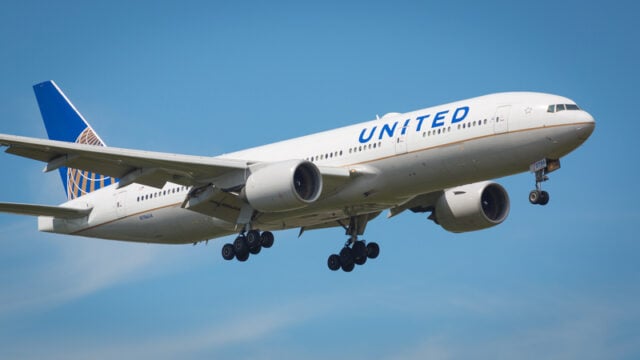
United Airlines has been making some serious waves in the news lately, and unfortunately, it’s not for adding more legroom or finally making the pretzels bigger. Instead, they’re hiking prices. And we’re not just talking about a few extra dollars to choose a seat near the front. We’re talking about a significant, across-the-board surge that is making everyone’s summer vacation budget look a little… well, let’s go with “deflated.”
So, what is actually going on? Why is United leading the charge in making travel more expensive, who else is joining the party, and—most importantly—is there any hope for a price drop on the horizon? Grab a coffee (it’s probably cheaper than a checked bag right now), and let’s break it down.
The “Why”: Turbulence in the Fuel Tank
To understand why United is hiking prices, we have to look at the world stage. As of April 2026, the biggest driver of your expensive ticket isn’t corporate greed alone—it’s the literal fuel powering the engines.

Following the geopolitical conflict that flared up in the Middle East in late February, jet fuel prices didn’t just go up; they effectively doubled. Before the conflict began on February 28, 2026, jet fuel was sitting at a relatively manageable $2.50 per gallon. By early April, that number had skyrocketed to nearly $5.00 per gallon.
For an airline like United, which consumes billions of gallons of fuel a year, that price jump is a catastrophe. United CEO Scott Kirby recently noted that if these fuel prices hold, the airline faces an eye-watering $11 billion in additional annual expenses. To put that in perspective, United’s most profitable year ever didn’t even hit $5 billion in profit. Basically, the math doesn’t work unless the passengers help foot the bill.
Because United (unlike some other carriers) generally chooses not to “hedge” its fuel—meaning they don’t lock in lower prices in advance—they are feeling the immediate sting of the market. When the price of oil goes up at the pump, United feels it at the hangar, and you feel it at the checkout.
The United Strategy: Fares, Fees, and Tiers
United isn’t just raising the base price of a ticket and calling it a day. They are getting creative with how they recoup that $11 billion. Here is the three-pronged approach they’ve rolled out over the last few weeks:
1. The 15-20% Fare Bump
Kirby has been very candid: fares likely need to rise by about 15% to 20% this summer just for the airline to break even on its fuel costs. If you’re seeing a flight that was $400 last year now sitting at nearly $500, that’s exactly the math in action.
2. The Baggage Fee Creep
Checking a bag? That’ll be extra. United recently bumped domestic checked bag fees by $10. For most flights within the U.S., Mexico, and Canada, your first checked bag now starts at $45. It seems small, but when you multiply that by millions of passengers, it’s a massive revenue stream that helps offset the fuel burn.
3. The New “Tiered” Premium Cabins
In a move that’s ruffled some feathers, United is introducing a new three-tier structure for its Polaris business-class and Premium Plus cabins. Essentially, they are “unbundling” the luxury experience. You might be able to buy a “Base” Polaris seat for slightly less, but you won’t get the lounge access or the same baggage allowance that used to be standard. It’s a way to keep the entry price looking “stable” while charging more for the perks we used to take for granted.
Is It Just United? (Spoiler: No)
While United is being the most vocal about the “why,” they are certainly not the only ones reaching for your wallet. The entire industry is in a bit of a defensive crouch.
- Delta Air Lines: Delta quietly followed suit in early April, raising its checked bag fees by $10 across the board. Now, like United, you’re looking at $45 for the first bag and $55 for the second. Delta cited “evolving global conditions” (which is corporate-speak for “fuel is expensive”) as the reason.
- JetBlue: They were actually the “early adopters” of this latest fee hike wave, being the first major U.S. carrier to jump their bag fees earlier this spring.
- American Airlines: While they haven’t been as aggressive with fare warnings as United, they are managing their own set of challenges, including high labor costs and their own fuel exposures. They are also trimming routes that aren’t profitable under these new fuel constraints.
Essentially, when one “legacy” carrier (United, Delta, American) raises prices or fees, the others usually follow within days or weeks. It’s like a high-stakes game of “Follow the Leader,” except the prize is a more expensive vacation for you.
Why Prices Won’t Drop Tomorrow
Here is the part where I have to be the bearer of some less-than-stellar news. Even though there was a ceasefire announcement on April 8, 2026, and oil prices have retreated slightly from their absolute peaks, you shouldn’t expect your flight to Honolulu to drop back to 2025 prices anytime soon. Here’s why:
Fees are “Sticky”
History shows us that once an airline raises a fee (like the $45 bag fee), they almost never lower it. Even if fuel dropped to $1 a gallon tomorrow, those bag fees are likely here to stay. They become part of the “new normal” for airline revenue.
The Labor Factor
Fuel is the headline, but labor is the backbone of airline costs. Pilots, flight attendants, and ground crews have all successfully negotiated significant raises over the last two years to keep up with inflation. Those costs are permanent. Airlines can’t “un-pay” their staff, so ticket prices have to stay high enough to cover those larger paychecks.
Aircraft Shortages
You’ve probably heard about the delivery delays at Boeing and Airbus. Because airlines can’t get new, more fuel-efficient planes as fast as they want, they are forced to keep flying older, thirstier jets. This limits the total number of seats available (supply) while travel demand remains incredibly high (demand). Basic economics: low supply + high demand = higher prices.
When Will Relief Actually Arrive?
If you’re looking for a silver lining, it’s all about timing and strategy. While we likely won’t see a “crash” in prices, we can expect some stabilization toward the end of 2026.
- The “Post-Summer” Slump: Once the frantic summer travel season ends in late August and September, demand naturally dips. This is when airlines will start offering “deals” again to fill seats. If you can wait until the fall, you might see fares drop by 10% to 15% from their summer highs.
- Capacity Stabilization: United is currently cutting about 5% of its planned flights to save fuel. As the market stabilizes, they may restore those flights. More seats usually means more competitive pricing.
- Points and Miles: Interestingly, while cash prices have spiked, “mileage prices” haven’t always kept pace. Many travel experts are noting that using credit card points or frequent flyer miles is currently providing the best “bang for your buck” since the points-to-dollar ratio has improved as fares climbed.
The Verdict
United and its peers are in a tough spot, and unfortunately, they’re passing that toughness directly to us. Between $5-a-gallon fuel and high labor costs, the era of “dirt cheap” legacy flights might be on a temporary (or permanent) hiatus.
Your best bet? Book as early as humanly possible, consider “unbundled” fares if you’re a light packer, and keep an eye on those fall dates. The “fare storm” is real, but like every storm, it eventually runs out of rain. It just might cost us a few extra checked-bag fees to wait it out.
Sources Used and Links:
- CEO of major airline says fares could increase 15-20% this summer due to surge in fuel costs https://www.abc10.com/article/news/nation-world/united-airlines-ceo-airfare-fees-price-increase-war-iran-jet-fuel-cost/507-b386d79e-8a7c-4f00-9a52-c580604c7b23
- United Airlines braces travelers for a fare storm – TheStreet https://www.thestreet.com/automotive/united-airlines-braces-travelers-for-a-fare-storm
- Summer airfare is much higher than last year; here’s how much prices are increasing | FOX 35 Orlando https://www.fox35orlando.com/news/summer-airfare-prices-much-higher-how-much-increasing
- United Airlines Cuts 2026 Forecast, Trims Flight Capacity As Jet Fuel Prices Bite Sector – NDTV Profit https://www.ndtvprofit.com/business/after-lufthansa-united-airlines-cuts-2026-forecast-trims-capacity-as-jet-fuel-prices-bite-sector-11392024
- Higher fuel prices push Delta to increase baggage fees – Bobcat Multimedia https://bobcatmultimedia.com/8032/thecolonnade/higher-fuel-prices-push-delta-to-increase-baggage-fees/
- Market Outlook: United cuts forecast as fuel costs hit airlines – BNN Bloomberg https://www.bnnbloomberg.ca/investing/market-outlook/2026/04/22/market-outlook-united-cuts-forecast-as-fuel-costs-hit-airlines/
- Global Airfares to Remain Steady Through 2026 – Global Business Travel Association https://gbta.org/global-airfares-to-remain-steady-through-2026/
Disclaimer
Artificial Intelligence Disclosure & Legal Disclaimer
AI Content Policy.
To provide our readers with timely and comprehensive coverage, South Florida Reporter uses artificial intelligence (AI) to assist in producing certain articles and visual content.
Articles: AI may be used to assist in research, structural drafting, or data analysis. All AI-assisted text is reviewed and edited by our team to ensure accuracy and adherence to our editorial standards.
Images: Any imagery generated or significantly altered by AI is clearly marked with a disclaimer or watermark to distinguish it from traditional photography or editorial illustrations.
General Disclaimer
The information contained in South Florida Reporter is for general information purposes only.
South Florida Reporter assumes no responsibility for errors or omissions in the contents of the Service. In no event shall South Florida Reporter be liable for any special, direct, indirect, consequential, or incidental damages or any damages whatsoever, whether in an action of contract, negligence or other tort, arising out of or in connection with the use of the Service or the contents of the Service.
The Company reserves the right to make additions, deletions, or modifications to the contents of the Service at any time without prior notice. The Company does not warrant that the Service is free of viruses or other harmful components.