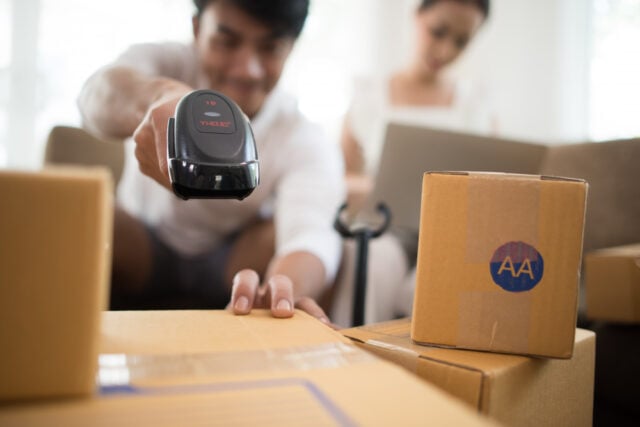
Asset tracking is the practice of monitoring the location of an organization’s physical assets to use them more efficiently and to lose them less often. IBM defines it this way and notes that the category now covers everything from delivery vehicles and laptops to heavy machinery. In other words, it is no longer a niche tool for warehouses or security teams. It has become part of how modern organizations keep control over the things they own, move, lend, repair, and retire. IBM also points out that today’s systems combine hardware and software, with tools such as barcodes, QR codes, and RFID feeding location data into a tracking platform in real time.
Why the category has outgrown spreadsheets
The reason asset tracking has become so important is simple: once assets start moving across departments, sites, or even cities, manual records stop matching reality. IBM says effective tracking helps organizations avoid spending time searching for missing items or buying replacements for assets that already exist, while also improving maintenance visibility and reducing theft risk. That shift matters because the problem is not just losing things. It is making decisions based on stale information. When a team believes an asset is available but it is actually out for service, in transit, or sitting unused, the cost shows up in delays, duplicate purchases, and avoidable downtime.
The market signal is hard to ignore

Recent market research shows that asset tracking is growing for a reason. Grand View Research estimates the global asset tracking market at USD 24.14 billion in 2024, with a projection to USD 51.59 billion by 2030, which implies a 14.9% CAGR from 2025 to 2030. Fortune Business Insights is also bullish, valuing the market at USD 25.98 billion last year and forecasting growth to USD 71.55 billion by 2034. The exact numbers differ because research firms scope the category differently, but the direction is the same. Businesses are spending more because they want better control, better utilization, and cleaner operational data.
The tools behind the system
A useful asset tracking setup is not one technology, but a stack. IBM says modern systems commonly use barcodes, QR codes, and RFID to collect real-time asset data. GS1 US explains that RFID tracking automatically identifies products, cartons, cases, and physical assets, and can provide visibility across the full lifecycle of an item. GS1 also notes that barcodes and RFID can complement each other rather than compete, which is why many organizations use both depending on the environment. That pairing matters because not every asset needs the same level of capture speed, range, or durability. A laptop in an office, a surgical tool in a hospital, and a pallet in a distribution center all have different tracking needs.
What recent adoption data says about how it is used
The latest adoption research shows that asset tracking is no longer just about finding a few expensive items. IoT Analytics reports that the average large enterprise tracks over 166,000 assets on any given day, and estimates that 3.7 billion, or about 20%, of the world’s 18.8 billion connected IoT devices can be classified as IoT asset tracking. The same report says enterprise tracking has matured over three decades and now plays a role in core operations, not just isolated equipment monitoring. It also says adoption is driven by practical pressures such as supply chain disruption, loss reduction, and the need for better operational control. Those numbers show a real shift in scale.
Why ROI is showing up faster than many expected
The business case is getting stronger because the results are measurable. IoT Analytics says 74% of asset-tracking projects meet or exceed ROI expectations, and that companies spend an average of $110 per asset annually to track inventory, equipment, or vehicles. IBM cites a recent study showing that enterprise-wide visibility can improve maintenance productivity by 28% and reduce inventory maintenance and repair by 18%. Those are not abstract benefits. They translate into fewer wasted hours, better servicing schedules, and less money tied up in unnecessary replacements. That is why asset tracking often pays back in places leaders did not initially expect, especially maintenance, audit readiness, and utilization.
Where asset tracking is heading next
The next phase is less about basic visibility and more about context. Grand View Research says the software segment held more than 47% of market revenue in 2024, cloud deployment nearly 62%, and RFID over 31%, which suggests buyers are leaning toward systems that can scale, centralize data, and work across multiple sites. As more organizations connect assets through cloud platforms and IoT devices, the category is moving toward earlier alerts, better utilization analysis, and lifecycle-level control. That is the real story behind asset tracking in 2026. It is not about putting a label on an item. It is about knowing what that item is doing, what it has already cost, and what it is likely to cost next.
Disclaimer
Artificial Intelligence Disclosure & Legal Disclaimer
AI Content Policy.
To provide our readers with timely and comprehensive coverage, South Florida Reporter uses artificial intelligence (AI) to assist in producing certain articles and visual content.
Articles: AI may be used to assist in research, structural drafting, or data analysis. All AI-assisted text is reviewed and edited by our team to ensure accuracy and adherence to our editorial standards.
Images: Any imagery generated or significantly altered by AI is clearly marked with a disclaimer or watermark to distinguish it from traditional photography or editorial illustrations.
General Disclaimer
The information contained in South Florida Reporter is for general information purposes only.
South Florida Reporter assumes no responsibility for errors or omissions in the contents of the Service. In no event shall South Florida Reporter be liable for any special, direct, indirect, consequential, or incidental damages or any damages whatsoever, whether in an action of contract, negligence or other tort, arising out of or in connection with the use of the Service or the contents of the Service.
The Company reserves the right to make additions, deletions, or modifications to the contents of the Service at any time without prior notice. The Company does not warrant that the Service is free of viruses or other harmful components.