By Shira Ovide
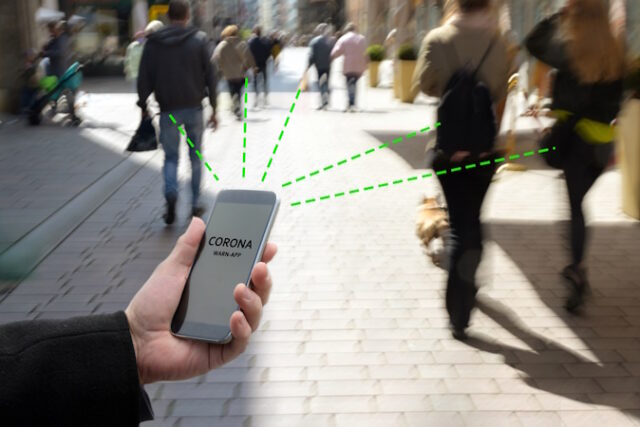
If you have an Android phone or tablet, Google will email you soon — if it hasn’t already — to say your device will automatically beam its location anonymously to strangers’ compatible gadgets nearby. It’s to help find lost devices.
Google is letting you opt out of the company’s similar “Find My” network. What should you do?

My advice: Most people should say yes to Google’s location-tracking network.
It will help you more easily locate your Android phone, some Bluetooth headphones or other belongings when they’re misplaced or stolen. You’re helping other people do the same.
There is an exception. If you believe there’s a risk strangers or someone you know could be stalking you, don’t let Google add your devices to this digital narc network. If you don’t say no, your Android devices will be automatically added.
(I have instructions at the bottom of this article to turn off this feature for Apple and Android phones.)
One privacy expert said the stalking risks of Apple’s and Google’s location-emitting networks are so serious that the technologies shouldn’t be permitted.
For years, Apple and Google have had “Find My” apps and websites that help you locate your phone and delete its contents from afar if it’s lost or stolen. They work for some other devices, too.
Those features typically use multiple signals to approximate your device’s location, including satellite GPS, nearby cellular towers and WiFi connections.
Apple — and Google, as of last month — have gone a step further by adding crowdsourced Bluetooth signals to the mix. The companies lump all of these location-finding technologies into their “Find My” apps.
Disclaimer
Artificial Intelligence Disclosure & Legal Disclaimer
AI Content Policy.
To provide our readers with timely and comprehensive coverage, South Florida Reporter uses artificial intelligence (AI) to assist in producing certain articles and visual content.
Articles: AI may be used to assist in research, structural drafting, or data analysis. All AI-assisted text is reviewed and edited by our team to ensure accuracy and adherence to our editorial standards.
Images: Any imagery generated or significantly altered by AI is clearly marked with a disclaimer or watermark to distinguish it from traditional photography or editorial illustrations.
General Disclaimer
The information contained in South Florida Reporter is for general information purposes only.
South Florida Reporter assumes no responsibility for errors or omissions in the contents of the Service. In no event shall South Florida Reporter be liable for any special, direct, indirect, consequential, or incidental damages or any damages whatsoever, whether in an action of contract, negligence or other tort, arising out of or in connection with the use of the Service or the contents of the Service.
The Company reserves the right to make additions, deletions, or modifications to the contents of the Service at any time without prior notice. The Company does not warrant that the Service is free of viruses or other harmful components.