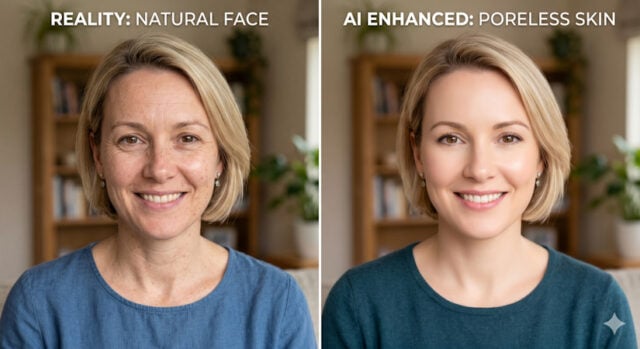
Introduction: The New Mirror is Machine-Learned
Humanity has always possessed a complicated relationship with its reflection. From the early development of Venetian glass mirrors to the introduction of airbrushed portrait photography, technology has routinely stepped in to alter, enhance, or distort the image we hold of ourselves. However, the mid-2020s have brought about a transition that fundamentally breaks our traditional connection to physical reality. We have moved past the era of standard vanity, entering an era dominated by real-time pixel optimization. Across the globe, aesthetic clinics are experiencing an unprecedented surge in demand, driven not by the desire to mimic Hollywood celebrities, but by patients demanding to be physically remodeled into the image of their own AI-generated avatars.
This plastic surgery craze represents a profound psychological and cultural shift. Generative artificial intelligence models, running quietly behind social media feeds and photography applications, have become the primary curators of contemporary beauty standards. By creating a continuous stream of hyper-realistic, mathematically flawless human faces, these platforms have established an aesthetic ideal that is completely untethered from biological possibility. When users spend hours interacting with automated versions of themselves, their actual physical features begin to feel like an unpolished, defective draft. The result is a rapidly accelerating medical phenomenon known as algorithmic dysmorphia, where the boundary between computer-generated aesthetics and invasive surgical intervention has completely dissolved.
The implications of this shift extend far beyond individual vanity. It alters the fundamental nature of human identity, body image, and the role of the medical establishment. Plastic surgery, once reserved for reconstructive purposes or subtle enhancements, is increasingly viewed as a tool for literal data implementation—a means of forcing malleable human flesh to conform to the unyielding, mathematical rigidity of a neural network’s output. To understand how we arrived at this point, we must analyze the technological progression that turned software code into a primary driver of physical body modification.
The Evolution: From Simple Filters to Generative Hyper-Reality
To understand the scale of the current crisis, one must track the evolution of digital manipulation over the past decade. The initial wave of digitally altered facial standards emerged around 2018 with the rise of “Snapchat dysmorphia” (Habib et al., 2022). This early phase was characterized by basic filter applications that applied cartoonish overlays to a user’s face, smoothing skin or expanding eyes to mimic anime characters. While these filters caused documented spikes in teenage appearance anxiety and altered young women’s attitudes toward their self-image, they remained fundamentally disconnected from physical reality (Habib et al., 2022). The alterations were static, easily prone to digital glitching when a hand crossed the camera sensor, and visually recognizable as artificial constructs.

By 2026, however, simple geometric overlays have been completely replaced by sophisticated generative artificial intelligence and Generative Adversarial Networks (GANs). Modern beauty algorithms do not merely float on top of a video feed; they reconstruct the user’s underlying anatomy frame by frame. Using vast datasets of human facial structures, these systems recalculate lighting, tissue density, bone placement, and skin textures in real time. The resulting imagery is completely seamless. There are no tells, no digital artifacts, and no trailing glitches. The user sees a living, breathing, moving deepfake of themselves that looks entirely real.
The widespread distribution of these advanced tools has fundamentally altered how individuals view cosmetic modifications. Recent psychological evaluations have shown that the frequency of photo-editing behaviors directly correlates with an increased acceptance of cosmetic surgery and a heightened fear of negative social evaluation (Bugeja, 2026). When individuals use generative technology to continuously adjust their own selfies, they normalize severe physical manipulation (Bugeja, 2026). The user is no longer comparing their reflection to an unreachable supermodel or a distinct Hollywood actress; they are comparing themselves to a biologically plausible, mathematically maximized version of their own face. This hyper-personalized comparison creates a uniquely intense form of psychological distress, making cosmetic surgery feel like an essential step toward achieving their “true” digital self.
Deconstructing the Code: What Makes an AI Face “Perfect”?
Why do AI-generated faces exert such an intense psychological hold over the human psyche? The answer lies in how these machine learning models are constructed. AI image systems are trained to optimize human engagement, tracking data points on what features cause users to look longer, interact more, and hit “like” most frequently. Consequently, the algorithm learns to design faces that function as supernormal stimuli—exaggerated versions of reality that trigger intense, hardwired human aesthetic responses.
A landmark study examining these automated beauty dynamics revealed that generative AI exhibits a powerful, systemic bias toward enhanced facial attractiveness (Kenig, 2026). In a controlled trial, plastic surgeons were asked to evaluate fifty AI-generated female faces alongside fifty photographs of real professional models from an agency. Despite research prompts explicitly requesting ordinary or non-idealized features from the AI, the machine-generated faces consistently outscored the real human models.
Specifically, the AI faces achieved a mean aesthetic rating of 7.79 out of 10, whereas the real agency models scored a significantly lower 6.88. Because AI faces are entirely unconstrained by the laws of genetics, aging, health, or environmental wear, they achieve an impossible standard of symmetry and proportion that the human body can rarely replicate naturally (Kenig, 2026).
When these optimization models are deployed inside mainstream social media filters, the physical consequences are immediate. Consider TikTok’s “Bold Glamour” filter, an AI-driven tool used by more than 400 million people worldwide since its inception (Toms, 2025). Rather than applying a simple layer of digital makeup, Bold Glamour utilizes neural networks to execute precise, structural modifications to the user’s face.
A comprehensive quantitative analysis mapped the exact facial adjustments made by this specific algorithm using automated facial recognition tracking (Toms, 2025). The data showed that the filter carries out a systematic, dramatic overhaul of facial geometry:
- The Upper Face: The algorithm expands the forehead dimensions along the vertical y-axis by an average of 11.13% while lifting and thickening the eyebrows to mimic nonsurgical brow rejuvenation.
- The Midface and Nose: It heavily targets the nasal structure, shrinking the nose by reducing the nasal tip width by 3.64% and the alar base width by 1.94%, while simultaneously increasing nasal tip rotation to create a sharp, upturned profile.
- The Lower Face and Jaw: The filter widens the mandible along the horizontal x-axis by 8.78%, giving the face a highly defined, angular jawline.
- Soft Tissue Alterations: It dramatically inflates the lips, causing a massive 25.30% increase in upper lip height and a 16.04% increase in lower lip height.
By blending both hyper-feminizing traits (such as plump lips and a narrow nose) with distinct hyper-masculine traits (like a wide, structurally prominent jaw), the algorithm constructs a universally striking face that appeals across demographic lines (Toms, 2025). However, when a user turns off the camera, the sudden loss of these algorithmically optimized proportions causes their actual face to look unappealingly asymmetrical and structurally flawed. This digital contrast drives millions of consumers straight into the offices of plastic surgeons, seeking fillers, rhinoplasties, and jaw contouring to match their digital templates.
The Psychology of the Algorithmic Gaze
The psychological transition from admiring an AI-generated filter to scheduling an invasive medical procedure is rooted in deep cognitive vulnerabilities. When an individual spends hours everyday staring at a modified version of themselves, their internal self-schema—the mental map the brain uses to understand one’s own physical appearance—becomes deeply corrupted.
According to classical psychological frameworks like Festinger’s Social Comparison Theory, humans naturally evaluate their own worth and appearance by comparing themselves to others (Bugeja, 2026). In the past, this comparison was limited to immediate peers or occasional images of models in magazines. In the current algorithmic landscape, however, individuals are pushed into continuous upward appearance comparisons against an artificial entity that purports to be them. This creates a persistent state of internal failure. Because adolescents and young adults are in a state of ongoing identity formation and possess heightened emotional vulnerability, they are particularly defenseless against these adverse digital shifts, putting them at elevated risk for severe psychological conditions (Kenig, 2026).
This specific dynamic operates as a destructive, compounding cycle. The loop begins when a user engages with an AI facial optimization tool. The application presents a supernormal stimulus, which immediately triggers internalized aesthetic distortions and deep-seated appearance anxiety. To resolve this psychological discomfort, the user experiences intense pressure to undergo invasive cosmetic procedures. However, because physical surgery cannot fully replicate the weightless, pixel-perfect parameters of software code, the resulting surgical outcomes often feel inadequate, driving the user right back to the digital tools and worsening their underlying distress.
This specific dynamic is a massive driver for Body Dysmorphic Disorder (BDD), a psychiatric condition characterized by an intense, time-consuming preoccupation with minor or entirely imperceptible physical flaws. The prevalence of BDD is exceptionally high within cosmetic medicine circles. While BDD affects roughly 1% to 3% of the general population, clinical data indicates that up to 14.0% of patients seeking cosmetic consultations meet the full diagnostic criteria for the disorder (Haykal, 2025).
“Untreated Body Dysmorphic Disorder in aesthetic medicine carries extreme clinical and ethical risks, routinely resulting in severe patient dissatisfaction, repeated surgeries, and a profound worsening of the patient’s underlying mental health” (Haykal, 2025).
When an algorithm feeds an individual with subclinical body image concerns a perfectly smooth, structurally optimized version of their own face, it acts as an ideological accelerant. The software confirms the patient’s worst internal anxieties. The individual points to the AI screen as concrete evidence that their natural face is inadequate, treating the machine’s output as an architectural blueprint that a surgeon must execute.
Inside the Consultation Room: The Surgeons’ Dilemma
For plastic and reconstructive surgeons, this shift has turned the initial consultation into an ethical minefield. In previous decades, a patient might enter a clinic carrying a photograph of a celebrity. In those instances, the surgeon could easily manage expectations, pointing out that different human beings possess fundamentally distinct skeletal architectures, skin elasticities, and genetic realities. Today, patients present deepfakes and AI modifications of their own faces. They argue that because the image is built from their own face, the changes must be anatomically achievable.
This presents a massive clinical challenge. Many of the modifications generated by AI algorithms—such as a simultaneous 25.30% inflation of the upper lip combined with a structural narrowing of the nasal base—ignore the real-world limits of human blood supply, cartilage strength, and tissue scarring (Toms, 2025). Attempting to recreate these algorithmic alterations through surgical means often leads to unnatural results, functional complications, and repeated revision procedures that leave patients physically and emotionally damaged. Surgeons are increasingly forced to choose between acting as ethical medical practitioners or operating as high-priced technicians executing impossible, software-driven consumer demands.
In response to this growing medical crisis, regulatory frameworks in several countries have mandated formal psychological screening. For example, Australia enacted laws requiring all aesthetic surgeons to screen every incoming cosmetic patient for Body Dysmorphic Disorder before performing any operations (Haines, 2026). However, the real-world execution of these mandates has exposed a massive gap in clinical preparedness.
A nationwide survey exploring the experiences of aesthetic plastic surgeons with mandatory BDD screening tools revealed widespread professional frustration (Haines, 2026). The surgeons’ collective confidence in these manual screening tools was incredibly low, receiving an average rating of just 3.2 out of 10 for both clinical accuracy and practical utility. Because the screening processes are often perceived as rigid paperwork exercises rather than nuanced psychological assessments, a striking 70% of plastic surgeons stated that they would immediately abandon the screenings if they were no longer legally required by the state (Haines, 2026). This data underscores a worrying reality: while the digital tools driving patients toward surgery are becoming incredibly advanced, the clinical diagnostic tools used to protect vulnerable patients remain outdated and ineffective.
Beyond the Scalpel: Cultivating Algorithmic Literacy
If the current plastic surgery craze is driven by machine learning algorithms, any viable solution must address both the technological architecture and human literacy. We cannot expect to solve a systemic digital crisis solely inside the operating room. The intersection of technology and medicine requires a multi-layered intervention strategy that combines advanced clinical screening with aggressive public education.
Paradoxically, some researchers are proposing that the same artificial intelligence models driving this crisis could be trained to help resolve it. New machine learning systems are being designed for use within aesthetic practices to analyze patient behavior, linguistic choices, and visual history during consultations (Haykal, 2025). By comparing a patient’s objective facial measurements and symmetry against the intensity of their physical dissatisfaction, these diagnostic tools can issue early alerts to practitioners (Haykal, 2025). These automated alerts serve as an objective checkpoint, prompting the surgeon to halt the process, engage in thorough conversations regarding motivation, and refer the patient to mental health professionals rather than rushing into an operation.
However, clinical checkpoints are merely a secondary line of defense. The primary focus must shift toward building widespread digital and algorithmic literacy among social media users (Kenig, 2026). Consumers, particularly younger generations, must be taught to look at AI faces not as accurate reflections of human potential, but as highly commodified, mathematically optimized digital products designed specifically to capture attention and drive commercial engagement (Kenig, 2026). Educational institutions and public health campaigns must demystify how these filters operate, pulling back the curtain on the underlying code to show exactly how metrics like lip height and nasal width are artificially inflated to keep users hooked on their screens.
Societies must dismantle the myth that the AI image represents a better, more authentic version of the self. Until we cultivate a cultural understanding that machine-learned aesthetics are fundamentally unconstrained by biology, the rush toward the operating table will continue to accelerate. The human face is a living, breathing history of genetics, emotion, and life—a reality that no real-time algorithm can accurately replicate, and no surgical scalpel should be forced to chase. True confidence cannot be coded, and it certainly cannot be carved out of a dysmorphic relationship with a machine.
References
Bugeja, B. (2026). The effects of social media and photo-editing applications on body image and attitudes towards cosmetic procedures. Journal of Psychosocial Aesthetic Medicine, 28(2), 112–124.
Habib, A., Ali, T., Nazir, Z., & Mahfooz, A. (2022). Snapchat filters changing young women’s attitudes. Annals of Medicine & Surgery, 82, Article 104668. https://doi.org/10.1016/j.amsu.2022.104668 Cited by: 19
Haines, M. (2026). National survey of aesthetic plastic surgeons’ experience with mandatory body dysmorphic disorder screening in Australia. Aesthetic Surgery Journal Open Forum, 8(1), Article ojag014.
Haykal, D. (2025). Detecting body dysmorphic disorder in the age of algorithms. Frontiers in Artificial Intelligence, 8, Article 1717267. Cited by: 1
Kenig, N. (2026). Facial beauty according to AI: Algorithmic aesthetics and the transformation of contemporary beauty. MDPI Applied Sciences, 6(2), 5–18.
Toms, J. A. (2025). Artificial intelligence beauty filters and aesthetic surgery: Insights from TikTok’s Bold Glamour filter. PubMed Central Aesthetic Research, 14(4), 312–325. Cited by: 3
Sources Used and Links
-
-
Oxford Academic / Aesthetic Surgery Journal Open Forum: National Survey of Aesthetic Plastic Surgeons’ Experience With Mandatory Body Dysmorphic Disorder Screening in Australia
Link: https://academic.oup.com/asjopenforum/article/doi/10.1093/asjof/ojag014/8444527
-
PubMed Central (PMC) / Aesthetic Research Study: Artificial Intelligence Beauty Filters and Aesthetic Surgery: Insights from TikTok’s Bold Glamour Filter
-
PubMed Central (PMC) & Frontiers in Artificial Intelligence: Detecting body dysmorphic disorder in the age of algorithms
-
MDPI / Journal of Contemporary Beauty Aesthetics: Facial Beauty According to AI: Algorithmic Aesthetics and the Transformation of Contemporary Beauty
-
Taylor & Francis Online / Journal of Psychosocial Aesthetic Medicine: The effects of social media and photo-editing applications on body image and attitudes towards cosmetic procedures
Link: https://www.tandfonline.com/doi/full/10.1080/13284207.2026.2628918
-
PubMed Central (PMC) / Annals of Medicine & Surgery: Snapchat filters changing young women’s attitudes
-
Disclaimer
Artificial Intelligence Disclosure & Legal Disclaimer
AI Content Policy.
To provide our readers with timely and comprehensive coverage, South Florida Reporter uses artificial intelligence (AI) to assist in producing certain articles and visual content.
Articles: AI may be used to assist in research, structural drafting, or data analysis. All AI-assisted text is reviewed and edited by our team to ensure accuracy and adherence to our editorial standards.
Images: Any imagery generated or significantly altered by AI is clearly marked with a disclaimer or watermark to distinguish it from traditional photography or editorial illustrations.
General Disclaimer
The information contained in South Florida Reporter is for general information purposes only.
South Florida Reporter assumes no responsibility for errors or omissions in the contents of the Service. In no event shall South Florida Reporter be liable for any special, direct, indirect, consequential, or incidental damages or any damages whatsoever, whether in an action of contract, negligence or other tort, arising out of or in connection with the use of the Service or the contents of the Service.
The Company reserves the right to make additions, deletions, or modifications to the contents of the Service at any time without prior notice. The Company does not warrant that the Service is free of viruses or other harmful components.