If there is one thing Donald J. Trump understands better than almost anyone else in modern politics, it is how to seize the center of a stage. He has spent a lifetime mastering the art of the pivot, transforming what anyone else would see as an embarrassing logistical nightmare into a personalized, prime-time spectacle.
So, when the entertainment roster for the highly publicized “Great American State Fair”—the crown jewel of the nation’s 250th birthday celebrations—began to collapse like a house of cards, nobody should have been surprised by the ultimate solution.
With multi-platinum country artists, rock veterans, and legendary funk acts abruptly dropping out of the lineup due to political backlash and safety concerns, the President did exactly what a lifelong reality TV producer would do.
He booked himself as the main event.

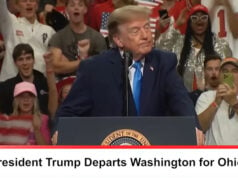
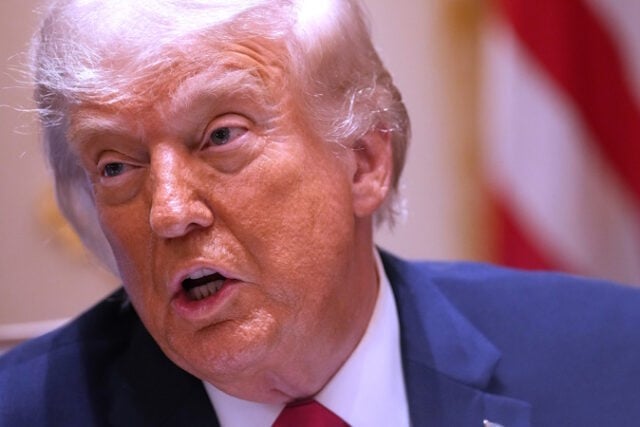
On Saturday, May 30, 2026, the organization behind the festival officially confirmed that President Donald Trump will personally kick off the historic celebration on the National Mall in Washington, D.C. Rather than letting the vacancies leave a quiet, empty stage, Trump leaned into his favorite persona: the ultimate closer who can salvage any production.
Taking to his social media platform, Truth Social, the President brushed off the sudden exit of his musical guests with characteristic bravado, claiming the artists simply got “the yips” and suggesting that the public would be much happier seeing “the GOAT” take the mic instead.
It is a classic Trumpian maneuver, turning a massive cultural boycott into a high-octane political rally. But how did an event explicitly designed to celebrate two and a half centuries of American independence, freedom, and unity devolve into a chaotic game of musical chairs? To understand the current spectacle unfolding on the National Mall, you have to look at how the guest list dissolved, who decided to stay, and why the 250th anniversary of the United States has become the latest battleground in America’s endless cultural civil war.
The Lineup That Was—And the Great Escape
The trouble began almost immediately after Freedom 250, the non-profit organization launched by Trump to spearhead the semiquincentennial celebrations, unveiled its first major wave of performers. The “Great American State Fair,” scheduled to run for 16 days from June 25 through July 10, 2026, was envisioned as a sprawling, World’s Fair-style exhibition on the National Mall. It promised a 110-foot Ferris wheel, a beautifully refurbished Smithsonian National Carousel, and nightly concerts showcasing a diverse mix of country, rock, rap, soul, and pop.
The initial rollout looked like a solid, nostalgia-fueled festival lineup designed to appeal to a wide swath of middle America. But within 24 hours of the announcement, a cascade of cancellations hit the organizers.
Country music icon Martina McBride was slated to open the concert series on June 25. By Thursday, she had officially backed out, taking to social media to tell her fans that she had agreed to the gig under the explicit assurance that it was a strictly nonpartisan affair.
“Yesterday things started changing and what we were told is, in fact, not what is happening,” McBride shared on her Instagram account, noting that the reality of the festival’s political undertones quickly clashed with what her team had been promised.
The exodus gained rapid momentum from there. Bret Michaels, the energetic frontman of the heavy-metal band Poison, announced on Friday morning that he was pulling the plug on his performance. Michaels, whose father was a veteran, noted that while he always jumps at the chance to honor active military, first responders, and frontline workers, the event had rapidly evolved into “something much more divisive” than what he originally signed up for. He also cited mounting online safety concerns for his fans, band, and crew as a primary reason for stepping away.
The urban and funk music communities witnessed a parallel flight. Rapper Young MC, famous for his iconic 1989 smash hit “Bust a Move,” posted a direct message on Facebook questioning the nonpartisan claims of the organizers. He pointed out that the artists were never informed of direct political involvement and noted that prominent media outlets like Spin magazine were openly describing the festival as “Trump-backed.”
Not long after, Morris Day announced via Instagram that, “contrary to rumor,” he and his legendary funk band, The Time, would absolutely not be performing, adding a blunt, definitive sign-off: “It’s A No For Me.” The Commodores, the legendary Motown group behind hits like “Brick House,” joined the retreat after founding member William King received an eye-opening phone call from a close friend who warned him in no uncertain terms that stepping onto that stage was a terrible career move.
The Defiant Few: Nostalgia Holds the Line
Despite losing more than half of the originally scheduled entertainment roster in less than 48 hours, the Great American State Fair’s stage won’t be entirely quiet before Trump takes the podium. A handful of artists have chosen to stand their ground, offering an eclectic, distinctly late-80s and 90s flavor to the remaining musical schedule.
Pop-rap star Flo Rida remains on the roster, while dynamic 90s hip-hop staple Vanilla Ice has proudly double-downed on his commitment to the gig. A representative for the “Ice Ice Baby” rapper stated via email to the Associated Press that he is “super honored to help celebrate America’s 250th Anniversary” and emphasized that “everyone is welcome to attend and celebrate USA’s Birthday and our Freedom!”
Perhaps the most dramatic reaction came from Fab Morvan, the surviving half of the infamous 1980s pop duo Milli Vanilli. Morvan, who now legally owns the Milli Vanilli name, released a statement confirming his intent to perform on the National Mall. Framing his decision as a mission of harmony rather than alignment, Morvan stated, “I am here to entertain and unite people, not divide them… I feel honored to be a part of as it will celebrate the 250 Year Anniversary of America.”
Meanwhile, Freedom Williams, the explicit frontman for dance-pop group C+C Music Factory, took a far more aggressive, viral approach to the unfolding controversy. In a heavily discussed, now-deleted video posted to his Instagram account, Williams acknowledged that while he briefly considered dropping out due to the immediate political backlash, he ultimately decided to do the show anyway out of sheer defiance against cancel culture.
Enter the Headliner: The Truth Social Proclamation
For a festival explicitly run by a public-private partnership backed by the sitting president, watching high-profile artists flee the roster in real-time was a public relations nightmare. Yet, instead of letting the story dominate the weekend cycle as a failure of recruitment, Donald Trump did what he does best: he re-wrote the script, eliminated the middleman, and cast himself as the savior of the show.
On the afternoon of Saturday, May 30, Trump published a characteristically colorful, triumphant post on Truth Social that immediately shifted the national conversation.
"I understand Artists are getting 'the yips' having to do with their performance,"
Trump wrote, mocking the hesitation of the musicians who bowed out. He went on to
 announce that he was actively thinking of bringing "the man who some say is the
Greatest President in History (THE GOAT!), DONALD J. TRUMP, to take the place of
these highly paid, total professionals."
Shortly after the post went live, Danielle Alvarez, a spokesperson for Freedom 250, issued an official statement confirming the massive shift in programming. The organization declared that President Trump will personally kick off the historic celebration on Wednesday, June 24, effectively transforming the opening night of the fair into a massive, national-stage Trump production.
The announcement did come with a minor dose of classic administration confusion. Trump’s social media post repeatedly referred to him holding a major rally on “Wednesday,” but the wider public fair on the National Mall isn’t scheduled to open its gates to the public until Thursday, June 25. While the White House did not immediately clarify the exact logistical discrepancy, the messaging achieved its primary goal: the narrative shifted from “Artists Boycott Trump’s Event” to “Trump Takes Over the National Mall.”
A Birthday Bounded by Concrete and Cages
The Great American State Fair on the National Mall is only one piece of an incredibly ambitious, highly unconventional, and deeply polarizing master plan that the Trump administration has rolled out for America’s 250th anniversary. Under the guidance of “Task Force 250,” the administration has spent the last year transforming the historic core of Washington, D.C., into a sprawling, hyper-visible monument to national pride—and to the Trump presidency itself.
For those walking near the White House grounds, the physical reality of this celebration is impossible to miss. Crews are currently working on the South Lawn to construct a temporary, massive, octagon-shaped UFC fighting cage. This wire-mesh arena will host a highly publicized championship bout on June 14, 2026, pull double-duty as a celebration for America’s 250th anniversary, and serve as a massive party for Donald Trump’s 80th birthday.
The White House UFC venue will feature:
-
A 5,000-seat temporary arena constructed right on the South Lawn.
-
A massive red, white, and blue stage adorned with star-and-stripe patterns.
-
Two towering electronic screens carrying the live, hard-hitting action.
-
A ringside seating section specifically designated for a full marching band to blast live music between rounds.
The demand for the event is reportedly unprecedented. At nearby Lafayette Park and the Ellipse, additional giant broadcasting screens will be deployed alongside a massive fan festival designed to accommodate up to 100,000 spectators. The official weigh-ins for the title fight—which features lightweight champion Ilia Topuria taking on interim champion Justin Gaethje—are scheduled to take place right on the steps of the Lincoln Memorial.
This construction project is part of a broader, aggressive push by Trump to leave an indelible, physical mark on the nation’s capital. Alongside the fight cage, the president has championed a 250-foot commemorative arch near the Lincoln Memorial, an IndyCar street race designed to zoom directly past the White House doors, and several major renovations to executive buildings, including a partisan “Presidential Walk of Fame” featuring plaques affixed directly to the White House colonnade walls.
The Nonpartisan Paradox
The core tension underlying the mass exodus of artists from the Great American State Fair lies in the fundamental definition of the word “nonpartisan.” On paper, Freedom 250 frames itself as a completely neutral, national organization dedicated to honoring 250 years of American sovereignty, history, and culture. The organization’s CEO, Keith Krach, is a veteran businessman who previously served as an under-secretary of state.
However, in the deeply fractured landscape of 2026, the line between a state-sponsored national holiday and a partisan executive showcase has become utterly blurred. While Freedom 250 organizers maintain that the fair belongs to all Americans, the reality is that the entity was built by presidential executive order, is heavily staffed by former Trump administration appointees, and serves as a direct platform for the president’s political aesthetic.
Every federal department has been directed to launch highly specific, often politically charged initiatives under the America 250 banner. For instance, the Department of Energy is rolling out a digital video series explicitly designed to praise the “Trump administration’s actions to shape American energy for generations to come.”
When an event celebrating the signing of the Declaration of Independence is deeply intertwined with explicit praise for a sitting president’s modern policy agenda, expecting mainstream commercial artists to view the event as “neutral” was arguably a massive oversight by the organizers. For decades, the mainstream entertainment industry has maintained a notoriously tense relationship with Donald Trump. Throughout his campaigns and presidency, legendary musical acts ranging from Celine Dion and Elton John to Guns N’ Roses have repeatedly issued formal legal objections over their music being played at his rallies.
When modern performers like Martina McBride or Bret Michaels realized that their performances would be contextually framed within a massive, highly politicized, Trump-led festival on the National Mall, the backlash from their respective fan bases became an immediate liability. In the modern entertainment economy, a single perceived partisan misstep can alienate half of a touring audience overnight. For the artists who backed out, the calculation was simple: no paycheck from a state fair was worth the long-term cost of a corporate branding crisis.
The Ultimate Reality Show Continues
By stepping directly into the headlining slot, Donald Trump has effectively ensured that America’s 250th birthday will look exactly like the rest of his political career: loud, intensely combative, highly entertaining, and entirely centered around his personal brand.
For his dedicated base of supporters, the move is an unmitigated triumph—a classic example of a strong leader refusing to be bullied by “woke” Hollywood elites, taking control of the narrative, and delivering a real populist celebration directly to the people on the National Mall. To his critics, it represents the ultimate co-optation of a shared national milestone, transforming a historic, 250-year-old democratic legacy into a self-aggrandizing political rally surrounded by a circus of reality TV stars, aging 90s rappers, and literal cage fights on the executive lawn.
But whether you view it as a patriotic triumph or a garish cultural spectacle, one thing is completely undeniable: Donald Trump knows how to keep the world watching. On June 24, when he steps out onto that stage on the National Mall to kick off the Great American State Fair, there won’t be any country stars or Motown legends around to share the spotlight. And that is exactly how the headliner likes it.
Sources Used and Links:
- The Guardian: No Kings event set for 14 June, as Trump celebrates birthday with White House UFC bout
- Washington Examiner: Freedom 250 unveils entertainer lineup for National Mall fair, with some dropping out
- Global News: Artists drop out of America’s 250th birthday event after lineup announcement
- Associated Press (AP News): Martina McBride, Morris Day among wave of cancellations at Trump-linked Freedom 250 concerts
- KRGV (via AP National): Trump to headline ‘Great American State Fair’ for nation’s 250th anniversary after artists drop out
- The White House (Official Freedom 250 Portal): Freedom 250 – The White House
- WQAD (via Associated Press): Trump set to headline ‘Great American State Fair’ after artists drop out over ties
- The Washington Post: Over half of Great American State Fair performers drop out over politics, threats
- Associated Press (AP News): UFC fighting cage rises on White House lawn for bout celebrating America’s 250th anniversary
Disclaimer
Artificial Intelligence Disclosure & Legal Disclaimer
AI Content Policy.
To provide our readers with timely and comprehensive coverage, South Florida Reporter uses artificial intelligence (AI) to assist in producing certain articles and visual content.
Articles: AI may be used to assist in research, structural drafting, or data analysis. All AI-assisted text is reviewed and edited by our team to ensure accuracy and adherence to our editorial standards.
Images: Any imagery generated or significantly altered by AI is clearly marked with a disclaimer or watermark to distinguish it from traditional photography or editorial illustrations.
General Disclaimer
The information contained in South Florida Reporter is for general information purposes only.
South Florida Reporter assumes no responsibility for errors or omissions in the contents of the Service. In no event shall South Florida Reporter be liable for any special, direct, indirect, consequential, or incidental damages or any damages whatsoever, whether in an action of contract, negligence or other tort, arising out of or in connection with the use of the Service or the contents of the Service.
The Company reserves the right to make additions, deletions, or modifications to the contents of the Service at any time without prior notice. The Company does not warrant that the Service is free of viruses or other harmful components.