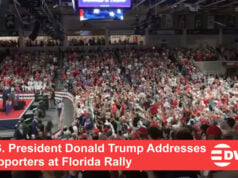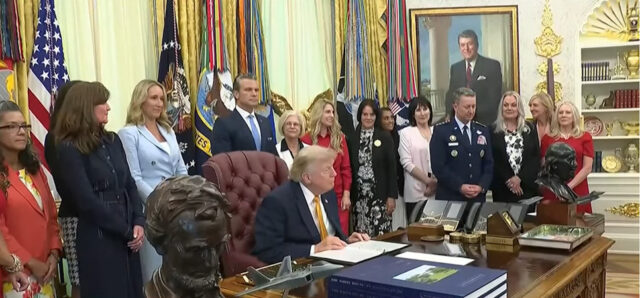
In a series of high-level national security addresses and executive briefings today, President Donald Trump outlined a decisive foreign policy strategy centered on the escalating confrontation with Tehran. Addressing ongoing military posture in the Middle East, Trump revealed that indirect diplomatic negotiations with Iran are proceeding in a structured, two-phase framework. According to the president, this negotiation process represents Tehran’s “last chance” to secure a diplomatic resolution before broader military or economic actions are taken to resolve regional instability.
The immediate priority of phase one involves the critical maritime chokepoint of the Strait of Hormuz, where the U.S. Navy currently maintains a strict naval blockade. Trump stated that conditional framework discussions are underway with the potential objective of seeing shipping lanes through the Strait fully opened as early as Tuesday, provided Iran complies with strict maritime transit guarantees. “Nothing gets through to Iran, unless we want it to, and nothing will get through unless a deal or total surrender is accomplished,” Trump asserted, reiterating that the United States military controls maritime transit in the region and stands fully prepared to “finish the job” if Tehran refuses to cooperate. The second phase of the proposed deal, Trump emphasized, would mandate the total denuclearization of Iran, strictly reiterating his long-standing position that Iran will never be permitted to acquire or maintain nuclear weapons capabilities.

Turning to domestic policy and election integrity, President Trump placed heavy emphasis on advancing the Safeguard American Voter Eligibility (SAVE) Act through Congress. Trump forcefully linked federal voter identification laws directly to national border security, arguing that a combination of lax border enforcement and unverified voter registration rolls poses a fundamental threat to democratic governance and constitutional rule of law.
Under the SAVE Act framework, all individuals registering to vote in federal elections would be required to present documentary proof of United States citizenship—such as an American passport or a birth certificate—in person. Trump argued that establishing nationwide, uniform verification protocols is necessary to safeguard federal elections against potential illegal voting and systemic irregularities. Framing the issue through executive actions aimed at ending taxpayer subsidies for open borders, the administration asserted that federal welfare benefits and voting privileges must be strictly limited to verified, lawful citizens. Supporters of the measure contend that nationwide photo identification standards restore public trust in election outcomes, while opponents argue that stringent documentary requirements create unnecessary administrative hurdles for voters. Nevertheless, Trump maintained that securing the border and securing the ballot box remain inextricably linked priorities for his domestic agenda.
The administration’s internal legal dynamics also came under intense scrutiny following President Trump’s public rebuke of U.S. Attorney for the District of Columbia Jeanine Pirro. The controversy stems from Pirro’s decision to move to dismiss a felony property destruction indictment against 67-year-old former Olympic canoeist Davey Hearn, who had been accused of deliberately tearing the newly installed lining of the Lincoln Memorial Reflecting Pool in Washington, D.C.
Initial claims by federal prosecutors accused Hearn of intentional vandalism during a June incident. However, court filings revealed that the Department of the Interior subsequently disclosed documentation indicating the damage was actually the result of a “botched and rushed installation” by a private contractor, Atlantic Industrial Coatings, rather than intentional sabotage. Despite the prosecutor’s admission that the lining had suffered widespread preexisting failures and massive water leakage prior to Hearn touching it, Trump publicly voiced strong dissatisfaction with Pirro’s handling of the prosecution. Criticizing the motion to drop the felony charge, Trump claimed that Pirro “choked” and “folded like an umbrella” under pressure, underscoring growing tension between the White House and federal legal officers regarding high-profile prosecutions.
Finally, the briefings touched upon ongoing administrative oversight regarding federal tax disclosure standards and Trump’s IRS audit records. Addressing recurring questions surrounding executive tax reviews, the administration framed standard federal audit procedures within its broader commitment to domestic economic expansion, regulatory relief, and fiscal transparency. Trump emphasized that his administration’s primary economic objective remains reducing regulatory burdens on American businesses, incentivizing domestic manufacturing, and protecting national supply chains from foreign energy shocks.
By tying international maritime stability in the Strait of Hormuz directly to domestic energy prices and inflation control, the administration reiterated its intent to deliver sustainable economic growth while navigating complex geopolitical and legal battles across multiple fronts.
Sources Used
- Iran International
- The Times of Israel
- Korea JoongAng Daily
- Center for American Progress
- Center for Immigration Studies
- The Independent
- Washington Examiner
- The Guardian
Disclaimer
Artificial Intelligence Disclosure & Legal Disclaimer
AI Content Policy.
To provide our readers with timely and comprehensive coverage, South Florida Reporter uses artificial intelligence (AI) to assist in producing certain articles and visual content.
Articles: AI may be used to assist in research, structural drafting, or data analysis. All AI-assisted text is reviewed and edited by our team to ensure accuracy and adherence to our editorial standards.
Images: Any imagery generated or significantly altered by AI is clearly marked with a disclaimer or watermark to distinguish it from traditional photography or editorial illustrations.
General Disclaimer
The information contained in South Florida Reporter is for general information purposes only.
South Florida Reporter assumes no responsibility for errors or omissions in the contents of the Service. In no event shall South Florida Reporter be liable for any special, direct, indirect, consequential, or incidental damages or any damages whatsoever, whether in an action of contract, negligence or other tort, arising out of or in connection with the use of the Service or the contents of the Service.
The Company reserves the right to make additions, deletions, or modifications to the contents of the Service at any time without prior notice. The Company does not warrant that the Service is free of viruses or other harmful components.