WASHINGTON — In a major escalation of geopolitical tensions, President Donald Trump announced this afternoon that the United States is officially reinstating a sweeping naval blockade on Iran. The announcement came alongside an intense new wave of military action, with U.S. Central Command (CENTCOM) initiating its third consecutive night of targeted airstrikes against Iranian forces. Amid the rapidly unfolding crisis, the White House confirmed that President Trump will address the nation in a primetime speech on Thursday at 9:00 PM Eastern Time.
U.S. President Donald Trump:
“We’re going to hit Iran very hard tonight and we’re going to hit them hard tomorrow, and there’s not a damn thing they can do about it.”
Contributed by @AZ_Intel_. pic.twitter.com/ncAgnOydAc
— Open Source Intel (@Osint613) July 13, 2026
Yesterday, using multiple one-way attack surface drones, CENTCOM forces successfully struck a submarine and ship maintenance facility in Iran. Three Corsair unmanned surface vessels hit the port at Bandar Abbas Naval Base, marking the first time American forces have employed sea… pic.twitter.com/bOM2kmgRxz
— U.S. Central Command (@CENTCOM) July 13, 2026
The abrupt shift back to active military containment signals the absolute collapse of the brief, fragile diplomatic ceasefire that had been brokered just last month. Speaking in a wide-ranging radio interview with political commentator Hugh Hewitt, Trump made it clear that the interim agreements were effectively dead, declaring that the U.S. military will continue striking Iranian assets relentlessly over the coming days.

BREAKING: Trump has formally restarted the war with Iran, in a letter sent to congress on Friday July 10th.
Trump said minutes ago the US will hit Iran “hard” tonight and tomorrow, adding “the MOU was only a test for Iran.”
Trump also announced he will address the nation on… pic.twitter.com/QwcGhUwuhf
— The Hormuz Letter (@HormuzLetter) July 13, 2026
“We’re going to hit them very hard tonight, and we’re going to hit them hard tomorrow,” Trump stated during the interview. “And there’s not a damn thing they can do about it. They have nothing”.
A Third Night of Thunder over Iran
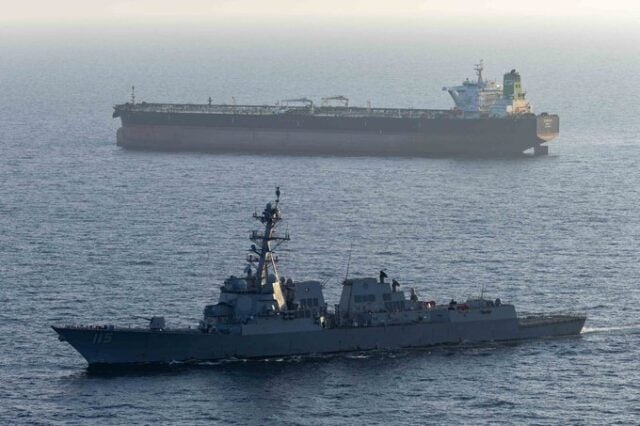
According to an official release from U.S. Central Command, American forces commenced the latest wave of bombardments precisely at 4:45 PM ET on Monday. The strikes deployed carrier-based aircraft, naval vessels, and long-range drones to systematically degrade Iran’s defensive and offensive infrastructure. Among the primary targets were sophisticated air defense systems, coastal radar stations, missile and drone launch facilities, and small fast-attack boats operated by the Islamic Revolutionary Guard Corps (IRGC).
CENTCOM emphasized that these military actions are direct retributions designed to impose a “heavy cost” on Iranian forces, explicitly targeting their capacity to threaten commercial shipping corridors and regional stability. The White House had formally notified congressional leaders last week that hostilities were resuming following a series of Iranian-backed drone attacks on merchant vessels transiting the Gulf of Oman, violating the core tenets of the June 17 memorandum of understanding.
Trump hinted that the operational bounds of the conflict could expand significantly if Tehran attempts further retaliation. During his afternoon remarks, he explicitly referenced heavily fortified nuclear infrastructure, noting that highly protected targets like Pickaxe Mountain, situated just south of the Natanz nuclear complex, could ultimately face military intervention.
The Blockade and the “Hormuz Toll”
Central to the administration’s strategy is the total reinstatement of the strict maritime blockade surrounding all Iranian ports, oil terminals, and coastal zones. Trump specified that the blockade is designed to permanently choke off Iranian oil exports and incoming maritime logistics.
“We are reinstating THE IRANIAN BLOCKADE, so named because it is only stopping Iran’s ships or customers from entering or leaving,” Trump wrote on his social media platform, Truth Social.
However, the policy contains an unprecedented economic twist that has stunned international maritime authorities: the United States intends to collect a mandatory 20% toll on all eligible commercial cargo transiting the Strait of Hormuz. Trump asserted that the fee is a justifiable reimbursement for the U.S. Navy doing “the job of providing safety and security to this very volatile section of the World”. Under this new paradigm, the president declared that the U.S. would assume the title of “THE GUARDIAN OF THE HORMUZ STRAIT”.
The international community has reacted with deep anxiety. European Union top diplomat Kaja Kallas swiftly called for the protection of open shipping lanes, reminding global powers that freedom of navigation must be respected under international law. In Tehran, Foreign Minister Abbas Araghchi counter-claimed that Iran remains the true historical guardian of the strait, calling the proposed 20% tariff excessive. Meanwhile, regional state-run media reported that air defense sirens were triggered across multiple Gulf countries, including Bahrain and Kuwait, as defensive forces scrambled to intercept retaliatory missile fire.
Markets Skidding as Oil Nears $80
The immediate fallout of the renewed warfare rippled instantly through global financial networks, ending a period of relative equity market stability. In the futures market, Wall Street braced for a sharp drop. S&P 500 futures fell by 0.36%, while tech-heavy Nasdaq 100 futures slid by 0.5% as investors rushed toward safe-haven assets. The overnight trading session saw even sharper declines in Asian indices, amplified by broader fears of supply chain disruptions.
Predictably, commodities caught fire. Brent crude oil futures surged by more than 4%, advancing past $79.50 a barrel and closing in on the psychologically significant $80 threshold. U.S. West Texas Intermediate (WTI) crude tracked a similar explosive path, climbing 4.3% to trade above $74.20 a barrel. Market analysts warned that if the blockade sparks an extended closure of the Strait of Hormuz—which handles nearly 20 million barrels of crude oil flows daily—energy prices could rapidly rocket into a devastating triple-digit range between $110 and $150 per barrel.
Pain Waves at the Domestic Gas Pump
For ordinary consumers, the geopolitical standoff has translated into immediate financial pain at the retail pump. According to the latest national tracking data from GasBuddy, the sudden spike in crude oil prices effectively broke a multi-week streak of declining fuel costs.
The national average for regular gasoline jumped by 10.3 cents over the course of the week to reach $3.82 per gallon, marking the first broad weekly increase since mid-May. In specific metropolitan regions, the adjustments have been even more drastic; average prices surged by nearly 17 cents in parts of the East Coast and close to 28.6 cents per gallon in Western hubs like Ogden, Utah. Industry analysts point to a classic “rockets and feathers” pricing phenomenon, noting that retail fuel operators pass wholesale crude increases onto consumers with extreme speed while letting prices drift down much more slowly when tensions cool.
A Primetime Address to the Nation
With military operations slated to continue over the next forty-eight hours and economic impacts deepening, all eyes are turning to the upcoming presidential address.
“President Trump will be making a Speech to the Nation on Thursday evening, at 9 P.M. Eastern,” a White House statement posted to Truth Social read. While Trump casually remarked in his interview with Hugh Hewitt that it would be “a speech like a lot of my speeches,” political analysts expect the address to serve as a formal layout of the administration’s long-term military parameters in the Persian Gulf. With congressional elections approaching in November, the dual pressures of an active overseas conflict and rising inflation at home will undoubtedly frame the administration’s rhetoric as the nation braces for an extended standoff.
Sources and Links:
- The Guardian: https://www.theguardian.com/world/2026/jul/13/us-iran-war-missile-strikes-news-attacks-strait-of-hormuz
- The Guardian (Live Updates): https://www.theguardian.com/world/live/2026/jul/13/us-iran-strikes-middle-east-strait-of-hormuz-military-latest-news-updates
- Anadolu Ajansı (CENTCOM Strikes): https://www.aa.com.tr/en/us-israel-iran-war/us-launches-3rd-consecutive-night-of-strikes-against-iran-centcom/3997046
- Anadolu Ajansı (Address Announcement): https://www.aa.com.tr/en/americas/trump-to-deliver-address-to-nation-on-thursday-evening/3996975
- PBS NewsHour: https://www.pbs.org/newshour/world/trump-says-u-s-will-blockade-iran-in-the-strait-of-hormuz-and-will-charge-a-toll-for-safe-passage
- SWI swissinfo.ch (Bloomberg Markets Wrap): https://www.swissinfo.ch/eng/oil-climbs%2C-us-stock-futures-dip-on-iran-strikes%3A-markets-wrap/91735304
- The Economic Times: https://m.economictimes.com/markets/commodities/news/oil-price-today-july-13-crude-oil-up-almost-5-nears-80-as-us-iran-unleash-more-strikes-100-in-sight/articleshow/132354622.cms
- WFAE 90.7: https://www.wfae.org/conflict-in-mideast/2026-07-13/gas-prices-jump-in-charlotte-after-oil-surge-tied-to-iran-conflict
- Standard-Examiner: https://www.standard.net/news/local/2026/jul/13/ogden-gasoline-price-average-jumps-28-6-cents-per-gallon-since-last-week/
- ALM First: https://www.almfirst.com/resources/beyond-the-headlines/july-13-2026-headlines
- The Jerusalem Post: https://www.jpost.com/middle-east/iran-news/article-902414
- Newsday: https://www.newsday.com/news/nation/trump-iran-graham-mcconnell-l39908
Disclaimer
Artificial Intelligence Disclosure & Legal Disclaimer
AI Content Policy.
To provide our readers with timely and comprehensive coverage, South Florida Reporter uses artificial intelligence (AI) to assist in producing certain articles and visual content.
Articles: AI may be used to assist in research, structural drafting, or data analysis. All AI-assisted text is reviewed and edited by our team to ensure accuracy and adherence to our editorial standards.
Images: Any imagery generated or significantly altered by AI is clearly marked with a disclaimer or watermark to distinguish it from traditional photography or editorial illustrations.
General Disclaimer
The information contained in South Florida Reporter is for general information purposes only.
South Florida Reporter assumes no responsibility for errors or omissions in the contents of the Service. In no event shall South Florida Reporter be liable for any special, direct, indirect, consequential, or incidental damages or any damages whatsoever, whether in an action of contract, negligence or other tort, arising out of or in connection with the use of the Service or the contents of the Service.
The Company reserves the right to make additions, deletions, or modifications to the contents of the Service at any time without prior notice. The Company does not warrant that the Service is free of viruses or other harmful components.