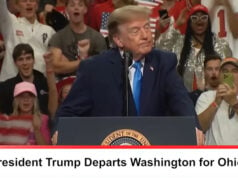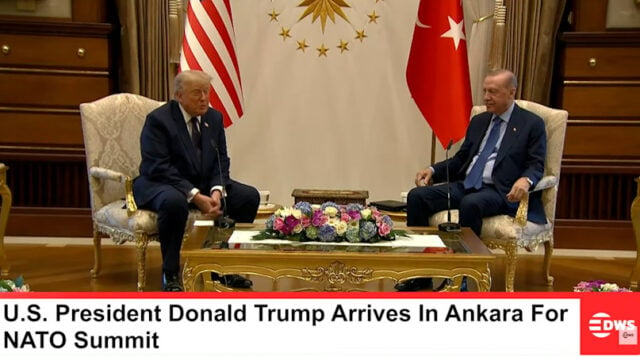
The annual NATO summit, convening in Ankara, Turkey, has instantly transformed into one of the most volatile diplomatic arenas in modern history. Rather than serving as a traditional display of Western solidarity, the July 2026 summit has spotlighted a fundamental fracturing of the transatlantic security paradigm. Driven by President Donald Trump’s transactional view of international relations and his “America First” doctrine, the meetings have forced the 32-member alliance to confront an uncomfortable reality: the era of unconditional U.S. security guarantees is rapidly drawing to a close.

From the moment his administration laid the groundwork for what Pentagon officials call “NATO 3.0,” Trump has made it clear that European defense must be led, financed, and sustained by Europe itself. This shift has triggered a scramble within the alliance to establish viable strategic alternatives, even as the U.S. President introduces highly disruptive bilateral deals—most notably a sudden reversal on advanced military sales to Turkey, an aggressive renewal of his campaign to acquire Greenland, and a dramatic re-engineering of Western policy toward the Russia-Ukraine war.
The Ukraine Crucible: Battlefield Successes Meet a Forced Peace
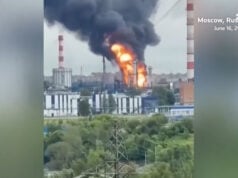
The most critical shadow hanging over Ankara is the ongoing war between Russia and Ukraine, now grinding through its fifth year. Ukrainian President Volodymyr Zelenskyy arrived at the summit in a significantly strengthened tactical position. Thanks to an aggressive deep-strike drone campaign, Kyiv has knocked out approximately 20% of Russia’s oil-refining capacity, triggering a severe domestic summer fuel crisis for Vladimir Putin and eliminating the illusion of a secure Russian strategic rear.
Despite these frontline gains, Ukraine remains critically vulnerable to Russian ballistic missile barrages, highlighted by a devastating strike on Kyiv on the eve of the summit that killed dozens of civilians. Zelenskyy used his historic keynote speech in Ankara to passionately argue for immediate NATO membership and the urgent supply of Patriot air defense systems.
┌────────────────────────────────────────────────────────────────────────┐
│                    THE ANKARA SUMMIT STRATEGIC SPLIT                   │
├────────────────────────────────────┬───────────────────────────────────┤
│         UKRAINE'S POSITION         │          TRUMP'S POSITION         │
├────────────────────────────────────┤├──────────────────────────────────┤
│ • Destroyed 20% of RU oil capacity ││ • Demands immediate ceasefire     │
│ • Intercepting >90% of Shahed UAVs ││ • Rejects active NATO membership  │
│ • Demands Patriot air defenses     ││ • Held pre-summit talks with Putin│
└────────────────────────────────────┘└──────────────────────────────────┘
However, President Trump has fundamentally shifted the diplomatic calculus. Following a 90-minute pre-summit phone call with Vladimir Putin and an upcoming high-stakes bilateral meeting with Zelenskyy in Ankara, Trump signaled his intention to force an immediate, unconditional ceasefire in place. Trump boldly told reporters, “I think we’re getting much closer to ending the war than people realize.”
While NATO allies plan to support a massive €70 billion ($80 billion) military aid package for 2026 to show long-term resolve, Trump’s focus on a negotiated settlement has sparked immense anxiety among Eastern European nations, who fear an early freeze could leave occupied territories permanently in Russian hands.
The F-35 Pivot: Rewarding Turkey, Rattling the Alliance
In a move that caught many European delegations off guard, President Trump used the summit’s opening day to fundamentally alter U.S. policy toward the host nation. Standing alongside Turkish President Recep Tayyip Erdogan, Trump announced that Washington would lift the punitive Countering America’s Adversaries Through Sanctions Act (CAATSA) sanctions imposed on Ankara in 2020. More provocatively, he expressed strong backing for restoring Turkey’s access to the fifth-generation F-35 stealth fighter jet program.
Turkey was unceremoniously removed from the F-35 consortium in 2019 after purchasing the Russian S-400 air defense system. Trump, however, signaled that personal chemistry and geopolitical loyalty outweighed past grievances.
“Turkey has been, in many ways, much more loyal than other countries that we think would be loyal,” Trump remarked. “It’s a great plane… and it’s certainly something we will consider.”
While the administration is exploring complex technical bypasses—such as transferring Turkey’s S-400 batteries to a neutral third country—the sudden policy reversal has drawn sharp, vocal opposition. Israeli Prime Minister Benjamin Netanyahu publicly warned that supplying Turkey with F-35s would dangerously upset the military balance of power in the Middle East, challenging the qualitative air superiority that Israel has long maintained.
The Battle for Greenland: Sovereignty vs. American Strategy
If the F-35 negotiations highlighted Trump’s willingness to reward friendly partners, his renewed rhetoric regarding Greenland exposed the deep diplomatic rifts separating Washington from traditional European allies. Trump re-ignited an international firestorm by insisting that the United States, rather than Denmark, should hold absolute control over the massive, resource-rich Arctic island.
The administration has increasingly framed the acquisition of Greenland as an absolute national security imperative. Trump and his defense advisors assert that Denmark lacks the military capability to defend the territory against aggressive Arctic encroachment by Russia and China, claiming the island is effectively being surrounded by foreign vessels.
European leaders have roundly condemned the rhetoric, pointing out that NATO is built on the sacred principle of respecting and defending member states’ existing territorial integrity. The Danish government has consistently maintained that Greenland is simply not for sale. Yet, Trump has escalated the stakes, previously leveraging threats of sweeping tariffs against European nations to force an asset negotiation, stating:
“That should be controlled by the United States, not by Denmark… We are going to do something on Greenland whether they like it or not.”
NATO 3.0: Seeking Alternatives to a Receding Superpower
Faced with an unpredictable American executive and concrete reductions in U.S. military commitments, NATO members are no longer treating American withdrawal as a hypothetical threat. They are actively planning for it.
The immediate catalyst for this strategic shift was a formal announcement from Washington outlining significant cuts to the military assets it provides to Europe during a security crisis. The reductions encompass aircraft carrier strike groups, submarines, fifth-generation fighter jets, and crucial aerial refueling planes.
This policy shift aims to implement “NATO 3.0″—a re-engineered alliance where Europe takes primary responsibility for its own continent’s defense against Kremlin aggression, allowing the U.S. military to reallocate its primary combat power toward other global theaters.
In response, European defense ministers are forcing a radical rethink of how the continent prepares for conflict. Rather than attempting to clone the capital-intensive American way of war, European states are exploring cheaper, highly scalable asymmetric alternatives:
- Mass Drone Integration: Expanding the deployment of long-range and medium-range unmanned aerial vehicles (UAVs) to offset the loss of U.S. tactical strike aircraft, modeled directly on Ukraine’s successful drone tactics against Russian infrastructure.
- Asymmetric Air Defense: Accelerated domestic development of low-cost anti-missile and anti-drone technologies to reduce reliance on scarce, expensive U.S. Patriot missile systems.
- Localized Production: Consolidating European defense industrial pipelines to manufacture standardized artillery and long-range rocket systems rapidly through joint defense production and licensing pacts.
While NATO Secretary General Mark Rutte has attempted to spin the transition positively—noting that European allies are rapidly increasing defense spending toward a new target of 3.5% to 5% of GDP—the structural gaps remain vast. As the Ankara summit demonstrates, Europe is sprinting to build a self-sufficient military apparatus before the American safety net is completely pulled away.
Sources and Links:
- TIME: “Zelensky Urges ‘Strong Decisions’ at NATO Summit After Russia Launches Another Deadly Attack on Kyiv”
- The Guardian: “Nato should let Ukraine join to ‘make all of us stronger’, says Zelenskyy”
- Kyiv Post: “Confident Zelensky Arrives at NATO Summit After Ukraine Regains Momentum”
- Just Security: “Will Trump Take the Win at NATO’s Ankara Summit?”
- RFE/RL: “Trump Heads To Ankara As NATO Faces Defining Tests From Ukraine To Middle East”
- Al Jazeera: “NATO summit begins in Turkiye’s Ankara: Who is attending, what is at stake?”
- Defense News: “US will lift sanctions on Turkey, possibly sell F-35 fighter jets, Trump says”
- The Indian Express: “Trump likely to back F-35 jets sale to Turkey despite Netanyahu’s power balance warning”
- UK House of Commons Library: “President Trump and Greenland: Frequently asked questions”
- PBS NewsHour: “Trump again demands Greenland as NATO unveils military projects worth billions to prove its firepower”
Disclaimer
Artificial Intelligence Disclosure & Legal Disclaimer
AI Content Policy.
To provide our readers with timely and comprehensive coverage, South Florida Reporter uses artificial intelligence (AI) to assist in producing certain articles and visual content.
Articles: AI may be used to assist in research, structural drafting, or data analysis. All AI-assisted text is reviewed and edited by our team to ensure accuracy and adherence to our editorial standards.
Images: Any imagery generated or significantly altered by AI is clearly marked with a disclaimer or watermark to distinguish it from traditional photography or editorial illustrations.
General Disclaimer
The information contained in South Florida Reporter is for general information purposes only.
South Florida Reporter assumes no responsibility for errors or omissions in the contents of the Service. In no event shall South Florida Reporter be liable for any special, direct, indirect, consequential, or incidental damages or any damages whatsoever, whether in an action of contract, negligence or other tort, arising out of or in connection with the use of the Service or the contents of the Service.
The Company reserves the right to make additions, deletions, or modifications to the contents of the Service at any time without prior notice. The Company does not warrant that the Service is free of viruses or other harmful components.