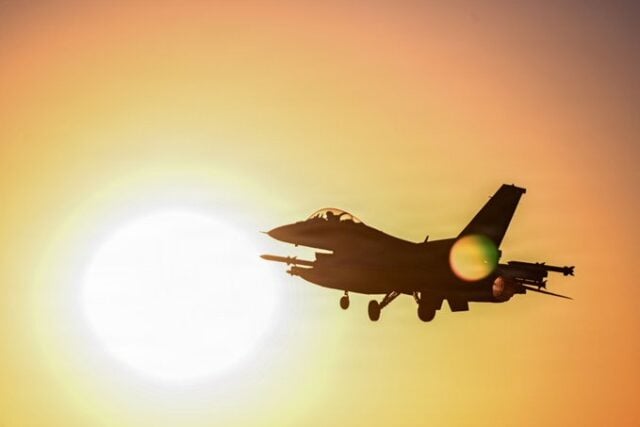
The situation in the Middle East just took a chaotic turn over the weekend. On Saturday, the United States and Iran traded intense military strikes, effectively obliterating any remaining hope for the recent ceasefire. U.S. Central Command forces launched fresh waves of precision attacks targeting Iranian coastal radar networks, air defense hubs, and missile storage facilities along the Gulf. Iran immediately retaliated, launching heavy missile and drone salvos against merchant shipping channels and regional military installations. This rapid, explosive Saturday exchange has pushed both nations into a dangerous state of open warfare, transforming a tense standoff into a burning international crisis.
BREAKING: The U.S. and Iran have entered a new phase of direct confrontation.
Iran’s IRGC announced the complete closure of the Strait of Hormuz, declaring that no vessel will be allowed to transit until the United States ends its military interference in the region. The IRGC… pic.twitter.com/f3JNUmuFcX
— The Hormuz Report (@HormuzReport) July 12, 2026
🚨 BREAKING:
Iran: “The Strait of Hormuz belongs to Iran. We will never lose it.”
Iran wins.. the U.S. loses. pic.twitter.com/mCmqxJgGg5
— IRGC NEWS (@IRGC_IRAN_News) July 11, 2026
Right at the center of this weekend explosion is the ultimate economic bottleneck: the Strait of Hormuz. Following the latest clashes, Tehran took the extreme step of declaring the vital waterway closed until further notice. Iranian officials explicitly stated that they fully control the Strait of Hormuz, bluntly warning the United Nations and Western allies that their sovereignty over the shipping lane is completely non-negotiable. They claim no international vessel can pass without direct permission from Tehran, essentially threatening to cut off a fifth of the entire planet’s energy supply.

As if the threat of a global trade blockade weren’t enough, the rhetoric has turned incredibly personal and dark. Iranian state channels openly renewed their explicit vows to target and assassinate Donald Trump in retaliation for the ongoing conflict. Trump’s counter-response was characteristically aggressive and immediate. He issued a blunt ultimatum demanding that Iran publicly keep the waterway open to international commerce “or else.” Pushing the stakes even higher, Trump publicly boasted that thousands of highly advanced American missiles are currently locked and loaded, aimed directly at Iran’s defense systems and ready to fire if Tehran continues its aggressive stance.
While military generals shuffle their battle plans, everyday people are getting hit by a bizarre economic paradox. If you have been to a gas station over the last few days, you have probably noticed that fuel costs are getting painful. What makes no sense on the surface is that global crude oil prices have actually dropped significantly, sliding toward $70 per barrel due to weaker global demand and steady domestic production outside the Middle East.
Normally, cheap crude oil means cheap gasoline. But right now, the system is totally broken.
Because the Saturday attacks have choked off the Strait of Hormuz, shipping companies are facing massive insurance premiums and are forced to reroute their tankers entirely around the continent of Africa. This massive logistical nightmare means that even though raw oil is cheap to buy, the actual cost to refine it and safely deliver it to your local neighborhood station has skyrocketed. As a result, gas prices continue climbing higher by the day, leaving drivers to pay the price for a war happening thousands of miles away.
Sources and Links:
- Al-Monitor: Iran declares Strait of Hormuz closed as ‘unauthorised’ vessel hit
- The Guardian: US launches strikes on Iran for a second day after Trump says agreement to end the war is ‘over’
- The Guardian: Europe considering proposals to allow navigation fees in strait of Hormuz
- U.S. Central Command: U.S. Forces Complete Another Round of Strikes Against Iran
- UN News: US-Iran war leaves shipping at near-standstill in Hormuz again
Disclaimer
Artificial Intelligence Disclosure & Legal Disclaimer
AI Content Policy.
To provide our readers with timely and comprehensive coverage, South Florida Reporter uses artificial intelligence (AI) to assist in producing certain articles and visual content.
Articles: AI may be used to assist in research, structural drafting, or data analysis. All AI-assisted text is reviewed and edited by our team to ensure accuracy and adherence to our editorial standards.
Images: Any imagery generated or significantly altered by AI is clearly marked with a disclaimer or watermark to distinguish it from traditional photography or editorial illustrations.
General Disclaimer
The information contained in South Florida Reporter is for general information purposes only.
South Florida Reporter assumes no responsibility for errors or omissions in the contents of the Service. In no event shall South Florida Reporter be liable for any special, direct, indirect, consequential, or incidental damages or any damages whatsoever, whether in an action of contract, negligence or other tort, arising out of or in connection with the use of the Service or the contents of the Service.
The Company reserves the right to make additions, deletions, or modifications to the contents of the Service at any time without prior notice. The Company does not warrant that the Service is free of viruses or other harmful components.