Escalation in the Strait
The Persian Gulf has plunged back into severe instability following a rapid succession of military escalations that threaten critical global energy corridors. The United States has officially reinstated its comprehensive naval blockade against Iran, effective Tuesday, July 14, 2026, at 4:00 p.m. Eastern Time. The directive follows reports from the United Arab Emirates Ministry of Defense that Iranian forces fired cruise missiles at commercial vessels transiting the strategic Strait of Hormuz, resulting in multiple casualties. The twin crises have shattered a short-lived peace accord, sending shockwaves through global commodities markets, spiking crude oil futures, and triggering an immediate downturn across international financial exchanges.
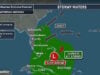
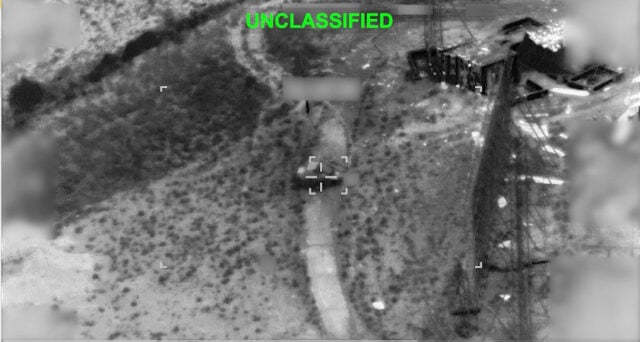
U.S. Central Command (CENTCOM) completed the latest wave of strikes against Iran at 10:15 p.m. ET on July 13.
BREAKING 🔴
U.S. military:
“TAMPA, Fla. — U.S. Central Command (CENTCOM) completed the latest wave of strikes against Iran at 10:15 p.m. ET on July 13.
During the five-hour mission, U.S. forces successfully struck military targets across Iran including Bushehr, Chah Bahar,… pic.twitter.com/l5pNctuT39
— Open Source Intel (@Osint613) July 14, 2026
According to official communiqués issued by the UAE military, two UAE-flagged oil tankers, the Mombasa and the Bahia, were targeted by Iranian cruise missiles while navigating the southern passage of the Strait of Hormuz within Omani territorial waters. The UAE Ministry of Defense confirmed that the precision strikes ignited intense fires on both vessels and caused heavy structural damage. Tragically, the attack resulted in the death of an Indian crew member aboard the Mombasa, while eight other mariners sustained injuries. The UAE government fiercely condemned the actions as a flagrant breach of international law, declaring that the state reserves its full right to respond to this dangerous escalation to safeguard its territory and national interests.

Flashpoint at Sea
Tehran has moved to aggressively assert its authority over the maritime chokepoint. Iran’s Islamic Revolutionary Guard Corps (IRGC), speaking through the state-linked Tasnim News Agency, claimed responsibility for disabling what it characterized as offending supertankers. The IRGC explicitly asserted that the commercial vessels were acting under direct American influence, alleging they had deactivated their navigation systems and diverted onto unauthorized shipping lanes through Omani waters. Furthermore, Iranian state television broadcaster IRIB cited military sources declaring the Strait of Hormuz closed, warning that any Western military intervention or U.S. retaliation would be met with an immediate, overwhelming response against regional targets.
The renewed American blockade marks the second major naval interdiction campaign launched by Washington this year, following an initial blockade that ran from April 13 to June 18, 2026. U.S. Central Command (CENTCOM), operating from Florida, announced that forces will rigorously enforce restrictions against maritime traffic entering or exiting Iranian ports and coastal zones. However, the military enforcement has been accompanied by a controversial policy shift from President Donald Trump, who announced via social media that the U.S. intends to assess a 20 percent protection fee or transit toll on commercial shipping utilizing the waterway to offset security expenditures. While Iran’s Foreign Minister Abbas Araghchi sarcastically welcomed the premise of tolls to validate Tehran’s own historical claims as the guardian of the strait, the United Nations’ International Maritime Organization (IMO) quickly issued a formal rejection, stating there is no legal basis to levy mandatory tolls within international waterways.
Shockwaves Through Commodities
The sudden closure of the strait and the enforcement of the naval blockade have triggered immediate volatility in the global energy sector. The Strait of Hormuz serves as the world’s most critical maritime oil artery, handling approximately one-fifth of global crude oil and natural gas consumption before the conflict. News of the deadly strikes caused Brent crude and WTI futures to jump significantly, reversing a brief period of stabilization where prices had dropped from their wartime peaks of $120 per barrel. Prominent global energy analysts warn that if the blockade persists and shipping lanes remain contested, global retail gas prices will inevitably spike at the pump, placing renewed inflationary pressures on Western economies that are already highly vulnerable to prolonged supply chain disruptions.
Global Market Consequences
Global financial markets reacted with immediate risk aversion as news of the conflict spread. Major benchmark stock indices across New York, London, and Tokyo experienced sharp pullbacks as investors fled equities in favor of safe-haven assets. The U.S. dollar strengthened against a basket of major currencies, while gold prices surged toward historic highs. Simultaneously, maritime insurance syndicates drastically increased war-risk premiums for any commercial vessels operating within the Persian Gulf and Gulf of Oman, effectively stalling standard commercial transit. Companies relying on Middle Eastern petroleum products face soaring freight costs and logistical gridlocks, compounding fears of a broader stagflationary shock to the global economy. Institutional investors are actively repositioning portfolios, moving capital out of cyclical sectors and scaling back growth expectations for the fiscal quarter.
Fragile Geopolitical Outlook
The security situation remains highly fluid as geopolitical actors scramble to contain the widening fallout. U.S. Secretary of State Marco Rubio previously emphasized that Washington would not tolerate Iranian attempts to restrict or monetize international waters, yet the addition of American-imposed tolls has complicated diplomatic relations with long-standing regional Gulf allies. With CENTCOM executing intensive pre-emptive airstrikes against dozens of Iranian radar sites, air defense units, and missile launch facilities, the risk of an uncontained regional conflagration is higher than it has been in months. Commercial mariners have been strictly advised by maritime watchdogs to monitor emergency broadcasts and maintain constant bridge-to-bridge communication on channel 16 as the world watches the escalating battle for control over the planet’s most vital energy corridor. Maritime security agencies warn that shipping schedules will face severe delays well into the coming weeks.
Sources and Links:
- U.S. Central Command (CENTCOM): U.S. Forces to Resume Naval Blockade Against Iran
- PBS NewsHour: U.S. begins new Iran strikes after Trump says ships will be charged to use the Strait of Hormuz
- Gulf News: US launches fresh strikes on Iran; UAE says two ships attacked in Strait of Hormuz
- Times of India: One Indian crew member killed, 6 injured after Iran strikes UAE tankers in Strait of Hormuz
- The Washington Post: Iran launches attacks on Gulf states amid heaviest U.S. strikes in months
- Wikipedia: 2026 United States naval blockade of Iran
Disclaimer
Artificial Intelligence Disclosure & Legal Disclaimer
AI Content Policy.
To provide our readers with timely and comprehensive coverage, South Florida Reporter uses artificial intelligence (AI) to assist in producing certain articles and visual content.
Articles: AI may be used to assist in research, structural drafting, or data analysis. All AI-assisted text is reviewed and edited by our team to ensure accuracy and adherence to our editorial standards.
Images: Any imagery generated or significantly altered by AI is clearly marked with a disclaimer or watermark to distinguish it from traditional photography or editorial illustrations.
General Disclaimer
The information contained in South Florida Reporter is for general information purposes only.
South Florida Reporter assumes no responsibility for errors or omissions in the contents of the Service. In no event shall South Florida Reporter be liable for any special, direct, indirect, consequential, or incidental damages or any damages whatsoever, whether in an action of contract, negligence or other tort, arising out of or in connection with the use of the Service or the contents of the Service.
The Company reserves the right to make additions, deletions, or modifications to the contents of the Service at any time without prior notice. The Company does not warrant that the Service is free of viruses or other harmful components.