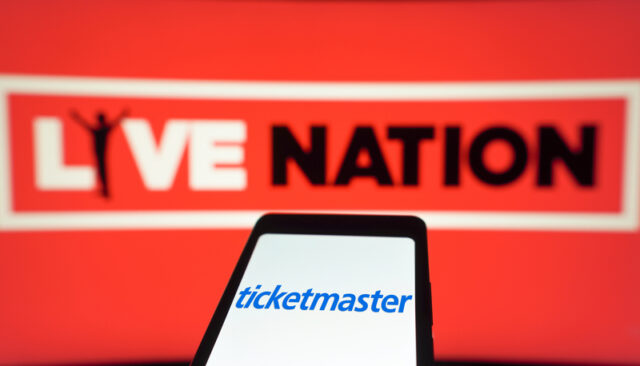
In a decision that sent shockwaves through the multibillion-dollar live entertainment world, a Manhattan federal jury ruled today, April 15, 2026, that Live Nation Entertainment and its subsidiary Ticketmaster have operated as an illegal monopoly. After a grueling five-week trial and four days of intense deliberation, the nine-member jury reached a unanimous verdict, finding that the companies systematically smothered competition, retaliated against rivals, and overcharged millions of American concertgoers.
The ruling marks the most significant antitrust victory against a major American corporation in decades. It signals a potential end to the “vertically integrated” era of live music, where a single entity controlled the artists, the venues, the promotion, and the primary ticketing marketplace. For fans who have spent years frustrated by escalating fees and “dynamic pricing,” this verdict offers the first tangible hope of structural change.
The Verdict Breakdown
The jury, sitting in the U.S. District Court for the Southern District of New York, ruled in favor of a bipartisan coalition of 34 state attorneys general. The verdict was a “clean sweep” for the prosecution, finding Live Nation and Ticketmaster liable on several key counts of violating the Sherman Antitrust Act:
- Monopolization of Ticketing Services: The jury found that Ticketmaster maintained an illegal monopoly over primary ticketing services for major concert venues.
- Amphitheater Dominance: Jurors agreed that Live Nation held a monopoly over the market for large amphitheaters—those vital outdoor summer venues that are essential for major touring artists.
- Unlawful Tying: Perhaps most critically, the jury found that Live Nation illegally “tied” its venue dominance to its promotion services. In practice, this meant that artists wishing to play at Live Nation-owned amphitheaters were effectively forced to use Live Nation as their promoter and Ticketmaster as their ticketing platform.
- Consumer Harm: The jury found that these practices directly led to higher prices, concluding that fans were overcharged by an average of $1.72 per ticket across 257 major venues over the last five years.
While the $1.72 figure may sound modest per transaction, it represents hundreds of millions of dollars in damages when scaled across the company’s massive volume. Under federal antitrust law, these damages are automatically tripled—a legal concept known as “treble damages”—meaning Live Nation could face a payout exceeding $450 million in the coming months.

A “Backstage Pass” to Corporate Conduct
The trial provided what many observers called a “backstage pass” to the inner workings of the entertainment giant. Throughout the proceedings, the states’ legal team, led by attorney Jeffrey Kessler, painted a picture of a company that functioned as a “monopolistic bully.”
One of the most damaging moments for the defense came during the presentation of internal emails from Live Nation executives. In one particularly inflammatory exchange, executive Benjamin Baker described certain ticket prices as “outrageous” and referred to customers as “so stupid,” boasting that the company was “robbing them blind, baby.”
Though Baker later testified that these messages were “immature and unacceptable,” the jury clearly viewed them as a window into a corporate culture that prioritized market dominance over consumer fairness.
The Legal Schism: States vs. The DOJ
The path to this verdict was unusual and politically charged. In 2024, the U.S. Department of Justice (DOJ) joined dozens of states to file the original lawsuit. However, just days into the trial in March 2026, the DOJ—operating under a different administration’s oversight—suddenly announced it had reached a $280 million settlement with Live Nation.
The federal settlement would have required Live Nation to open some amphitheaters to other promoters and stop certain tying practices, but it notably did not require the company to spin off Ticketmaster.
A coalition of 33 state attorneys general, including California’s Rob Bonta and Pennsylvania’s Dave Sunday, took the bold step of rejecting the federal settlement. They argued that the DOJ’s deal was “wholly inadequate” and failed to address the core structural issues of the monopoly. By pressing forward to a jury trial, the states took a massive legal risk that paid off today.
“The verdict is in!” California Attorney General Rob Bonta said in a statement following the ruling. “In the face of dwindling antitrust enforcement by the federal government, this verdict shows just how far states can go to protect our residents from big corporations that are using their power to illegally rip off Americans.”
The Long Shadow of the 2010 Merger
To understand the magnitude of today’s ruling, one must look back to 2010, when the Obama-era DOJ allowed Live Nation (the world’s largest promoter) to merge with Ticketmaster (the world’s largest ticketing company). At the time, critics warned that the merger would create an unbeatable juggernaut.
The DOJ allowed the deal to proceed under a “consent decree” that prohibited Live Nation from retaliating against venues that used other ticket sellers. However, for 15 years, venues and rival promoters argued that the decree was toothless. Venues feared that if they didn’t use Ticketmaster, Live Nation would simply stop sending its superstar artists to their stages. Today’s jury verdict effectively confirms that those fears were rooted in illegal reality.
The Future: A Possible Breakup?
While the jury has decided on liability and the rate of overcharges, the “remedies phase” of the trial still looms. The judge in the case will now hold a separate bench trial to determine what actions Live Nation must take to restore competition.
The states have been vocal about their desired outcome: the forced divestiture of Ticketmaster. If the judge orders a breakup, it would be the most significant corporate dissolution since the 1982 breakup of the Bell System (AT&T).
Live Nation, for its part, has already announced its intention to appeal. In a post-verdict statement, the company insisted that its market share results from “excellence and effort” rather than illegal tactics. “Success is not against the antitrust laws,” the company stated, echoing the closing arguments of its defense attorney, David Marriott.
Industry Impact and the Fan Experience
For the music industry, the implications are profound. If Live Nation is forced to unbundle its services:
- Venues may finally feel free to use competing ticketing platforms like SeatGeek or AXS without fear of losing major tours.
- Independent Promoters could gain access to major amphitheaters that have been effectively “locked up” by Live Nation for years.
- Artists might find more leverage in negotiating their tours when the promoter and the venue owner aren’t the same corporate entity.
For the average fan, the immediate impact may be a period of legal appeals, but the long-term hope is for a more transparent ticketing marketplace where “junk fees” are minimized and competition drives down the cost of seeing a live show.
Sources Used and Links:
- The Guardian: Live Nation and Ticketmaster had monopoly over big venues, US jury finds
- Courthouse News Service: Jury finds Live Nation, Ticketmaster committed antitrust violations
- California Attorney General’s Office: Attorney General Bonta Celebrates Historic Verdict in Live Nation/Ticketmaster Trial
- District of Columbia Office of the Attorney General: Attorney General Schwalb Issues Statement Following Win in Live Nation Antitrust Lawsuit
- New Hampshire Department of Justice: Live Nation and Ticketmaster Antitrust Verdict
- PBS News: Ticketmaster and Live Nation had monopoly over big concert venues, jury finds
- Pennsylvania Office of Attorney General: VERDICT: AG Sunday Announces Federal Jury Finds Live Nation/Ticketmaster Operated Monopoly Over Live Entertainment Industry
Disclaimer
Artificial Intelligence Disclosure & Legal Disclaimer
AI Content Policy.
To provide our readers with timely and comprehensive coverage, South Florida Reporter uses artificial intelligence (AI) to assist in producing certain articles and visual content.
Articles: AI may be used to assist in research, structural drafting, or data analysis. All AI-assisted text is reviewed and edited by our team to ensure accuracy and adherence to our editorial standards.
Images: Any imagery generated or significantly altered by AI is clearly marked with a disclaimer or watermark to distinguish it from traditional photography or editorial illustrations.
General Disclaimer
The information contained in South Florida Reporter is for general information purposes only.
South Florida Reporter assumes no responsibility for errors or omissions in the contents of the Service. In no event shall South Florida Reporter be liable for any special, direct, indirect, consequential, or incidental damages or any damages whatsoever, whether in an action of contract, negligence or other tort, arising out of or in connection with the use of the Service or the contents of the Service.
The Company reserves the right to make additions, deletions, or modifications to the contents of the Service at any time without prior notice. The Company does not warrant that the Service is free of viruses or other harmful components.