
In the financial world, discussions often pit active management against passive indexing as if they are fundamentally incompatible philosophies. Investors are frequently told they must choose a side: either opt for the predictable, market-matching returns of an index fund or pay a premium to an active manager in the hopes of beating the market. However, this fierce debate often overlooks a foundational truth that governs all investment outcomes. According to insights from Vanguard, the real battleground isn’t active versus passive, nor is it stocks versus bonds. Instead, the ultimate arbiter of investment success is cost.
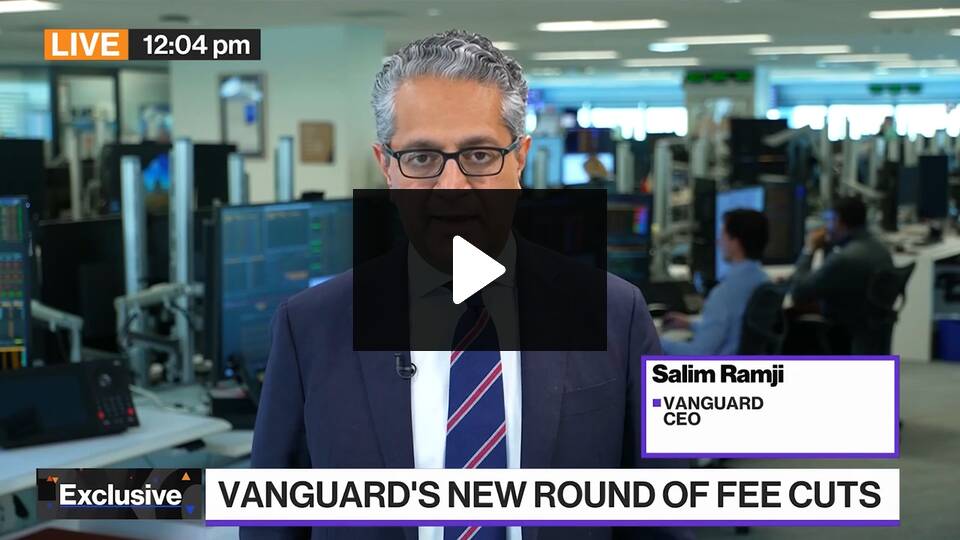
Active, passive, stocks or bonds—costs still matter | Vanguard
When evaluating how to build a portfolio, the impact of expense ratios and management fees can seem negligible on a year-to-year basis. A fraction of a percentage point here or there appears minor in the context of double-digit market swings. Yet, over a multi-decade investing horizon, these seemingly trivial costs compound into massive sums that are drained directly from an investor’s total returns. Vanguard, a pioneer in low-cost investing, has long argued that keeping costs at an absolute minimum is the single most reliable way to improve long-term investment performance. This philosophy applies universally across all product lines, asset classes, and management styles.

The Universality of the Cost Advantage
The structural advantage of low fees is most commonly associated with passive index funds. By design, an index fund seeks to track the performance of a specific market benchmark, such as the S&P 500 or a total bond market index. Because these funds do not require an extensive team of research analysts to hand-pick individual securities, their administrative and operational overhead is low. When an index fund charges a rock-bottom expense ratio, it ensures that investors capture virtually the entire return of the underlying market. This straightforward formula revolutionized retail investing and fueled the explosive growth of index tracking over the past several decades.
However, the cost advantage is by no means exclusive to indexing. Vanguard emphasizes that low costs give active managers a substantial, often decisive, edge over their higher-cost peers. In an active fund, the portfolio manager’s goal is to outperform a benchmark by making tactical asset allocations and selecting specific securities. If an active manager operates a fund with a high expense ratio, they start every year at a distinct disadvantage. They must not only beat the market index, but they must also outperform it by a wide enough margin to cover their steep management fees before their clients see a single dollar of alpha.
By reducing the fee hurdle, low-cost active management alters this dynamic entirely. When an active fund features a minimal expense ratio, the manager has a much lower barrier to overcome to achieve net outperformance. This means that a significant portion of the manager’s skill is directly translated into realized gains for the investor, rather than being consumed by institutional overhead. Vanguard’s operational structure, which offers both active and index funds under a low-cost mandate, serves as a real-world case study for this principle. Low fees do not dilute the value of active management; rather, they unlock its true potential.
Lower Fees and Disciplined Risk Management
Beyond the mathematical certainty of keeping more of what you earn, low fees fundamentally alter the behavioral incentives and risk dynamics for portfolio managers. This effect is particularly pronounced in fixed income markets, such as active bond funds, where the expected range of historical returns is narrower than that of equities. In a lower-yielding environment, every single basis point matters immensely.
When an active fixed income manager is burdened with a high expense ratio, they face immense structural pressure to generate outsized returns just to break even with a benchmark. To overcome a high fee hurdle, the manager is often forced to take on excessive, potentially dangerous risks. They might aggressively extend the portfolio’s duration, exposing investors to severe interest rate risk if macroeconomic conditions shift. Alternatively, they might dip lower into the credit quality spectrum, loading the fund with high-yield or speculative-grade corporate bonds that carry a heightened risk of default. In essence, high fees force managers to chase returns, abandoning disciplined risk management in a frantic effort to justify their cost.
In stark contrast, a low fee hurdle empowers an active manager to make highly disciplined, measured decisions. With a minimal expense ratio, the manager does not need to take reckless gambles on credit or interest rates to post competitive net numbers. They can afford to be patient, defensive, and precise. If macroeconomic indicators suggest that credit markets are overvalued, a low-cost manager can safely position the portfolio conservatively, secure in the knowledge that their low fees will keep them competitive with the peer group. Vanguard notes that this operational freedom is exactly how their active fixed income teams operate. By charging an asset-weighted average expense ratio of just 0.11% (11 basis points) for their active bond funds as of year-end 2025, Vanguard eliminates the structural pressure to chase yield.
The empirical data strongly validates this approach. For the ten-year period ending December 31, 2025, an impressive 88% (42 of 48) of Vanguard’s active bond funds outperformed their peer group averages. Looking at the ten-year period ending March 31, 2026, the outperformance remained dominant, with 83% (43 of 52) of those active bond funds beating their peers. These figures demonstrate that long-term outperformance in active fixed income is not an accidental byproduct of luck or reckless risk-taking. It is the direct consequence of a structural fee advantage that allows management teams to execute their strategies with unwavering discipline.
The Enduring Legacy of John Bogle
The philosophical anchor of this low-cost approach dates back to the very founding of Vanguard by John C. Bogle. Bogle transformed the financial services industry by challenging the prevailing wisdom that high fees equated to premium quality. He famously summarized his investment philosophy with a timeless maxim: “In investing, you get what you don’t pay for.”
In almost every other consumer marketplace, paying a premium price usually guarantees a superior product or a higher level of service. A luxury vehicle, a high-end appliance, or a specialized medical consultation costs more because it utilizes superior materials or requires rare expertise. In the world of finance, however, this logic is completely inverted. The financial markets function as a zero-sum game before costs are deducted. The aggregate return achieved by all investors combined will always equal the market’s total return. Once transaction costs, advisory fees, and fund expense ratios are factored into the equation, the aggregate return of all investors must inevitably underperform the market by the exact amount of those costs.
Therefore, every dollar an investor pays to a fund management company is a dollar that is permanently removed from the compounding machine of their portfolio. Bogle realized that minimizing these frictional costs was the most predictable, repeatable variable under an investor’s control. While no one can control the direction of the stock market, the trajectory of inflation, or the shifting policies of central banks, every investor can control the fees they choose to pay.
This core belief continues to dictate corporate strategy at Vanguard. The firm’s unique, client-owned structure means that it does not have outside stockholders to satisfy. Instead, profits are returned to the fund investors themselves in the form of lower expense ratios. The firm’s ongoing series of fee cuts—including substantial cost reductions enacted throughout 2025 and into 2026—is a deliberate continuation of Bogle’s vision.
Reframing the Active-Passive Debate
For decades, the financial media has framed the choice between active and passive investing as a binary, ideological conflict. This framing encourages investors to fixate on complex manager selection strategies or macroeconomic forecasting, while ignoring the silent drain of high fees. Vanguard’s research and real-world performance data suggest that this traditional debate asks the wrong question. The primary differentiator between successful and unsuccessful portfolios isn’t whether the funds are actively managed or passively indexed; it is the cost of admission.
When investors shift their focus toward minimizing expense ratios, the false dichotomy between active and passive dissolves. An investor can confidently construct a diversified portfolio that utilizes low-cost index funds to capture broad equity market returns, while simultaneously employing low-cost active funds in fixed income or specialized equity sectors where professional management can add distinct value. In both cases, the underlying driver of success remains identical: keeping expenses low so that a larger share of market returns remains in the investor’s account to compound over time.
As the investment landscape grows increasingly complex with the introduction of niche financial products, alternative asset classes, and high-fee specialized vehicles, the fundamental principle of cost matters more than ever. Whether an investor prefers stocks or bonds, active strategies or passive tracking, the historical data remains clear. The ultimate predictor of long-term investment performance is cost. By embracing the simple truth that you get what you don’t pay for, investors can cut through the noise of Wall Street, mitigate unnecessary portfolio risks, and maximize their long-term financial security.
Sources Used:
- Vanguard Corporate Insight Article: Active, passive, stocks or bonds—costs still matter
Disclaimer
Artificial Intelligence Disclosure & Legal Disclaimer
AI Content Policy.
To provide our readers with timely and comprehensive coverage, South Florida Reporter uses artificial intelligence (AI) to assist in producing certain articles and visual content.
Articles: AI may be used to assist in research, structural drafting, or data analysis. All AI-assisted text is reviewed and edited by our team to ensure accuracy and adherence to our editorial standards.
Images: Any imagery generated or significantly altered by AI is clearly marked with a disclaimer or watermark to distinguish it from traditional photography or editorial illustrations.
General Disclaimer
The information contained in South Florida Reporter is for general information purposes only.
South Florida Reporter assumes no responsibility for errors or omissions in the contents of the Service. In no event shall South Florida Reporter be liable for any special, direct, indirect, consequential, or incidental damages or any damages whatsoever, whether in an action of contract, negligence or other tort, arising out of or in connection with the use of the Service or the contents of the Service.
The Company reserves the right to make additions, deletions, or modifications to the contents of the Service at any time without prior notice. The Company does not warrant that the Service is free of viruses or other harmful components.