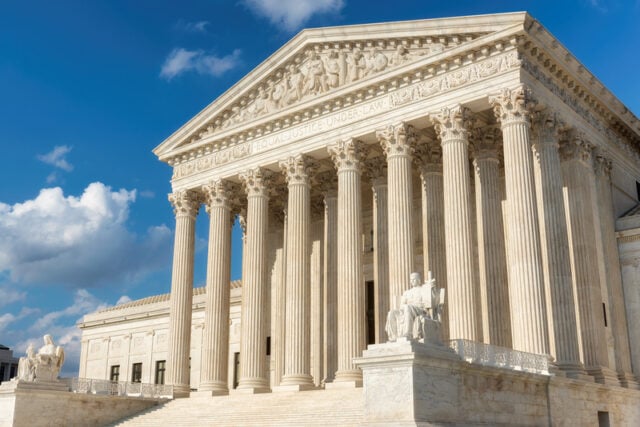
It was an absolute whirlwind of a morning in Washington. The Supreme Court finished its term with a massive bang today. Justices tackled two of the most heated cultural debates in America. They ruled on birthright citizenship and transgender school sports. These decisions will reshape our national legal landscape for decades. Both rulings landed on Tuesday morning, June 30, 2026. The high court showed a fascinating mix of legal philosophies. They did not simply side with one political party. Instead, they split their focus across two historic issues.
Let’s look at the first case closely. This one centers on who gets to be an American. President Donald Trump tried to end birthright citizenship via executive order. He signed that order on his first day back in the office. The high court flatly rejected his sweeping move today.
The Battle for the Fourteenth Amendment
Let’s break down the citizenship numbers first. The Supreme Court voted 6-3 to protect birthright citizenship. It was a decisive defeat for the White House immigration policy. The case brought intense national focus to the courtroom. The administration wanted to limit automatic citizenship rights. They targeted children born to undocumented or temporary immigrants. Trump argued the government misunderstood the rules for over a century. He wanted a narrower reading of our founding laws.
But the justices simply were not buying that logic. The majority relied on a long-settled legal understanding. They pointed directly to the Fourteenth Amendment of the Constitution. This amendment was ratified way back in 1868. It declares that all persons born here are citizens. The key phrase is “subject to the jurisdiction thereof.” The White House claimed this phrase excluded undocumented families. They claimed non-citizens are not fully under American jurisdiction.

The court rejected that argument completely. They leaned heavily on a famous legal precedent. That precedent is United States v. Wong Kim Ark. That landmark case was decided in 1898. It established the broad concept of jus soli (the right of the soil). It means being born on U.S. soil makes you a citizen. The court reaffirmed that baseline rule today. They stated that exceptions are incredibly rare. Children of foreign diplomats do not get automatic citizenship. Neither do children of foreign invading armies. But almost everyone else born here does.
This ruling brings huge relief to millions of immigrant families. Lower courts had already blocked Trump’s order. It never actually took effect anywhere in the country. Still, the final SCOTUS ruling provides permanent legal clarity. The conservative-majority court chose to respect long-standing legal precedent. They refused to expand presidential power in this instance. It shows the court has clear limits on executive authority.
The courtroom arguments back in April were highly dramatic. President Trump actually attended the oral arguments in person. This was an unprecedented move for a sitting president. Both conservative and liberal justices questioned his team sharply during that session. They raised deep doubts about changing a century of immigration law with a pen stroke. Today, those doubts turned into a binding legal reality. The court made it clear that changing citizenship requires a constitutional amendment. A simple executive order will never suffice.
The Court Draws a Line on Transgender Sports
Now let’s flip the coin to the day’s other massive ruling. The atmosphere shifted quickly as the next decision dropped. The Supreme Court took a very different path on transgender rights. They ruled on whether states can ban transgender athletes from female sports. The justices voted 6-3 to uphold these state bans.
This ruling is a major blow to the LGBTQ+ community. It marks another significant setback in federal court. The decision directly impacts laws in Idaho and West Virginia. But it echoes far beyond those two states. At least 25 other states have very similar restrictions. This ruling effectively greenlights all of them.
The high court looked at two specific student cases. One was brought by a teen named Becky Pepper-Jackson. She is a fifteen-year-old runner from West Virginia. The other involved a college student named Lindsay Hecox. She attends Boise State University in Idaho. Both students sued after being barred from competing. They argued the state bans violated their civil rights. They pointed to the Fourteenth Amendment’s equal protection clause. They also claimed the bans violated Title IX rules. Title IX is the federal law banning sex discrimination in schools.
Lower courts had originally sided with the students. The Fourth and Ninth Circuits blocked the bans. But the Supreme Court has now overturned those decisions. The conservative majority decided that biological sex is what matters most here.
Inside Kavanaugh’s Majority Opinion
Justice Brett Kavanaugh wrote the majority opinion for the court. He brought a unique personal perspective to the text. Kavanaugh has coached girls’ youth basketball teams for many years. He argued that biological sex provides specific athletic advantages. He wrote that male puberty creates irreversible physical differences. Because of this, the majority found the bans legal. They ruled the laws do not violate equal protection.
Kavanaugh explained that courts should not manage sports rules. He wrote that judges are not sports experts. Instead, he pointed to local elected leaders. He said state legislatures are better equipped for this task. They can weigh fairness and science much better than judges. Under the Constitution, lawmakers have the right to set these lines. The court used a standard called intermediate scrutiny. They found that protecting female sports is an important state goal. Therefore, the bans are a rational way to achieve that goal.
The three liberal justices strongly disagreed with this view. Sonia Sotomayor, Elena Kagan, and Ketanji Brown Jackson dissented. They argued the bans create clear sex-based discrimination. They said the laws target a vulnerable group of kids. The dissenters believe the Constitution should protect these students. They feel the ruling leaves transgender youth isolated and excluded. They stated that sports provide vital social connections for children. Forcing trans kids out of teams causes genuine emotional harm.
A Growing String of Legal Setbacks
This athletics ruling fits into a much larger political pattern. President Trump has campaigned heavily against transgender rights. He focused on this topic during the 2024 election. His administration has also limited gender-neutral pronouns on federal documents. Today’s ruling gives his movement a massive legal victory.
It also continues a trend at the high court. The justices have consistently limited transgender protections recently. Last year, they upheld bans on gender transition care for minors. Earlier this year, they ruled on conversion therapy and school policies. The court is steadily shifting authority back to conservative states.
Public opinion on this issue remains highly divided. Many athletic associations praise the decision today. They believe it protects the integrity of women’s categories. They argue that fair competition is impossible without clear biological boundaries. On the other side, human rights groups express profound grief. They worry about the mental health of transgender youth. They argue that inclusion matters more than physical differences.
The Nuance of a Divided Term
Yet, today’s twin rulings show a complex court. The justices are not operating as a simple rubber stamp. They checked the president’s power on immigration and citizenship. But they supported state power on sports and gender identity. It is a nuanced balancing act by Chief Justice John Roberts and his colleagues. They preserved the historic definition of American citizenship. At the same time, they altered the future of American sports.
Legal experts will dissect these words for years to come. School boards must now rewrite their athletic handbooks immediately. Immigrant advocacy groups are celebrating a hard-fought win. Meanwhile, LGBTQ+ organizations are planning their next legal steps. It is a historic Tuesday that redefines rights across the nation. Both sides of the political aisle have something to process today. The Supreme Court has officially left its mark on 2026.
Let’s look closer at the ripple effects of the birthright ruling. The decision protects millions of children born to immigrant parents. It means their American passports remain completely secure. Business groups also welcomed the citizenship decision. A stable workforce depends on clear legal status for workers. Stripping citizenship would have created massive economic chaos. It would have triggered countless workplace verification nightmares. The court chose stability over radical policy shifts.
The sports ruling will have an opposite effect. It will trigger immediate changes in dozens of states. Schools will now enforce strict birth certificate requirements for athletes. Some states may even implement genetic testing policies. Parents of cisgender female athletes feel a sense of relief. They believe their daughters now have a fair playing field. They feel their hard work will be rewarded properly.
Transgender advocates vow to keep fighting. They will shift their focus to local school policies. They will look for alternative ways to support trans youth. Some suggest creating open categories for all athletes. This could allow everyone to play without separating by sex. But implementing open categories will take considerable time. It requires a complete redesign of school athletic programs. For now, the legal path for trans girls is blocked.
The final day of the term leaves a mixed legacy. It shows a court fiercely protective of the written Constitution. They read the Fourteenth Amendment text literally for citizenship. They read Title IX intent historically for sports. The justices proved they will follow their own legal path. They will not simply bow to political pressure from any side. This independence is vital for our system of checks and balances. It reminds us that the judiciary stands apart from the executive.
As the sun sets on Washington today, the dust begins to settle. The country has two clear answers on two massive questions. We know exactly who qualifies as a citizen at birth. We know who can play on school sports teams. The legal battles may pause for the summer recess. But the cultural conversations will certainly continue across the nation.
Sources and Links:
- KTVB News: Supreme Court rules on Trump’s effort to end birthright citizenship
- WSLS News / Associated Press: Supreme Court upholds birthright citizenship, rejecting Trump’s proposed limits
- PBS NewsHour: Supreme Court rejects Trump limits on birthright citizenship
- Courthouse News Service: Supreme Court won’t redefine American citizenship at Trump’s request
- The Guardian: US supreme court upholds laws excluding trans women from competing in female sports
- The Washington Post: Supreme Court upholds bans on transgender women in female athletics
- Westlaw Today / Thomson Reuters: SCOTUS OKs state bans on transgender athletes in girls’ sports
Disclaimer
Artificial Intelligence Disclosure & Legal Disclaimer
AI Content Policy.
To provide our readers with timely and comprehensive coverage, South Florida Reporter uses artificial intelligence (AI) to assist in producing certain articles and visual content.
Articles: AI may be used to assist in research, structural drafting, or data analysis. All AI-assisted text is reviewed and edited by our team to ensure accuracy and adherence to our editorial standards.
Images: Any imagery generated or significantly altered by AI is clearly marked with a disclaimer or watermark to distinguish it from traditional photography or editorial illustrations.
General Disclaimer
The information contained in South Florida Reporter is for general information purposes only.
South Florida Reporter assumes no responsibility for errors or omissions in the contents of the Service. In no event shall South Florida Reporter be liable for any special, direct, indirect, consequential, or incidental damages or any damages whatsoever, whether in an action of contract, negligence or other tort, arising out of or in connection with the use of the Service or the contents of the Service.
The Company reserves the right to make additions, deletions, or modifications to the contents of the Service at any time without prior notice. The Company does not warrant that the Service is free of viruses or other harmful components.