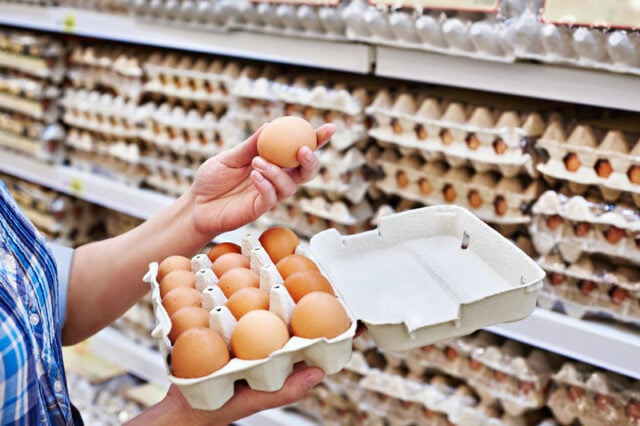
The U.S. Department of Justice (DOJ) Antitrust Division, alongside a bipartisan coalition of 17 state attorneys general, filed a major civil antitrust lawsuit against three of the nation’s dominant egg producers. Simultaneously, the regulators announced a comprehensive proposed settlement. The government accused Cal-Maine Foods Inc., Versova Holdings LLC, and Hickman’s Egg Ranch Inc. of engaging in a multi-year, behind-the-scenes conspiracy to artificially inflate wholesale egg prices.
To resolve the joint state and federal investigation, the three industry giants agreed to pay a combined $3.3 million to the participating states and donate an unprecedented 53 million free eggs to regional food banks and community service organizations. While the settlement brings a swift resolution to the government’s price-gouging probe, it has re-ignited a intense nationwide debate over corporate accountability, food inflation, and consumer protection.
Inside the Cartel: The Urner Barry Manipulation Scheme
According to the civil complaint filed in the U.S. District Court for the Northern District of Iowa, the illegal coordination ran from roughly June 2022 through March 2025. This period precisely aligned with a historic spike in grocery store prices that left American shoppers reeling. While the agricultural sector publicly blamed soaring grocery bills entirely on devastating outbreaks of highly pathogenic avian influenza (bird flu), federal and state antitrust enforcers assert that a corporate conspiracy was quietly exacerbating the crisis.
The heart of the government’s case centers on the systematic manipulation of industry benchmarks. In the commercial egg market, billions of retail and commercial supply contracts are directly tied to daily price index quotes published by Urner Barry Publications, a private market-reporting firm. Because supermarkets, restaurants, and food manufacturers use these quotes to establish contract baseline pricing, any movement in the Urner Barry index instantly dictates the prices paid across the entire country.

The DOJ revealed that executives from Cal-Maine, Versova, and Hickman’s used phone calls, emails, and text messages to secretly coordinate their bidding strategies on spot markets, such as the Egg Clearinghouse. By systematically entering high-priced bids in tandem, the companies intentionally signaled a false, heightened market demand to Urner Barry’s reporters.
In one heavily cited December 2022 exchange, Glenn Hickman, then-CEO of Hickman’s Egg Ranch, sent an email directly to senior executives at Cal-Maine and Versova. The message urged the competing firms to post “strong bids, early and often” before market reporters began their daily analysis. That morning, the three defendants filed dozens of premium-priced bids, completely overwhelming the rest of the market, which generated fewer than six bids combined. Urner Barry subsequently raised its daily price quotation, instantly inflating contract costs nationwide. Investigators also uncovered communications from the head of an unnamed egg cooperative instructing members that “as a group we need to bid like they vote in Chicago, early and often.”
Breakdown of the Global Settlement Terms
The proposed final judgments establish distinct financial and agricultural restitution targets for each of the three corporate defendants. As the single largest producer and distributor of shell eggs in the United States, Cal-Maine Foods bears the heaviest burden under the state agreements.
| Egg Producing Defendant | Monetary Settlement | Free Egg Donation Volume |
| Cal-Maine Foods, Inc. | $1.5 Million | 30 Million Eggs |
| Versova Holdings LLC | $800,000 | 20 Million Eggs |
| Hickman’s Egg Ranch, Inc. | $1.0 Million | 3.25 Million Eggs |
| Total Cartel Restitution | $3.3 Million | 53 Million Eggs |
The 53 million fresh eggs must be produced, packaged, and distributed entirely at the companies’ expense. They are required to meet all standard federal food safety regulations before being delivered to food banks and non-profit hunger relief networks across the 17 participating states. For example, New York state, which helped lead the multi-state investigation alongside the DOJ, is legally slated to receive roughly 4.9 million eggs for its regional distribution networks, while Minnesota will receive 2 million.
Beyond the financial and agricultural restitution, the court-enforced settlement imposes stringent behavioral injunctions on the companies to prevent future collusion. If approved by the federal judge, the producers are permanently barred from communicating with their market competitors regarding bidding strategies, active pricing, or spot-market transactions meant to influence benchmark publishers.
Additionally, all three corporations are legally mandated to restructure their internal corporate governance. This includes implementing rigorous antitrust compliance programs, appointing dedicated, independent antitrust compliance officers, and actively monitoring all future joint-venture or agricultural cooperative meetings. Any suspected or potential breaches of the final judgment must be immediately reported to federal regulators and state attorneys general.
Supply Shocks vs. Corporate Profiteering
In corporate responses and regulatory filings, all three producers staunchly denied any legal wrongdoing or market manipulation, framing the settlement as a purely pragmatic business decision to avoid prolonged litigation. Corporate leaders maintained that the dramatic price fluctuations experienced by families over the past several years were the organic result of macroeconomic disruptions rather than a corporate conspiracy.
Sherman Miller, the president and chief executive officer of Cal-Maine Foods, noted in a public statement that the period under investigation represented a historic storm of uncontrollable agricultural challenges. Miller pointed out that severe waves of avian influenza required the mandatory depopulation of tens of millions of laying hens across the country, causing a massive, legitimate supply shock. When combined with lingering supply chain vulnerabilities from the COVID-19 pandemic, adverse weather events, and broad, multi-year economic inflation, wholesale costs naturally climbed. Cal-Maine also pointed out that it had formally exited the specific marketing cooperative named in the probe in May 2024, prior to learning of the DOJ’s investigation.
Remarkably, antitrust enforcers highlighted that wholesale egg prices tumbled sharply and suddenly in March 2025. This structural price drop occurred precisely when the DOJ issued formal document-preservation notices and alerted the corporate executives that their trading data was under federal scrutiny. While a mild bird flu season eventually helped industry flocks recover by mid-2026, consumer advocacy groups argue the sudden 2025 price correction is proof the cartel ran scared once regulators got involved.
“These massive egg producers rigged the system to jack up profits, and all of us paid for it. By shutting this scheme down and delivering millions of eggs to those in need, we’re sending a clear message.” — Connecticut Attorney General William Tong
The Public Debate Over Accountability
While the DOJ and state leaders celebrated the settlement as a victory for consumer pocketbooks, the terms have drawn sharp criticism from consumer watchdogs and agricultural economists. Many argue that a $3.3 million cash penalty is completely trivial compared to the windfall profits captured by these companies during the peak inflation cycle. For context, Cal-Maine Foods reported a staggering net profit of $1.22 billion during its 2025 fiscal year alone.
Angela Huffman, the president of the corporate agricultural watchdog group Farm Action, expressed deep disappointment in the final penalties, calling the settlement a minor slap on the wrist. Huffman argued that dominant corporations frequently treat low-million-dollar settlements as an ordinary, expected cost of doing business rather than meaningful accountability, leaving everyday consumers bearing the true financial damage of price-fixing schemes.
The Department of Justice, however, maintains that these swift settlements are part of an aggressive, ongoing campaign targeting anticompetitive behavior across the entire domestic food supply chain. Federal enforcers recently launched parallel antitrust investigations into major beef producers and consolidation within the meatpacking sector. Regulators insist that breaking up benchmark manipulation and placing permanent compliance watchdogs inside corporate boardrooms remains the most effective strategy to restore genuine competition and lower grocery store receipts for the American public.
Sources and Links:
- The United States Department of Justice (DOJ) Office of Public Affairs: Justice Department Requires Egg Producers to End Coordinated Benchmark Manipulation that Artificially Inflated Prices Across the Country
- The Associated Press (AP): Egg producers will pay $3.3M and donate 53 million eggs to settle price-fixing claims
- Financial Times: Egg producers settle US claims they manipulated benchmark prices
- Food Dive: Cal-Maine to donate 30M eggs in DOJ price-fixing settlement
- Quartz: DOJ, states settle egg price-fixing case against Cal-Maine
- Connecticut Office of the Attorney General (CT.gov): Attorney General Tong Blocks Illegal Cartel to Drive Down Egg Prices
- KARE 11 News (St. Paul, MN): Ellison, DOJ secure millions of dollars — and eggs — in settlement with egg producers
- WUSF Public Media / NPR: Egg producers settle with DOJ, states over price-fixing complaint
Disclaimer
Artificial Intelligence Disclosure & Legal Disclaimer
AI Content Policy.
To provide our readers with timely and comprehensive coverage, South Florida Reporter uses artificial intelligence (AI) to assist in producing certain articles and visual content.
Articles: AI may be used to assist in research, structural drafting, or data analysis. All AI-assisted text is reviewed and edited by our team to ensure accuracy and adherence to our editorial standards.
Images: Any imagery generated or significantly altered by AI is clearly marked with a disclaimer or watermark to distinguish it from traditional photography or editorial illustrations.
General Disclaimer
The information contained in South Florida Reporter is for general information purposes only.
South Florida Reporter assumes no responsibility for errors or omissions in the contents of the Service. In no event shall South Florida Reporter be liable for any special, direct, indirect, consequential, or incidental damages or any damages whatsoever, whether in an action of contract, negligence or other tort, arising out of or in connection with the use of the Service or the contents of the Service.
The Company reserves the right to make additions, deletions, or modifications to the contents of the Service at any time without prior notice. The Company does not warrant that the Service is free of viruses or other harmful components.