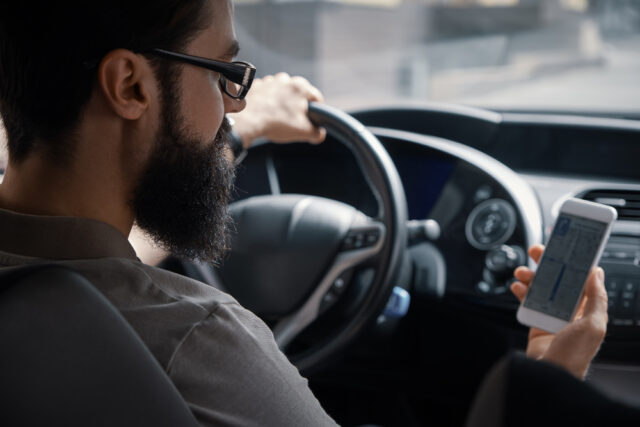
Distracted driving significantly increases the risk of auto accidents. Actions such as checking a phone, adjusting the radio, or looking at directions take a driver’s attention away from the road and reduce reaction time. These behaviors are major contributors to serious collisions and can lead to severe injuries or property damage.
Understanding how distractions affect driving underscores the importance of vigilance and the need for timely legal action after an accident.
What Counts as Distracted Driving
Distracted driving can take many forms, and not all are immediately obvious. Visual distractions happen when drivers take their eyes off the road, such as texting or checking a GPS. Manual distractions occur when hands leave the wheel, including eating, drinking, or adjusting controls.
Cognitive distractions take the driver’s mind off the task, making even routine driving more dangerous. Combining multiple distractions dramatically increases the risk of an accident, and these behaviors are more common than many realize.

Understanding what qualifies as a distraction is important for prevention and for assessing liability after a crash. Accident reports and insurance claims often rely on proving distraction. Proper documentation and professional guidance are essential, which is why it may be necessary to reach out to a distracted driving lawyer today to protect your rights and options.
How Distractions Lead to Accidents
Every second counts on the road, and even a momentary distraction can make a critical difference. When a driver is distracted, reaction times slow, and attention to surroundings diminishes.
Rear-end collisions, side-impact crashes, and pedestrian accidents become more likely. Distractions can also obscure traffic signals, road signs, and other vehicles, increasing the chances of misjudging speed or distance.
Accident data repeatedly show that distracted drivers are far more likely to cause serious injury than those fully attentive. These accidents often involve multiple parties, complicating insurance claims and legal responsibilities. Even minor distractions can escalate into major accidents, leaving victims facing medical bills, property damage, and complex legal processes.
Legal Challenges in Distracted Driving Accidents
- Difficulty in Proving Distraction – Showing that a driver was distracted is often one of the hardest parts of an accident claim. Insurance companies closely examine every detail to find reasons to reduce or deny compensation.
- Evidence Required – Establishing liability may involve:
- Witness statements.
- Traffic camera footage.
- Digital evidence from phones or vehicle systems.
- Procedural Challenges – Distracted driving claims must follow strict procedures, including filing deadlines, accurate reporting, and proper documentation. Mistakes can weaken the case.
- Importance of Professional Guidance – Experienced attorneys can gather necessary evidence and navigate insurance requirements effectively, increasing the likelihood of a strong claim.
Evidence That Strengthens Claims
Collecting evidence is a step that can make or break a distracted driving case. Key forms of evidence include:
- Accident reports filed with law enforcement document the scene and any observed behaviors.
- Photographs showing vehicle positions, damage, skid marks, and roadway conditions.
- Witness statements that describe the driver’s actions or unusual behavior leading up to the collision.
- Digital data from phones, dashcams, or vehicle monitoring systems that confirm distraction.
Together, these pieces create a comprehensive view of the incident, allowing insurers and courts to understand what happened. Gathering this evidence requires persistence, attention to detail, and often professional guidance to ensure it is complete and admissible.
Preventing and Minimizing Risks
Avoiding distractions is the most effective way to reduce accident risks. Drivers can take several practical steps to stay focused:
- Keep phones out of reach or use hands-free systems only for essential calls.
- Set navigation before starting a trip rather than adjusting on the go.
- Eat or drink before driving or wait until reaching a safe stop.
- Minimize multitasking by adjusting music, climate controls, and other distractions before moving.
Awareness campaigns and city regulations aim to reinforce these habits, but personal responsibility is critical. Technology, such as alerts for lane departure or automatic braking systems, can help, yet nothing replaces attentive driving.
Wrap Up!
Distracted driving is a growing risk that affects everyone on the road. Even small lapses can lead to severe accidents, complex claims, and long-term consequences. The legal process following such accidents is often challenging, requiring detailed documentation and strategic action. Victims face hurdles proving liability and securing fair compensation, which is why professional guidance is essential.
For anyone affected, it is wise to reach out to an auto accident lawyer today. Doing so ensures that claims are handled correctly, evidence is preserved, and the path to recovery is supported with expertise.
Disclaimer
Artificial Intelligence Disclosure & Legal Disclaimer
AI Content Policy.
To provide our readers with timely and comprehensive coverage, South Florida Reporter uses artificial intelligence (AI) to assist in producing certain articles and visual content.
Articles: AI may be used to assist in research, structural drafting, or data analysis. All AI-assisted text is reviewed and edited by our team to ensure accuracy and adherence to our editorial standards.
Images: Any imagery generated or significantly altered by AI is clearly marked with a disclaimer or watermark to distinguish it from traditional photography or editorial illustrations.
General Disclaimer
The information contained in South Florida Reporter is for general information purposes only.
South Florida Reporter assumes no responsibility for errors or omissions in the contents of the Service. In no event shall South Florida Reporter be liable for any special, direct, indirect, consequential, or incidental damages or any damages whatsoever, whether in an action of contract, negligence or other tort, arising out of or in connection with the use of the Service or the contents of the Service.
The Company reserves the right to make additions, deletions, or modifications to the contents of the Service at any time without prior notice. The Company does not warrant that the Service is free of viruses or other harmful components.