TAMPA, FL — A week-long search for two University of South Florida doctoral students took a harrowing and definitive turn Friday morning as authorities confirmed the discovery of a body and the arrest of a key person of interest. The Hillsborough County Sheriff’s Office announced that the remains of 27-year-old Zamil Limon were located near the Howard Frankland Bridge, ending the hopeful wait for his safe return but intensifying the urgent search for his companion, 27-year-old Nahida Bristy, who remains missing.
🚨MISSING USF STUDENTS UPDATE🚨#teamHCSO has located the remains of Zamil Limon, 27 and arrested Hisham Abugharbieh in connection to the disappearance of Limon and Nahida Bristy, 27.
Detectives are actively following investigative leads in the area surrounding the Howard… pic.twitter.com/BPgzMXl1cp
— HCSO (@HCSOSheriff) April 24, 2026
The suspect, identified as 26-year-old Hisham Saleh Abugharbieh—Limon’s roommate and a former USF student—was taken into custody following a dramatic SWAT standoff at a residence in North Tampa. The developments have sent shockwaves through the university community and the tight-knit circle of international scholars from Bangladesh to which both victims belonged.
The Discovery and the Arrest
The investigation reached a fever pitch early Friday morning. Detectives, who had been following leads across both Hillsborough and Pinellas counties, converged on the Howard Frankland Bridge after receiving information regarding the location of human remains. At approximately 10:30 a.m., Chief Deputy Joseph Maurer confirmed that the body found was that of Zamil Limon.
Simultaneously, units from the Hillsborough County Sheriff’s Office (HCSO) were dispatched to a home in the 14000 block of Pine Glen Circle in the Lake Forest community, just north of the USF campus. The response was initially triggered by an unrelated report of domestic violence involving Abugharbieh. However, upon arrival, deputies realized the occupant was the primary person of interest in the disappearance of the two doctoral students.
Abugharbieh reportedly refused to cooperate with law enforcement and barricaded himself inside the home. The situation escalated quickly, prompting the activation of the HCSO SWAT team, the Bomb Disposal Team, the Crisis Negotiations Team, and the Drone Response Team. For several hours, the quiet neighborhood was transformed into a tactical zone, with residents urged to shelter in place.
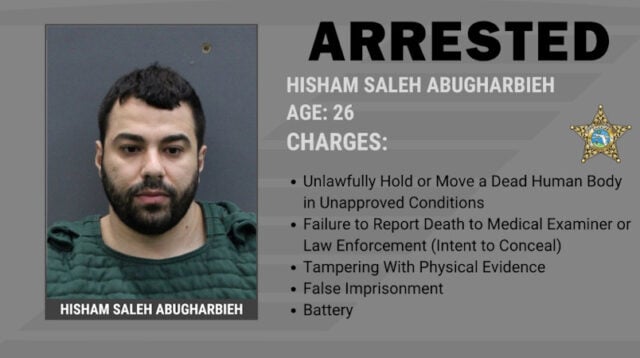
The standoff ended when Abugharbieh emerged from the residence with his hands raised, reportedly clad only in a blue towel. He was taken into custody without further violence. According to jail records, Abugharbieh faces a litany of charges, including:
- Unlawfully holding or moving a dead human body in unapproved conditions
- Failure to report a death to the Medical Examiner or Law Enforcement with intent to conceal
- Tampering with physical evidence
- False imprisonment
- Battery
A Timeline of Disappearance

The case began on April 16, 2026, when Zamil Limon and Nahida Bristy were last seen in the Tampa area. Limon, a geography and environmental science PhD candidate, was last spotted around 9:00 a.m. at his residence on Avalon Heights Boulevard. Bristy, a chemical engineering doctoral student, was seen an hour later at the Natural and Environmental Sciences (NES) Building on the USF campus.
When both students failed to respond to messages and missed critical academic commitments, a family friend contacted authorities on April 17. The USF Police Department initially handled the reports, but the case was later transferred to the Hillsborough County Sheriff’s Office as the investigation expanded beyond campus boundaries.
For days, the status of the pair remained “Missing,” but on Thursday, April 23, the HCSO officially upgraded the case to “Missing and Endangered,” citing newly discovered information that suggested the two were in imminent peril.
The Victims: Scholars with Bright Futures
Zamil Limon was described by his brother, Zubaer Ahmed, as a “very responsible and punctual person.” Having lived in Florida for 2 years, Limon was on the verge of a major academic milestone, scheduled to present his doctoral thesis this week. His research focused on the intersection of Artificial Intelligence and environmental science—a field he hoped would enable him to make a significant contribution to global sustainability efforts.
Nahida Bristy, an equally dedicated scholar in chemical engineering, was known for her consistent communication with her family in Bangladesh. Her brother, Zahid Pranto, noted that there had “not been a single day without contact” until April 16. The two students were more than just colleagues; they were a couple who were reportedly considering marriage and a future together.
The loss of Limon and the uncertainty surrounding Bristy have devastated their families abroad, who have been monitoring the case from thousands of miles away. “We are in deep pain,” Ahmed told reporters earlier this week, describing the situation as “unpredictable and unusual.”
The Suspect’s Background
As the investigation continues, attention has turned to Hisham Saleh Abugharbieh. A U.S.-born citizen, Abugharbieh had attended USF from Spring 2021 through Spring 2023, where he pursued a degree in Management, though he was not currently enrolled.
Court records reveal a troubling history of legal issues. In 2023, Abugharbieh faced misdemeanor charges for battery and burglary of an unoccupied dwelling. He had recently completed a diversion program for first-time offenders in 2024. Furthermore, records show that a relative had filed two domestic violence petitions against him in 2023, one of which resulted in a court-ordered injunction.
While the specific motive for the current incident remains under investigation, the charges suggest a harrowing sequence of events leading to Limon’s death and the potential concealment of the crime.
The Ongoing Search for Nahida Bristy
While one part of the mystery has been solved with the discovery of Limon’s remains, the fate of Nahida Bristy remains the primary focus for law enforcement. Dive teams from the Hillsborough County Sheriff’s Office spent much of Friday afternoon searching the waters of Tampa Bay near the Howard Frankland Bridge.
“We are still actively searching for Nahida,” Chief Deputy Maurer stated during a Friday afternoon press briefing. “We are using every tool available—drones, sonar, and specialized dive units—to bring her home to her family.”
The Sheriff’s Office has appealed to the public for any information, no matter how small, regarding her whereabouts or any suspicious activity observed near the Howard Frankland Bridge or the Avalon Heights area between April 16 and April 24.
A Community in Mourning
USF President Moez Limayem issued a heartfelt message to the university community Friday evening, expressing “deep sadness” over the news.
“This is an isolated situation that occurred off campus, and investigators believe the suspect acted alone,” Limayem stated. “There is no ongoing threat to the safety of the university community, but the emotional impact of this loss is immeasurable.”
The university has made counseling services available to students, faculty, and staff, emphasizing the importance of mental health support during such a traumatic time. The Bangladeshi Student Association at USF also held a private vigil Friday evening to honor Limon and pray for Bristy’s safe return.
As the Sun sets over Tampa Bay, the investigation remains fluid. The Pinellas County Medical Examiner’s Office is expected to release the official cause and manner of death for Zamil Limon following an autopsy on Saturday. For now, the community waits, hoping for a miracle in the search for Nahida Bristy while grappling with the stark reality of a brilliant young life cut short.
Sources Used and Links:
- Hillsborough County Sheriff’s Office (HCSO): Suspect Arrested, Remains of One Missing USF Student Located
- The Associated Press: Police identify the body of 1 missing USF student, second still missing as roommate is charged
- The Guardian: Roommate arrested after body of University of South Florida doctoral student discovered
- University of South Florida (USF) News: A message from President Moez Limayem about an ongoing law enforcement investigation
- Hindustan Times: Who is Hisham Saleh Abugharbieh? USF student’s roommate arrested on domestic violence charges amid missing case
- CBS News: Roommate arrested after 1 missing University of South Florida doctoral student found dead
- Global News: 2 University of South Florida doctoral students missing, police say
- The Durango Herald: Florida authorities looking for 2 USF doctoral students take person into custody
- IONTB: USF Police Seek Public’s Help Locating Two Missing Doctoral Students Last Seen in Tampa
- Sunday Guardian Live: Who was Zamil Ahamed Limon? USF Student Found Dead as Search Continues for Nahida Bristy in Tampa
Disclaimer
Artificial Intelligence Disclosure & Legal Disclaimer
AI Content Policy.
To provide our readers with timely and comprehensive coverage, South Florida Reporter uses artificial intelligence (AI) to assist in producing certain articles and visual content.
Articles: AI may be used to assist in research, structural drafting, or data analysis. All AI-assisted text is reviewed and edited by our team to ensure accuracy and adherence to our editorial standards.
Images: Any imagery generated or significantly altered by AI is clearly marked with a disclaimer or watermark to distinguish it from traditional photography or editorial illustrations.
General Disclaimer
The information contained in South Florida Reporter is for general information purposes only.
South Florida Reporter assumes no responsibility for errors or omissions in the contents of the Service. In no event shall South Florida Reporter be liable for any special, direct, indirect, consequential, or incidental damages or any damages whatsoever, whether in an action of contract, negligence or other tort, arising out of or in connection with the use of the Service or the contents of the Service.
The Company reserves the right to make additions, deletions, or modifications to the contents of the Service at any time without prior notice. The Company does not warrant that the Service is free of viruses or other harmful components.
![Brink of Bombing: Trump Abruptly Halts Planned Strike on Iran Following Last-Minute Intervention by Gulf Monarchies The Midnight Reprieve: A Stunned Washington and a Canceled IncursionIn a stunning reversal that shifted the trajectory of geopolitical affairs in the Middle East, President Donald J. Trump announced on Monday evening that he had abruptly canceled a comprehensive, large-scale military strike against the Islamic Republic of Iran. The highly classified offensive, which had been meticulously structured and slated to commence on Tuesday, May 19, 2026, was called off at the eleventh hour. The decision followed an intense, coordinated intervention by a trio of Washington’s most prominent allies in the Persian Gulf.The disclosure sent shockwaves through the international diplomatic community, primarily because the administration had kept the impending Tuesday timeline entirely hidden from the public. Only hours prior, the rhetorical posture emanating from the White House suggested that an immediate and devastating military escalation was inevitable. Over the preceding weekend, President Trump had utilized his social media channels to issue a series of severe ultimatums to Tehran, warning that the clock was ticking and declaring that if Iranian leadership did not capitulate to American terms swiftly, "there won't be anything left of them."However, by late Monday afternoon, the tone shifted dramatically. Taking to Truth Social, President Trump revealed that a joint diplomatic appeal from the top echelons of power in Qatar, Saudi Arabia, and the United Arab Emirates had prompted him to hit the pause button."I have been asked by the Emir of Qatar, Tamim bin Hamad Al Thani, the Crown Prince of Saudi Arabia, Mohammed bin Salman Al Saud, and the President of the United Arab Emirates, Mohamed bin Zayed Al Nahyan, to hold off on our planned Military attack of the Islamic Republic of Iran, which was scheduled for tomorrow," Trump wrote.He expressed that out of "respect" for these regional leaders, and based on their assurances that "serious negotiations" were suddenly viable, the operation would be delayed to allow diplomacy a brief window of opportunity.Later in the evening, as he walked across the South Lawn of the White House, Trump expanded on his decision to reporters. He confirmed that the United States had been entirely prepared to launch what he termed a "very major attack," but agreed to defer the operation for a period of "two or three days" because regional intermediaries believed they were on the precipice of securing a permanent resolution to the conflict."There seems to be a very good chance that they can work something out," Trump told reporters, adopts a uncharacteristically optimistic tone. "If we can do that without bombing the hell out of them, I'd be very happy. I put it off for a little while, hopefully, maybe forever. But possibly for a little while."The Tripartite Intervention: How the Gulf Monarchies Altered the Course of WarThe diplomatic maneuvers that averted Tuesday’s planned bombardment highlight the delicate balancing act being performed by the energy-rich monarchies of the Gulf Cooperation Council (GCC). For weeks, Qatar, Saudi Arabia, and the United Arab Emirates have found themselves physically and economically caught in the crossfire of an intensive confrontation between Washington and Tehran.The three leaders who initiated the joint appeal—Emir Tamim bin Hamad Al Thani of Qatar, Crown Prince Mohammed bin Salman of Saudi Arabia, and President Mohamed bin Zayed Al Nahyan of the UAE—reportedly engaged in a flurry of urgent telephone consultations with the White House over the weekend. According to diplomatic sources, the leaders presented the Trump administration with tangible evidence that Iran had relayed an amended, significantly restructured set of terms for a potential peace agreement. These terms were transmitted through Pakistani intermediaries, who have served as the primary diplomatic pipeline between Washington and Tehran since formal channels collapsed.Gulf LeaderNationStrategic Role in MediationPrimary Regional ConcernEmir Tamim bin Hamad Al ThaniQatarDirect intermediary; coordinates with Pakistani diplomatic channels.Preservation of maritime LNG export routes.Crown Prince Mohammed bin SalmanSaudi ArabiaBackchannel security guarantor; balancing regional hegemony.Protection of critical oil infrastructure from proxy retaliation.President Mohamed bin Zayed Al NahyanUnited Arab EmiratesEconomic stabilization lead; direct outreach regarding localized drone threats.Commercial shipping safety; vulnerability of domestic infrastructure.The Gulf states have a profound, existential interest in preventing a full-scale American air campaign against Iran. While these nations have historically viewed Tehran’s nuclear ambitions and regional proxy networks with deep suspicion, they are equally aware that any major military conflagration on the eastern side of the Persian Gulf would inevitably spill over onto their shores. Iranian military doctrine has long dictated that in the event of an American attack, Western-aligned infrastructure across the GCC would be treated as legitimate targets. With their multi-billion-dollar desalination plants, ultra-modern urban centers, and sprawling oil extraction facilities sitting well within range of Iran’s ballistic missile and drone arsenals, the Gulf monarchies recognized that an unrestricted war would trigger economic and structural devastation across the region.The Catalyst: The Sabotage at Barakah Nuclear Power PlantThe fragility of the security situation across the Gulf was made clear just one day prior to Trump's announcement. On Sunday, May 17, 2026, a low-flying kamikaze drone successfully penetrated the dense air defense networks of the United Arab Emirates, striking an auxiliary electricity generator located just outside the inner security perimeter of the Barakah Nuclear Power Plant.The incident, which sparked a localized fire but failed to compromise the reactor core or cause any radiological leakage, marked a dangerous escalation in the conflict. The Barakah facility, constructed with extensive technical assistance from South Korea, stands as the only operational nuclear power plant in the Arab world, generating approximately one-quarter of the United Arab Emirates’ total electricity needs.[Barakah Nuclear Power Plant Perimeter] │ ├───► [Inner Security Zone] ───► (Reactors Unharmed) │ └───► [Auxiliary Generator Facility] ▲ │ (Drone Impact - Sunday) [Hostile UAV] The Emirati Foreign Ministry immediately condemned the strike as an "unprovoked terrorist attack," though no regional group stepped forward to claim responsibility. Behind closed doors, intelligence officials in Abu Dhabi and Washington concluded that the drone was either launched directly from Iranian soil or supplied by Tehran to a proxy network operating within the region.The targeting of a civilian nuclear facility sent immediate shockwaves through global energy and security sectors. It demonstrated that despite the nominal presence of advanced Western air defense systems, the Gulf’s critical infrastructure remained highly vulnerable to saturation attacks utilizing low-cost unmanned aerial vehicles (UAVs).It was precisely this strike on Barakah that catalyzed the weekend’s frantic diplomatic intervention. Rather than prompting the UAE to demand American military retaliation, the attack achieved the opposite effect: it illustrated to Abu Dhabi and Riyadh that a full-scale war would result in the immediate targeting of their most prized national assets. The Gulf monarchies realized that they could not afford to let the Trump administration launch its scheduled Tuesday bombardment, as the inevitable Iranian counter-response would likely lay waste to the region’s economic foundation.Anatomy of the 2026 Conflict: From Outbreak to Stand-offThe current military crisis trace its origins back to February 28, 2026, when long-simmering tensions between the United States, Israel, and Iran boiled over into open, conventional warfare. While the exact trigger of the initial February hostilities remains a subject of intense debate, the conflict rapidly expanded from localized cyber-attacks and maritime skirmishes into a comprehensive regional war.By mid-April, after weeks of heavy aerial bombardments and intense naval engagements, international pressure forced a fragile, tentative ceasefire on April 7. This cessation of hostilities, brokered in large part through the diplomatic intervention of Pakistan, was intended to provide a stable framework for permanent peace negotiations. However, the truce proved to be highly unstable, characterized by frequent violations, localized exchanges of fire, and a total breakdown in trust between the primary combatants.By early May, the ceasefire was effectively on "life support." The United States military had instituted an aggressive, comprehensive naval blockade on all major Iranian ports, a policy formalized on April 13. According to data released by U.S. Central Command (CENTCOM), American naval assets operating in the region have actively intercepted, boarded, or redirected at least 85 commercial vessels suspected of violating the blockade or transporting illicit Iranian petroleum products.In retaliation for the strangulation of its maritime commerce, Iran enacted its ultimate economic countermeasure: the complete closure of the Strait of Hormuz. By deploying dense defensive minefields, utilizing swarm-boat tactics, and positioning mobile anti-ship missile batteries along the rugged coastlines of Musandam and Qeshm Island, the Islamic Revolutionary Guard Corps (IRGC) successfully halted the flow of commercial traffic through the world’s most vital energy chokepoint.The resulting dual-blockade—with the U.S. sealing Iran’s ports and Iran sealing the entrance to the Persian Gulf—created an unprecedented operational stalemate. Western forces frequently exchanged direct fire with Iranian coastal artillery and fast-attack craft, turning the waters of the Gulf into a highly volatile combat zone even as diplomats in neutral capitals claimed to be working toward a political solution. Inside the Command Structure: Hegseth, Caine, and the Hyper-Readiness MandateWhile President Trump has agreed to a brief pause to accommodate the diplomatic entreaties of his Gulf allies, he made it abundantly clear that the machinery of American military might remains fully coiled and prepared to strike. In his public communications, Trump explicitly noted that he had issued direct directives to his top defense officials to maintain a state of immediate, hyper-readiness."Based on my respect for the above mentioned Leaders, I have instructed Secretary of War, Pete Hegseth, The Chairman of The Joint Chiefs of Staff, General Daniel Caine, and The United States Military, that we will NOT be doing the scheduled attack of Iran tomorrow, but have further instructed them to be prepared to go forward with a full, large scale assault of Iran, on a moment's notice, in the event that an acceptable Deal is not reached," Trump declared.The inclusion of these specific names underscores the sweeping changes that have taken place within the American national security apparatus. Pete Hegseth, serving as the Secretary of War following an administrative rebranding of the defense department, alongside General Daniel Caine, the Chairman of the Joint Chiefs of Staff, have reportedly spent the last 48 hours finalizing the logistics for an air and sea campaign designed to systematically dismantle Iran’s command-and-control infrastructure, its ballistic missile silos, and its heavily fortified nuclear enrichment sites.Pentagon insiders indicate that the planned Tuesday strike was not designed as a mere symbolic gesture or a limited retaliatory strike. Rather, it was envisioned as a multi-wave, joint-force operation involving carrier-based strike aircraft, long-range strategic bombers operating from regional bases, and a massive barrage of land-attack cruise missiles.The objective was to permanently break the strategic stalemate by rendering Iran incapable of maintaining its blockade of the Strait of Hormuz. The pause ordered by Trump has forced military planners to temporarily hold these assets in place, keeping bomber crews on the tarmac and naval vessels in a state of high tactical readiness, waiting to see if the diplomatic window yields fruit or closes indefinitely.The Sticking Points of Diplomacy: Nuclear Stockpiles and the Pakistani ChannelThe core of the current diplomatic dispute lies in a fundamental disagreement over the parameters of Iran’s nuclear program and the architecture of regional sanctions. For years, Tehran has steadily advanced its uranium enrichment capabilities, pushing its stockpiles of 60%-enriched uranium to historic highs. While the Iranian government has consistently maintained that its nuclear program is designed exclusively for peaceful, civilian energy and medical purposes, the United States and Israel have long asserted that enrichment to such levels has no viable civilian application and represents a transparent effort to achieve breakout weapons capability.In the days leading up to the canceled Tuesday strike, the diplomatic exchange conducted through the Pakistani mediation channel had devolved into acrimony. Late last week, Iran submitted a comprehensive counterproposal aimed at securing a permanent end to the war. According to details leaked by regional officials, the Iranian proposal demanded:An immediate and total cessation of the U.S. naval blockade on Iranian ports.The comprehensive lifting of all primary and secondary economic sanctions imposed by Washington.The immediate unfreezing of tens of billions of dollars in Iranian financial assets currently held in foreign bank accounts.A synchronized end to military campaigns across all regional fronts, including Israel’s ongoing operations against Iranian-aligned factions in Lebanon.President Trump, however, dismissed this initial framework out of hand, publicly characterizing the proposal as "garbage." The primary point of contention was Iran’s steadfast refusal to relinquish its accumulated stockpile of 60%-enriched uranium and its insistence on retaining the "right" to independent enrichment.The United States has drawn a rigid line in the sand: any acceptable agreement must include verifiable guarantees that Iran will completely dismantle its enrichment capabilities and permit unfettered, instantaneous inspections by international monitors. "This Deal will include, importantly, NO NUCLEAR WEAPONS FOR IRAN!" Trump reiterated in his Monday statement.[Key Sticking Points in US-Iran Negotiations] U.S. / ISRAELI DEMANDS IRANIAN COUNTER-PROPOSAL ┌───────────────────────────────────┐ ┌───────────────────────────────────┐ │ • Complete elimination of 60% │ │ • Immediate lifting of all U.S. │ │ enriched uranium stockpiles. │ │ economic sanctions. │ │ • Verifiable cessation of all │ vs │ • Complete end to the maritime │ │ enrichment activities. │ │ blockade on Iranian ports. │ │ • Unfettered international │ │ • Unfreezing of all foreign-held │ │ inspections of nuclear sites. │ │ financial assets. │ └───────────────────────────────────┘ └───────────────────────────────────┘ The new round of "serious negotiations" referenced by the Gulf allies reportedly involves an amended set of concessions that the Iranians have quietly conveyed through Islamabad. Turkey’s Foreign Minister, Hakan Fidan, commenting on the status of the talks from Ankara, noted that while the immediate, practical concern of the international community is the reopening of the Strait of Hormuz to stabilize global trade, the core nuclear issue remains the ultimate hurdle.Fidan warned that while the parties are currently engaged in communication, a true breakthrough requires both sides to transition from rigid ultimatums to a granular, verifiable dialogue regarding the technical specifics of the nuclear stockpile.Economic Tremors: Oil Markets and the Strait of Hormuz StandoffThe real-world consequences of Trump's digital declarations were felt within minutes across the global financial markets, particularly within the volatile energy sector. The ongoing closure of the Strait of Hormuz has exerted severe upward pressure on oil prices for months, given that roughly one-fifth of the world’s total petroleum supply passes through the narrow waterway. The prospect of a massive American military strike on Tuesday had driven energy markets into a frenzy, with traders bracing for a catastrophic disruption to global supply chains.On Monday morning, crude oil futures were trading at a multi-month high of $108.83 per barrel, as Wall Street priced in the high probability of an imminent regional war. However, the moment President Trump’s Truth Social post materialized on traders' screens, the market experienced a sharp, instantaneous correction. Within minutes of the announcement that the strike had been called off to accommodate negotiations, crude futures shed more than $2 from their valuation.Timeframe (Monday, May 18, 2026)Crude Oil Price (per Barrel)Market Reaction / CatalystMorning Trading Hours$108.83Multi-month peak driven by fears of imminent U.S. bombardment on Tuesday.Post-Trump Announcement~$106.50Instantaneous drop of over $2 following disclosure of the diplomatic pause.Market Close$107.25Slight recovery as traders factor in the high volatility and military readiness.The market eventually settled at $107.25 per barrel by the close of trading, reflecting a lingering skepticism among institutional investors. While the immediate threat of a Tuesday morning bombing campaign had been neutralized, the fundamental economic crisis remains unresolved: the Strait of Hormuz remains closed, eighty-five commercial vessels have been turned away or detained by the U.S. Navy, and global sectors reliant on petroleum, natural gas, and chemical fertilizers continue to face severe supply constraints. Financial analysts warn that if the current two-to-three-day diplomatic window closes without a formal agreement to reopen the waterway, oil prices could easily surge past the $120 mark.The Domestic Front: Polling Crises and Midterm ShadowsWhile the official narrative from the White House emphasizes international respect for Gulf allies and a genuine desire to avoid unnecessary bloodshed, political analysts point to a distinct set of domestic calculations that may have influenced the president’s sudden willingness to embrace diplomacy. The ongoing war with Iran has become an increasingly divisive issue within the American electorate, casting a long shadow over the political landscape as the 2026 midterm elections approach.On the very day that Trump announced the cancellation of the Tuesday strikes, a major national poll published by The New York Times and Siena College revealed a significant erosion in public support for the administration's foreign policy. According to the data, a substantial majority of American voters expressed deep fatigue with the prolonged maritime blockade and the constant threat of a large-scale land or air war in the Middle East. The poll revealed that President Trump’s overall job approval rating had slipped to 37 percent, driven down primarily by independent and moderate voters who express concern over the economic fallout of the conflict, including rising domestic fuel prices and persistent inflation. [U.S. Voter Approval - May 2026 NYT/Siena Poll] ■■■■■■■■■■■■■■■■■■■■ 37% Approve ■■■■■■■■■■■■■■■■■■■■■■■■■■■■■■■■■ 63% Disapprove / Undecided The domestic political risk for the administration is acute. Republican lawmakers facing difficult re-election campaigns in swing districts have reportedly expressed private concerns to the White House, warning that an overt, unrestricted bombing campaign against Iran could trigger an electoral backlash in November.By accepting the intervention of the Gulf states and publicly framing the pause as an act of deliberate, statesperson-like restraint, Trump effectively insulates himself from critics who accuse him of recklessly dragging the country into another open-ended conflict. If the negotiations fail, the president can claim he exhausted every diplomatic avenue before resorting to force; if they succeed, he can claim credit for securing a nuclear-free deal through a strategy of maximum pressure and strategic brinkmanship.The Global Geometry: The Netanyahu and Xi Jinping ConsultationsThe diplomatic chessboard extending outward from Washington involves critical consultations with other major global actors. In his remarks to reporters and through administrative leaks, it was confirmed that President Trump held high-level telephonic discussions with Israeli Prime Minister Benjamin Netanyahu and Chinese President Xi Jinping over the weekend, ensuring that both superpowers and regional counter-weights were apprised of the fluid situation.Israel, which views Iran’s nuclear program as an existential threat, has consistently advocated for a decisive military resolution to the standoff. Sources within Jerusalem indicate that Prime Minister Netanyahu was informed of Trump’s decision to halt the Tuesday strike shortly before the news was blasted across social media. While Israel remains highly skeptical of any diplomatic overtures originating from Tehran, the Israeli security cabinet has reportedly agreed to honor the brief window requested by the Gulf monarchies, provided that the U.S. military maintains its hyper-readiness posture.Concurrently, Trump’s recent return from an official summit in Beijing, where he met face-to-face with President Xi Jinping, highlights the complex economic interdependence underlying the crisis. China stands as the primary buyer of Iranian oil and has maintained close diplomatic and economic ties with Tehran throughout the conflict.During their discussions, President Xi reportedly urged the American administration to exercise maximum restraint, pointing out that a prolonged closure of the Strait of Hormuz and a subsequent American bombardment would severely destabilize global manufacturing and supply chains, heavily impacting Chinese economic interests. The diplomatic intervention by the Gulf states, therefore, provided Trump with a timely mechanism to satisfy Beijing's calls for de-escalation without appearing to capitulate directly to Chinese pressure.Tehran's Response and the Volatile Road AheadThe reaction from within the Islamic Republic to Trump's announcement was a mix of public defiance and cautious tactical maneuvering. Shortly after the White House issued its statements regarding the cancellation of the Tuesday offensive, Iranian state television broke into regular programming to broadcast the news. Rather than framing the development as a diplomatic breakthrough, the official state media ticker and affiliated social media accounts characterized the American move as a "retreat" dictated by "fear" of Iran’s defensive capabilities.On the ground, however, military movements indicated that Tehran is taking the threat of a renewed American assault with utmost seriousness. Intelligence reports confirmed that late Monday evening, Iranian armed forces activated multiple advanced air defense systems on Qeshm Island. Located at the narrowest point of the Strait of Hormuz, Qeshm Island serves as the strategic anchor for Iran’s maritime denial capabilities and is home to a population of 150,000 civilians, alongside critical civilian infrastructure such as a massive water desalination plant. State media reported that the military activation was a standard precautionary measure and that the situation across the island remained entirely "under control."As the region enters a critical 72-hour window, the ultimate outcome of this diplomatic gambit remains highly uncertain. The Iranian Foreign Ministry, represented by spokesman Esmaeil Baghaei, confirmed during a press briefing that Tehran’s concerns and counter-proposals had been formally conveyed to the American side through the Pakistani mediator. While Baghaei noted that the exchange of messages is ongoing, he refrained from offering granular details regarding any potential nuclear concessions.The Middle East now stands at a historic crossroads. The intervention of Qatar, Saudi Arabia, and the United Arab Emirates has successfully pulled the world's preeminent military power back from the brink of a devastating air campaign, transforming what was supposed to be a Tuesday morning of shock and awe into a tense exercise in high-stakes diplomacy.Whether the deep-seated animosities, structural economic blockades, and existential nuclear disputes can be resolved in a matter of days remains to be seen. If the "serious negotiations" bear fruit, it could signal the dawn of a new security architecture for the Persian Gulf; if they falter, the American war machine stands fully prepared, on a moment’s notice, to execute the very assault that was canceled at the eleventh hour.Sources Used The Independent: Trump calls off strikes on Iran at request of Gulf allies, amid ‘serious’ talksPBS NewsHour: Trump says he's called off Iran strike planned for Tuesday at request of Gulf alliesCBS News: Trump says he's called off plans for "scheduled attack of Iran" after request from Gulf partnersThe Times of Israel: Trump says US attack on Iran called off after Gulf assurances that deal now possibleITV News: Trump says he cancelled imminent strike on Iran after Gulf ally requestAssociated Press via KTVN (2news): Trump says he's called off Iran strike planned for Tuesday at request of Gulf allies](https://southfloridareporter.com/wp-content/uploads/2026/05/AP26117720419677-238x178.jpg)