By Emily Long
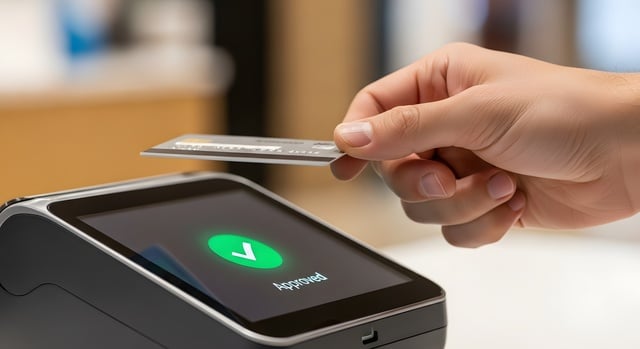
Contactless payment, also known as tap-to-pay, has become a fast, easy, and relatively common way to complete a transaction using your smartphone or credit card. It relies on Near Field Communication (NFC) to transmit data between your device and a payment terminal when the two are in close proximity, up to an inch or two away.
While NFC technology does provide some additional security—transmitting a virtual account number instead of your actual card details, for example—scammers have found a way to capitalize on tap-to-pay to steal money from unsuspecting targets. These “ghost tapping” schemes may exploit both cards and mobile wallets.

How tap-to-pay scams work
According to the Better Business Bureau, ghost tapping takes advantage of a potential victim’s proximity and lack of attention to detail. They suggest it is possible for a scammer to bump into you in a crowded public space, getting close enough to trigger a contactless transaction without your knowledge. (It’s not clear how common a close brush with a tap-to-pay machine actually is.)
For example, scammers might appear to be selling goods or collecting small donations for charity using tap-to-pay, but they are actually charging your card for a much larger amount to a fraudulent business. They count on you not to look closely at the transaction details before tapping, or they rush you through the process and fail to offer a receipt.
In one instance reported to the BBB’s Scam Tracker, individuals were targeted by a door-to-door salesman who claimed to be selling chocolate for a charitable cause. The transactions were for hundreds of dollars, which the victims didn’t see before tapping.
How to avoid contactless payment scams
As with any scam, vigilance is key. Tap-to-pay is easy enough to feel automatic, and you may be less likely to pause and check the details than you would when swiping or entering your credit card. Always slow down and confirm the merchant name and transaction and tip amount before pulling out your phone or card (again, close proximity is enough to trigger tap-to-pay). Beware of any vendor who tries to rush you, hide the screen, or avoid giving you a receipt.
You may also want to set up transaction alerts with your bank or credit card company so you can catch any suspicious charges immediately. If you get a notification about a “test” charge, that is also a scam red flag.
Finally, while scammers probably aren’t going around secretly scanning tap-to-pay en masse, you could protect your cards using a radio frequency identification (RFID)-blocking wallet or sleeve. You can disable NFC on your Android in Settings (type “NFC” into the search bar). On iPhone, you have to turn on Airplane Mode to block NFC.
Disclaimer
Artificial Intelligence Disclosure & Legal Disclaimer
AI Content Policy.
To provide our readers with timely and comprehensive coverage, South Florida Reporter uses artificial intelligence (AI) to assist in producing certain articles and visual content.
Articles: AI may be used to assist in research, structural drafting, or data analysis. All AI-assisted text is reviewed and edited by our team to ensure accuracy and adherence to our editorial standards.
Images: Any imagery generated or significantly altered by AI is clearly marked with a disclaimer or watermark to distinguish it from traditional photography or editorial illustrations.
General Disclaimer
The information contained in South Florida Reporter is for general information purposes only.
South Florida Reporter assumes no responsibility for errors or omissions in the contents of the Service. In no event shall South Florida Reporter be liable for any special, direct, indirect, consequential, or incidental damages or any damages whatsoever, whether in an action of contract, negligence or other tort, arising out of or in connection with the use of the Service or the contents of the Service.
The Company reserves the right to make additions, deletions, or modifications to the contents of the Service at any time without prior notice. The Company does not warrant that the Service is free of viruses or other harmful components.