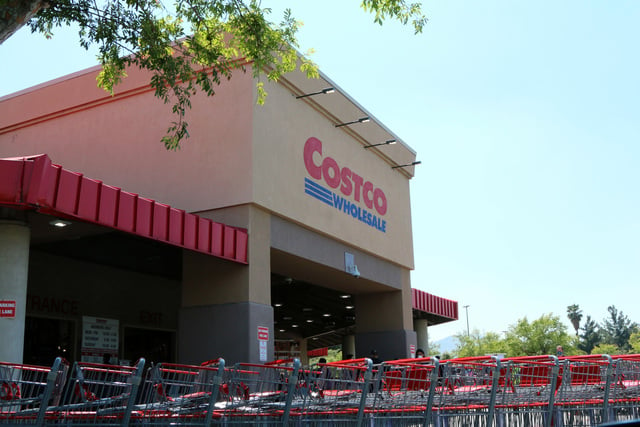
Have you asked an artificial intelligence bot for product advice recently? If you did, you might notice something surprising in the response. The bot probably skipped over Amazon entirely. Instead, it likely told you to shop at Walmart or Costco. A recent report from UBS analysts confirms this trend. According to Quartz, UBS analysts discovered that chatbots show a “consistent preference for brick-and-mortar chains over Amazon.”
The researchers tested leading consumer platforms, including ChatGPT and Claude. They asked these models everyday questions about buying consumer goods. Traditional wisdom suggested Amazon would dominate automated recommendations. After all, Amazon has led modern online shopping for decades. Yet the algorithms repeatedly favored physical retail giants instead. Quartz noted that this shift signals a “new battleground for retailers vying for consumer attention.”
Why are these smart systems leaning toward traditional stores? Several technical factors may explain the unexpected outcome. First, warehouse clubs and big-box stores provide transparent bulk pricing. Their store inventories are simple and broadly cataloged online. Amazon offers millions of third-party items that fluctuate in price constantly. Bots often struggle to evaluate complex marketplace options cleanly. In contrast, clear pricing gives established physical brands a distinct algorithmic edge. Bots simply find reliable pricing easier to parse and summarize.
This shift carries massive consequences for the entire retail industry. Shoppers increasingly bypass traditional search engines to ask assistants directly. Because of this trend, visibility inside generative models is critical. As Quartz reported, visibility in generative search is taking on “growing strategic importance.” Brands can no longer rely solely on standard web optimization. They must also optimize their data for machine consumption. Quartz also highlighted that retail brands are already moving to “forge ties with leading AI developers.” Companies want direct integrations into conversational platforms right now.

For shoppers, this transition may quietly shift brand loyalty. You might find yourself visiting Costco rather than ordering from Amazon. Algorithms are shaping purchasing decisions before we even open an app. Amazon still dominates delivery speed and overall marketplace volume. However, its digital supremacy no longer guarantees an automated win. Legacy retailers have clearly found a new path to modern relevance.
Retailers must now prepare for a world run by conversational search. Every digital interaction could influence where consumers spend their dollars tomorrow. If algorithms trust legacy store catalogs more, buying habits will shift quickly. The retail crown is officially up for grabs again.
Sources Used
- Quartz: https://qz.com/ubs-ai-chatbots-walmart-costco-amazon-100526
- MarketWatch: https://www.marketwatch.com
Disclaimer
Artificial Intelligence Disclosure & Legal Disclaimer
AI Content Policy.
To provide our readers with timely and comprehensive coverage, South Florida Reporter uses artificial intelligence (AI) to assist in producing certain articles and visual content.
Articles: AI may be used to assist in research, structural drafting, or data analysis. All AI-assisted text is reviewed and edited by our team to ensure accuracy and adherence to our editorial standards.
Images: Any imagery generated or significantly altered by AI is clearly marked with a disclaimer or watermark to distinguish it from traditional photography or editorial illustrations.
General Disclaimer
The information contained in South Florida Reporter is for general information purposes only.
South Florida Reporter assumes no responsibility for errors or omissions in the contents of the Service. In no event shall South Florida Reporter be liable for any special, direct, indirect, consequential, or incidental damages or any damages whatsoever, whether in an action of contract, negligence or other tort, arising out of or in connection with the use of the Service or the contents of the Service.
The Company reserves the right to make additions, deletions, or modifications to the contents of the Service at any time without prior notice. The Company does not warrant that the Service is free of viruses or other harmful components.