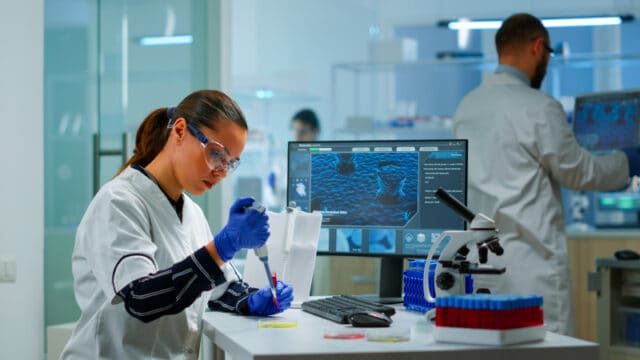
Modern medical research depends on scientists investigating biological processes in controlled, repeatable ways. Laboratory cell models provide an essential bridge between theoretical knowledge and the complex biology found in the human body. From exploring disease mechanisms to evaluating potential treatments, these models allow researchers to study cellular behavior under carefully defined conditions.
Understanding Disease at the Cellular Level
Many diseases begin with changes that occur at the level of individual cells. Genetic mutations, altered signaling pathways, and abnormal responses to environmental factors can all contribute to disease development.
Cell models give researchers an opportunity to investigate these processes in detail. Scientists can change specific experimental conditions and observe how cells respond, helping them identify biological mechanisms that may otherwise be difficult to isolate. This approach has contributed to research across areas including cancer, neurological disorders, infectious diseases, and metabolic conditions.
Supporting Drug Discovery and Development
Developing a new medicine involves extensive testing before a potential treatment can progress towards clinical studies. Laboratory cell models play an important role during the early stages of this process.

Researchers can expose cultured cells to different compounds and measure effects such as cell survival, metabolism, growth, and changes in gene expression. Researchers can then prioritize promising compounds for further investigation, while removing substances that show undesirable effects earlier in development.
Researchers can also select different cell models based on the biological question being studied. For example, researchers investigating intestinal absorption, transport mechanisms, and epithelial barrier properties may work with established models such as Caco2.
Creating More Controlled Experiments
One of the main advantages of laboratory cell models is the level of experimental control they provide. Researchers can carefully manage factors such as temperature, nutrients, exposure times, and concentrations of experimental compounds.
This makes it easier to determine whether a particular variable is responsible for an observed cellular response. Standardized experimental conditions can also support reproducibility, allowing researchers to repeat studies and compare findings between laboratories.
However, reliable results depend on good cell culture practices. Authentication, contamination control, and careful monitoring remain important because cell populations can change over time.
Reducing Dependence on Animal Models
Cell-based research can also contribute to efforts to reduce the use of animals in scientific studies. Although laboratory cells cannot reproduce every interaction occurring within an entire organism, they can answer many early-stage research questions without immediately requiring animal experiments.
Increasingly sophisticated approaches, including three-dimensional cultures, organoids and organ-on-chip systems, are expanding what researchers can investigate in vitro. These technologies can recreate aspects of tissue organization and cellular interactions that conventional two-dimensional cultures may not capture.
Building Better Foundations for Medical Progress
Laboratory cell models are not perfect replicas of the human body, and findings from them must be interpreted within their limitations. Their strength lies in providing accessible, controllable systems for investigating specific biological questions.
As cell culture technologies become more sophisticated, researchers can develop models that better represent human tissues and disease processes. Combined with genetic analysis, imaging, and other modern laboratory techniques, cell models will continue to provide an important foundation for understanding disease, identifying therapeutic targets, and developing safer, more effective treatments.
Disclaimer
Artificial Intelligence Disclosure & Legal Disclaimer
AI Content Policy.
To provide our readers with timely and comprehensive coverage, South Florida Reporter uses artificial intelligence (AI) to assist in producing certain articles and visual content.
Articles: AI may be used to assist in research, structural drafting, or data analysis. All AI-assisted text is reviewed and edited by our team to ensure accuracy and adherence to our editorial standards.
Images: Any imagery generated or significantly altered by AI is clearly marked with a disclaimer or watermark to distinguish it from traditional photography or editorial illustrations.
General Disclaimer
The information contained in South Florida Reporter is for general information purposes only.
South Florida Reporter assumes no responsibility for errors or omissions in the contents of the Service. In no event shall South Florida Reporter be liable for any special, direct, indirect, consequential, or incidental damages or any damages whatsoever, whether in an action of contract, negligence or other tort, arising out of or in connection with the use of the Service or the contents of the Service.
The Company reserves the right to make additions, deletions, or modifications to the contents of the Service at any time without prior notice. The Company does not warrant that the Service is free of viruses or other harmful components.