Medically reviewed by Aaron R. Block, MD MPH CPH DABFM MSCP, Menopause and Mid-Life Women’s Care, Family Medicine — Written by Rachel Nall, MSN, CRNA
The Centers for Disease Control and Prevention (CDC) and other health organizations do not distinguish between signs and symptoms for men and women.
The CDC reports that stroke is one of the leading causes of death in the United States. Strokes are more common and more likely to be fatal in women.
Being aware of all symptoms can help a person to seek lifesaving medical attention for someone who may be having a stroke.

In this article, we look at the early warning signs of a stroke, other symptoms, and the recovery process.
The use of binary terms such as “male” and “female” or “men” and “women” in this article reflects the language of the sources we’ve used. Unless otherwise noted, it’s unclear whether the research we reference included participants with expansive gender identities.
Early warning signs
There are a number of warning signs to look out for if a person is having a stroke. These include symptoms such as sudden:
- numbness or weakness in the face, arm, or leg, especially on one side of the body
- confusion, trouble speaking, or difficulty understanding speech
- trouble seeing from one or both eyes
- trouble walking, dizziness, loss of balance, or lack of coordination
- severe headache with no known cause
An ischemic stroke is the most common type of stroke. It involves a piece of plaque or a blood clot blocking an artery in the brain.
Hemorrhagic strokes are less common, and they involve bleeding in the brain.
A person may experience a transient ischemic attack (TIA), or a “ministroke.” These may cause short-term, stroke-like symptoms, and they can serve as a warning sign for a stroke.
A stroke cuts off blood flow to the brain, depriving brain cells of oxygen and nutrients. If a person does not get medical attention quickly, they are at risk of permanent brain damage or death.
What to do if a person is having a stroke
If a person suspects that someone is having a stroke, they should contact emergency services immediately. People in the U.S. should dial 911 and people in other countries should dial their local emergency number.
Identifying and quickly treating a stroke reduces the risk of brain damage or death. Within 4.5 hours of the onset of a stroke, a doctor can administer a clot-busting medication.
A person who suspects that they are having a stroke should not drive.
Symptoms of a stroke
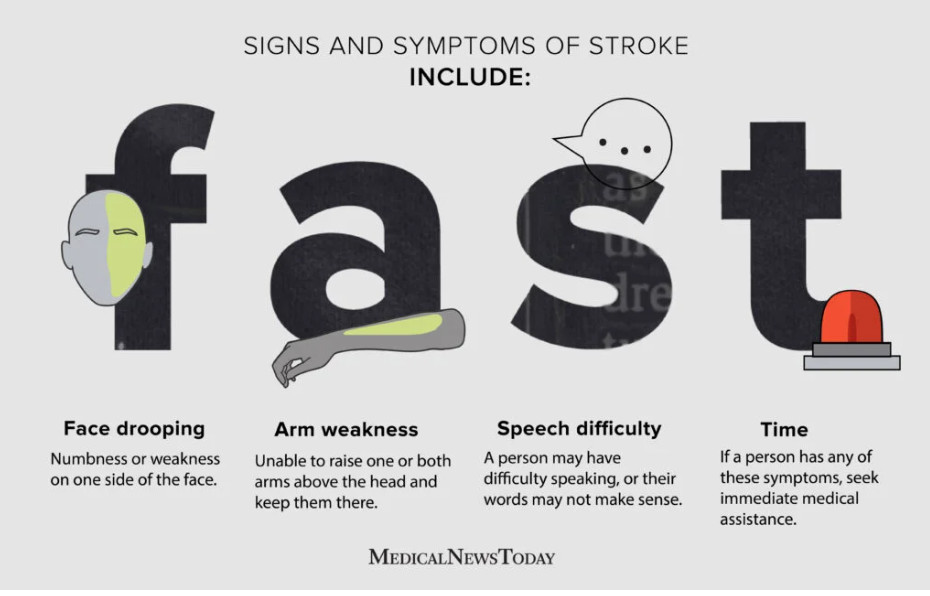
The acronym FAST can help a person to remember the most common symptoms and signs of a stroke, which are:
- Face drooping (F): A stroke can cause numbness or weakness on one side of the face. When a person with this symptom tries to smile, only one side of their mouth may respond.
- Arm weakness (A): A person having a TIA or stroke may be unable to raise one or both arms above their head and keep them there.
- Speech difficulty (S): A person may have difficulty speaking, or their words may not make sense.
- Time (T): If a person has any of the above symptoms, seek immediate medical assistance. A stroke is a medical emergency, and receiving urgent treatment can help prevent further injury to the brain.
A person having a stroke may show several symptoms or only one, such as one-sided weakness.
Other symptoms of a stroke include:
- double vision
- drowsiness
- nausea or vomiting
- headache
- dizziness
- pain
- feeling faint or lightheaded
- confusion
A 2023 study using data from MRI scans found that there are anatomic differences in stroke mechanisms between males and females that make certain symptoms more likely.
A2021 systematic review and meta-analysis found that women experiencing stroke are more likely to demonstrate:
- headache
- altered consciousness
- coma
- stupor, which refers to when a person is unresponsive but conscious
A 2022 systematic review and meta-analysis suggested that women are more likely to show generalized weakness, mental status change, fatigue, and loss of consciousness.
These analyses also note that men more commonly present with:
- muscle weakness and one-sided muscle weakness
- focal visual disturbances, which affect specific parts of a person’s field of vision
- ataxia
- dysarthria
- imbalance
It is important to note, however, that anyone can demonstrate all of the symptoms above. If anyone notices a person is experiencing any signs or symptoms of stroke, they should contact their local emergency services immediately.
Stroke recovery in males
There are significant differences in the rehabilitation and discharge of people who had a stroke. These differences may suggest that doctors need to consider the sex and age of a person in care planning.
A 2020 study found that doctors were more likely to discharge males than females. Males were also more likely to not require home care after discharge.
This may be because men tend to be younger than women when they have strokes. As a result, their bodies may be better able to recover.
Recovery after a stroke depends on many factorsTrusted Source. These include:
- the area of the brain affected by the stroke
- the amount of time that oxygen and blood were not flowing correctly
- a person’s overall health before the stroke
Some people fully recover from a stroke and experience no lasting effects. Others require long-term physical therapy and medications. These medications may:
- thin the blood
- lower blood pressure
- reduce cholesterol
A stroke can affect anyone, but there are some things that increase a person’s risk of a stroke. It is important to know what the risk factors are so that people can do certain things to help reduce the risk. These include:
- Age: The older a person is, the narrower and harder their arteries are likely to be. This can cause atherosclerosis, where the arteries become clogged.
- Medical conditions: Certain conditions increase the risk of stroke, such as high blood pressure, diabetes, obesity, and high cholesterol.
- Lifestyle factors: Certain behaviors such as smoking, drinking excessive amounts of alcohol, and not eating a balanced diet can damage blood vessels.
- Family history: If a first-degree relative has had a stroke, a person’s risk is likely to be higher.
- Environmental factors: Living or working in areas with air pollution may contribute to stroke risk.
- Mental health conditions: Anxiety, depression, and stress may contribute to stroke risk, as well as limited contact with loved ones or other people.
It is also important to note that, in the United States, stroke is more common in Black, Alaska Native, American Indian, and Hispanic adults than in white adults.
Pregnancy, the use of birth control pills, and hormone replacement therapy can increase stroke risk in women.
A person should speak with their healthcare professional if they have close relatives who have had a stroke or heart attack, as some types of high cholesterol can run in families.
Outlook
A stroke is severe, regardless of a person’s sex. People with risk factors such as high blood pressure and a history of smoking have an increased risk.
However, a person can significantly reduce their risk by avoiding smoking, limiting alcohol consumption, having an active lifestyle, and eating a balanced, nutritious diet.
Understanding and remembering the FAST acronym can help with recognizing the symptoms of a stroke and ensuring that the person receives urgent treatment.
The sooner a person receives treatment, the more likely they are to recover.
Disclaimer
Artificial Intelligence Disclosure & Legal Disclaimer
AI Content Policy.
To provide our readers with timely and comprehensive coverage, South Florida Reporter uses artificial intelligence (AI) to assist in producing certain articles and visual content.
Articles: AI may be used to assist in research, structural drafting, or data analysis. All AI-assisted text is reviewed and edited by our team to ensure accuracy and adherence to our editorial standards.
Images: Any imagery generated or significantly altered by AI is clearly marked with a disclaimer or watermark to distinguish it from traditional photography or editorial illustrations.
General Disclaimer
The information contained in South Florida Reporter is for general information purposes only.
South Florida Reporter assumes no responsibility for errors or omissions in the contents of the Service. In no event shall South Florida Reporter be liable for any special, direct, indirect, consequential, or incidental damages or any damages whatsoever, whether in an action of contract, negligence or other tort, arising out of or in connection with the use of the Service or the contents of the Service.
The Company reserves the right to make additions, deletions, or modifications to the contents of the Service at any time without prior notice. The Company does not warrant that the Service is free of viruses or other harmful components.