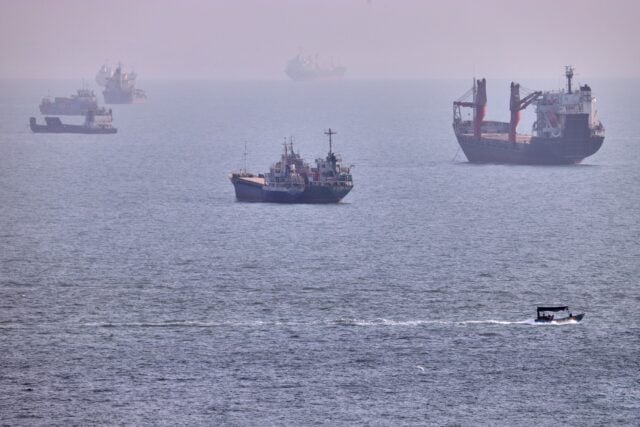
Naval friction in the Middle East has reached another boiling point. The Strait of Hormuz remains the center of this storm. Recently, American naval forces confronted Iranian Revolutionary Guard units in the waterway. U.S. officials reported intercepting Iranian vessels attempting to place explosive sea mines. In response, Tehran launched retaliatory drone and rocket strikes against regional outposts. Military patrols now monitor every vessel entering the narrow passage. This waterway handles roughly one-fifth of global oil shipments. Cargo ships carry millions of barrels of crude through daily. Any single mistake could quickly spark a much wider conflict.
The U.S. Navy continues to strictly enforce the U.S. blockade against Iran. As of Sept. 2, U.S. forces have redirected 86 commercial vessels, disabled 3 and boarded 2 to ensure compliance. pic.twitter.com/y5ZbqkvVod
— U.S. Central Command (@CENTCOM) September 2, 2026
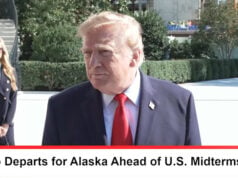
President Donald Trump addressed the tense standoff earlier Wednesday. He insisted that the strategic waterway remains operational. “The strait is open,” Trump stated during his remarks. He claimed advanced American underwater minesweepers have cleared key shipping routes. Trump noted that U.S. forces recently escorted two dozen commercial vessels safely through. Yet his tone carried severe warnings for Tehran. He pledged to strike back hard if Iran targets American ships. Trump also delivered a blunt message directly to domestic consumers. He warned that gas prices might stay higher for now. Paying more at the pump, he argued, counters an evil regime.

Energy markets are reacting swiftly to the ongoing naval standoff. Crude oil prices spiked immediately following reports of military skirmishes. Brent crude climbed above ninety-one dollars per barrel this week. Traders remain deeply worried about prolonged shipping interruptions. Insurance premiums for commercial tankers have jumped dramatically. Some tanker captains now refuse to enter the Persian Gulf entirely. Others take risky detours that add significant transit time and expense. Even minor disruptions in supply trigger heavy price swings across exchanges. As long as naval drones hover overhead, market volatility will persist.
Everyday drivers are already feeling the direct pinch from this conflict. Retail gasoline prices across the United States are steadily ticking upward. Service stations in several states are seeing prices jump ten cents overnight. Diesel fuel has experienced an even steeper climb in recent days. National diesel costs recently surpassed five dollars and sixty cents per gallon. Higher diesel expenses quickly drive up freight and shipping charges nationwide. That dynamic pushes grocery bills and retail goods even higher. Families are watching fuel costs eat into their monthly budgets once again. Energy analysts warn that relief is unlikely before diplomacy takes hold.
Geography makes the Strait of Hormuz uniquely vulnerable during wartime. The navigable shipping channel is only two miles wide in each direction. That narrow corridor lies right off the southern coast of Iran. Iranian coastal batteries and fast patrol craft maintain constant line of sight. Meanwhile, the United States enforces its naval blockade against Iranian cargo. Tehran insists no foreign vessels should dictate regional maritime security. Both sides claim authority over who passes through the strait. This high-stakes standoff creates an extraordinary hazard for global commerce.
Can diplomatic efforts calm the waters before a broader war erupts? Regional mediators from Qatar and Oman are pushing for a corridor agreement. Their plan would establish joint mine-clearing and safe commercial lanes. However, official talks between Washington and Tehran remain completely stalled. Neither side appears ready to back down or make substantial concessions. Until an agreement holds, oil tankers will navigate dangerous waters. Drivers should prepare for bumpy rides at the pump this autumn. The world economy hangs on twenty miles of contested sea.
Sources Used
Disclaimer
Artificial Intelligence Disclosure & Legal Disclaimer
AI Content Policy.
To provide our readers with timely and comprehensive coverage, South Florida Reporter uses artificial intelligence (AI) to assist in producing certain articles and visual content.
Articles: AI may be used to assist in research, structural drafting, or data analysis. All AI-assisted text is reviewed and edited by our team to ensure accuracy and adherence to our editorial standards.
Images: Any imagery generated or significantly altered by AI is clearly marked with a disclaimer or watermark to distinguish it from traditional photography or editorial illustrations.
General Disclaimer
The information contained in South Florida Reporter is for general information purposes only.
South Florida Reporter assumes no responsibility for errors or omissions in the contents of the Service. In no event shall South Florida Reporter be liable for any special, direct, indirect, consequential, or incidental damages or any damages whatsoever, whether in an action of contract, negligence or other tort, arising out of or in connection with the use of the Service or the contents of the Service.
The Company reserves the right to make additions, deletions, or modifications to the contents of the Service at any time without prior notice. The Company does not warrant that the Service is free of viruses or other harmful components.