Tensions in the Middle East have erupted into open warfare once again as the United States military launched a massive wave of offensive air and missile strikes against Iranian military targets across multiple provinces. The heavy military operation, executed by U.S. Central Command (CENTCOM), marks a major escalation in the region and effectively collapses a fragile ceasefire agreement that had been brokered just weeks prior in June.
At 7:15 p.m. ET today, U.S. Central Command forces began launching the third round of strikes this week against Iran after Islamic Revolutionary Guard Corps forces blatantly attacked M/V GFS Galaxy, a Cyprus-flagged container ship transiting the Strait of Hormuz. A civilian crew…
— U.S. Central Command (@CENTCOM) July 11, 2026
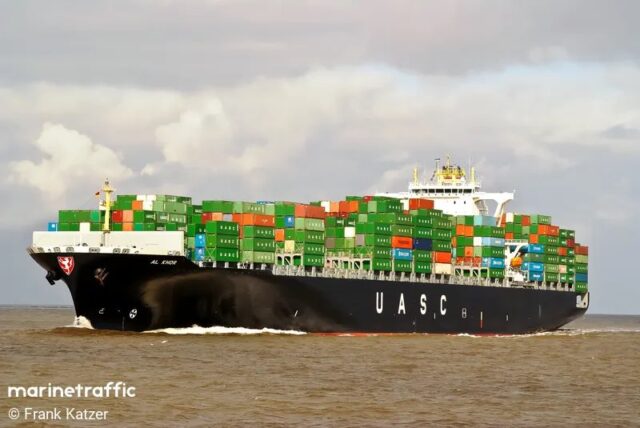
According to official Pentagon briefings and international maritime monitoring agencies, the U.S. precision strikes were initiated in immediate retaliation for an unprovoked series of Iranian attacks targeting commercial shipping vessels transiting the strategic Strait of Hormuz. On Tuesday, Iranian forces reportedly fired upon three merchant ships, including the Marshall Islands-flagged M/T Al Rekayyat, the Saudi Arabia-flagged M/T Wedyan, and the Liberian-flagged M/T Cyprus Prosperity. In a frantic mayday call broadcast from the Al Rekayyat, the crew reported being struck by an explosive drone on the port side near the engine room as the vessel attempted to travel south out of the strait. Gulf neighbors reacted swiftly, with Saudi Arabia condemning the strikes as a direct threat to global energy supplies. Meanwhile, Qatar, which had been acting as a primary mediator in the peace talks, summoned Iran’s deputy ambassador to strongly protest the aggression.

Visualizing the Conflict Zone: The map illustrates the narrow passage of the Strait of Hormuz, separating Iran and its port city of Bandar Abbas from the tip of Oman and the United Arab Emirates. This tiny corridor connects the Persian Gulf to the Gulf of Oman, forcing international oil tankers to pass directly adjacent to Iranian coastal military networks, making it a severe naval chokepoint during active hostilities.
The renewed hostilities have effectively shattered the 14-point memorandum of understanding signed by Washington and Tehran on June 17, which had established a tentative truce. Following consecutive nights of American strikes, President Donald Trump declared that the temporary peace agreement is officially “over”. The Trump administration also moved swiftly to revoke a temporary sanctions waiver that had previously permitted Tehran to export limited amounts of oil, instantly cutting off the primary economic benefit provided to Iran under the short-lived ceasefire deal.
“Anything that happens is going to happen very fast,” President Trump stated from the sidelines of an international summit, describing the strikes as necessary retribution to preserve global shipping lanes. Vice President JD Vance echoed these firm sentiments during a public address, stating that since Iran broke its good behavior and chose to shoot at ships, the U.S. military had no choice but to respond. “If they try to close it down, there’s going to be a response,” Vance warned.
Meanwhile, the United Nations International Maritime Organization (IMO) reported that the sudden outbreak of hostilities has brought commercial shipping to a near-standstill in the Strait of Hormuz. Thousands of seafarers remain stranded aboard hundreds of vessels as global maritime agencies warn all transit to avoid the chokepoint until basic safety conditions can be fully restored. Iranian health authorities reported that at least 14 people have been killed and dozens more injured in the initial waves of American strikes, which heavily hit coastal cities such as Bandar Abbas, Sirik, and Bushehr. Despite explosions rocking the southwestern Bushehr province, official media reports indicate that Iran’s commercial nuclear power plant complex in the area sustained no structural damage. As international energy markets brace for volatile price fluctuations, U.S. defense forces remain fully postured to hold Tehran accountable.
Sources and Links:
- U.S. Central Command (CENTCOM): U.S. Forces Complete New Round of Retaliatory Strikes Against Iran
- UN News: US-Iran war leaves shipping at near-standstill in Hormuz again
- The Guardian: US launches strikes on Iran for a second day after Trump says agreement to end the war is ‘over’
- The Guardian: US launches strikes against Iran after attacks on vessels in strait of Hormuz
- The Washington Post: U.S. and Iran launch fresh strikes following attacks on commercial ships
- CBS News: Iran and U.S. ramp up tit-for-tat strikes as Khamenei laid to rest
Disclaimer
Artificial Intelligence Disclosure & Legal Disclaimer
AI Content Policy.
To provide our readers with timely and comprehensive coverage, South Florida Reporter uses artificial intelligence (AI) to assist in producing certain articles and visual content.
Articles: AI may be used to assist in research, structural drafting, or data analysis. All AI-assisted text is reviewed and edited by our team to ensure accuracy and adherence to our editorial standards.
Images: Any imagery generated or significantly altered by AI is clearly marked with a disclaimer or watermark to distinguish it from traditional photography or editorial illustrations.
General Disclaimer
The information contained in South Florida Reporter is for general information purposes only.
South Florida Reporter assumes no responsibility for errors or omissions in the contents of the Service. In no event shall South Florida Reporter be liable for any special, direct, indirect, consequential, or incidental damages or any damages whatsoever, whether in an action of contract, negligence or other tort, arising out of or in connection with the use of the Service or the contents of the Service.
The Company reserves the right to make additions, deletions, or modifications to the contents of the Service at any time without prior notice. The Company does not warrant that the Service is free of viruses or other harmful components.