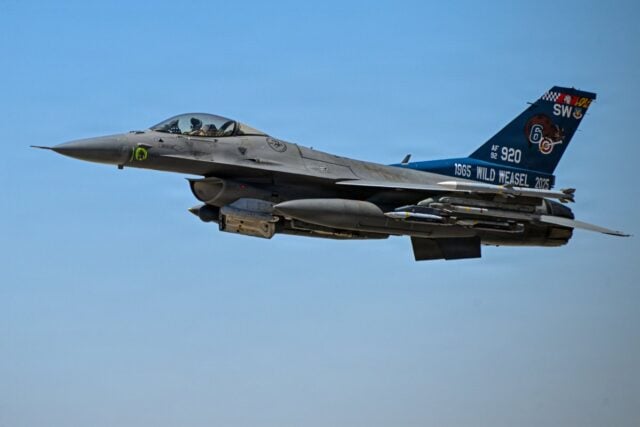
Night after night, the sky above the Middle East continues to light up as military strikes intensify, marking a perilous turn in global geopolitical stability. On Thursday night, the United States military completed its 13th consecutive night of precision air and missile attacks against military installations across Iran. What began as targeted retaliation has mushroomed into a full-scale maritime and economic crisis. As military capabilities engage across key international shipping lanes, the conflict is no longer confined to tactical military objectives—it has spilled directly into global financial markets, energy exchanges, and grocery aisles worldwide.
With crucial maritime chokepoints squeezed by naval blockades and insurgent strikes, international oil prices have breached psychological resistance levels. The global economy now faces severe supply chain headwinds reminiscent of historical energy crises. Consumers, investors, and central banks are left grappling with the immediate fallout of rising fuel costs, volatile stock markets, and mounting inflationary pressure across basic household essentials.
Military Escalation: How Iran and the Houthis Continue Fighting
⚡️BREAKING: Another Oil Tanker has been Hit by Iran in the Strait of Hormuz for crossing without Permission
The Tanker War is now taking place both in the Strait of Hormuz and the Bab Al Mandeb Strait
The world may soon face a Shortage of Oil Tankers to export oil pic.twitter.com/52oQARz2bL
— IRGC NEWS (@IRGC_IRAN_News) July 23, 2026
BREAKING: A Saudi oil tanker is on fire after being struck by the Houthis approximately 70 km north of the Yemeni border, according to UKMTO.
The vessel had departed from Yanbu before the reported attack. The Yemeni Houthis later said “large-scale operations are underway.”… pic.twitter.com/RcUrtPA46X
— The Hormuz Report (@HormuzReport) July 23, 2026

The 13th consecutive night of American military action targeted critical Iranian military infrastructure. According to U.S. Central Command (CENTCOM), late-night bombardments focused on Islamic Revolutionary Guard Corps (IRGC) command centers, drone storage facilities, coastal surveillance radar sites, and communication networks. The explicit operational goal is to degrade Tehran’s ability to threaten international shipping transiting regional waters. However, Iranian forces and their regional allies show no signs of backing down.
Tehran has effectively restricted commercial transit through the Strait of Hormuz—the narrow waterway through which roughly 20 percent of the world’s petroleum and liquefied natural gas (LNG) flows. Iranian naval units and IRGC forces have laid sea mines along key navigation routes while claiming responsibility for explosions that damaged commercial oil tankers attempting to navigate the passage.
As depicted in the maritime map above, the Strait of Hormuz represents an irreplaceable bottleneck where hundreds of commercial crude tankers converge between Iran and Oman. When military actions or naval blockades disrupt traffic through this narrow corridor, the immediate result is stranded vessels and a rapid contraction of available crude on global spot markets.
Energy Shock: Crude Oil and Gasoline Prices Surge
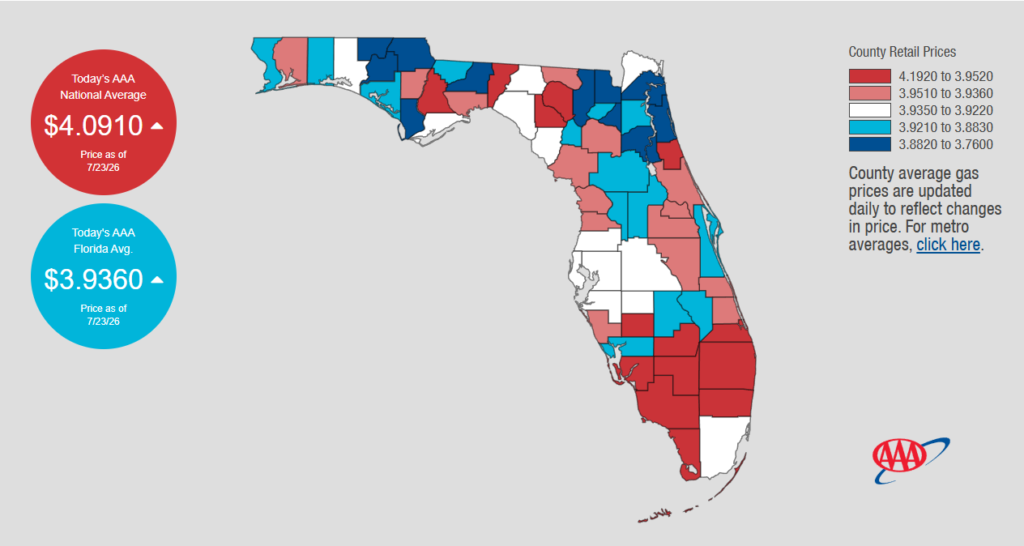
Click the map for updated gas prices
 The immediate casualty of these dual maritime blockades has been energy benchmark pricing. International benchmark Brent crude surged past $100 per barrel on Thursday, settling at $100.69—its highest level in months—after gaining over 7 percent in a single trading session. Meanwhile, U.S. West Texas Intermediate (WTI) crude climbed above $88 a barrel. Market analysts emphasize that while physical supplies have not been completely severed, the growing geopolitical risk premium is pushing prices higher as energy traders price in long-term supply disruptions.
The shockwaves from $100 crude spilled over instantly to retail pump prices across the United States and Europe. AAA reported that average regular gasoline in the U.S. reached $4.09 per gallon on Thursday, jumping more than 15 cents in less than a week. Drivers in most U.S. states are now paying $4.00 or more per gallon, with industry experts warning that additional increases are locked in due to the typical time lag between wholesale crude purchasing and retail distribution. Analysts note that as long as military engagements around Hormuz and the Red Sea persist, pump prices will remain under upward pressure, stretching household budgets during peak travel periods.
Supply Chains, Grocery Bills, and Household Staples
Higher energy costs do not remain isolated at the gas station; they ripple through every layer of the global supply chain. Agriculture and food distribution are acutely vulnerable to fuel shocks. Farmers rely heavily on diesel fuel to operate heavy machinery, while food processing plants and distribution networks rely on refrigerated trucking to haul fresh produce, dairy, and meat.
Consequently, grocery prices are mounting globally. In the Gulf Cooperation Council (GCC) region—which relies on the Strait of Hormuz for more than 80 percent of its food imports—disruptions triggered a major supply emergency, forcing emergency airlifts of basic staples. In the United States and Europe, freight carriers like UPS and FedEx have introduced fuel surcharges to offset skyrocketing diesel and jet fuel prices. Industry indices reveal that truckload freight pricing has hit multi-year highs.
These logistics costs are directly transferred to consumers. Grocery chains have lowered their financial outlooks due to rising operational expenses and cautious consumer spending. Everyday grocery items—especially imported olive oil, fresh vegetables, refrigerated dairy, and packaged goods—are seeing sharp price increases. Furthermore, with the back-to-school shopping season underway, costs for school supplies, apparel, and consumer electronics are climbing as maritime carriers pass along surcharges for rerouting cargo ships around the African continent.
Wall Street Turbulence and Global Market Reactions
Financial markets reacted sharply to news of the 13th night of strikes and the resurgence of $100 crude. Stock indexes plummeted across major global exchanges as investors weighed the prospect of a prolonged conflict triggering a fresh wave of global inflation. On Wall Street, the tech-heavy Nasdaq Composite dropped 2.2 percent, led by steep declines in major technology and automotive shares, while the S&P 500 fell 1.2 percent.
The bond market experienced significant turbulence as well. The yield on the U.S. 10-year Treasury note climbed to 4.71 percent—an 18-month high—as traders rapidly priced out expected central bank interest rate cuts. In Europe, German 10-year bond yields touched their highest levels since 2011. Central banks are caught in a difficult position: the European Central Bank (ECB) warned that the full inflationary impact of the energy shock has yet to materialize, forcing monetary authorities to hold borrowing costs elevated despite slowing economic growth. The threat of stagflation—a combination of stagnant growth and high inflation—has once again become a central concern for institutional investors.
Outlook
As military operations enter their second week with no clear off-ramp, the geopolitical impasse shows few signs of swift resolution. With the United States expanding its aerial campaign, Iran maintaining its naval blockade, and Houthi forces disrupting Red Sea commercial shipping, global markets remain on high alert. Until maritime routes are secured and military escalation subsides, businesses and consumers worldwide will continue to bear the heavy economic burden of this expanding conflict.
EDITORIAL DISCLAIMER: Be advised that certain video footage or still photographs appearing in this article may or may not have been synthesized, altered, or generated utilizing artificial intelligence (AI) technologies by foreign government entities or foreign state-affiliated actors.
Sources and Links:
- PBS NewsHour: U.S. military launches 13th night strikes on Iran as clashes escalate over shipping routes
- CBS News: Iran War Latest: U.S. carries out more strikes as Trump threatens Iran, Houthis with “major military punishment”
- The Times of Israel: US military launches fresh round of strikes on Iran for the 13th consecutive night
- The Straits Times: US military says it completed 13th consecutive night of strikes on Iran
- Livemint: Crude oil prices climb to six-week high with Brent above $95 amid escalating US-Iran war
- Financial Times: Oil hits $100 as Trump weighs ‘massive attack’
- AP News: Gas, groceries and back-to-school items are where shoppers might see higher oil prices surface
Disclaimer
Artificial Intelligence Disclosure & Legal Disclaimer
AI Content Policy.
To provide our readers with timely and comprehensive coverage, South Florida Reporter uses artificial intelligence (AI) to assist in producing certain articles and visual content.
Articles: AI may be used to assist in research, structural drafting, or data analysis. All AI-assisted text is reviewed and edited by our team to ensure accuracy and adherence to our editorial standards.
Images: Any imagery generated or significantly altered by AI is clearly marked with a disclaimer or watermark to distinguish it from traditional photography or editorial illustrations.
General Disclaimer
The information contained in South Florida Reporter is for general information purposes only.
South Florida Reporter assumes no responsibility for errors or omissions in the contents of the Service. In no event shall South Florida Reporter be liable for any special, direct, indirect, consequential, or incidental damages or any damages whatsoever, whether in an action of contract, negligence or other tort, arising out of or in connection with the use of the Service or the contents of the Service.
The Company reserves the right to make additions, deletions, or modifications to the contents of the Service at any time without prior notice. The Company does not warrant that the Service is free of viruses or other harmful components.