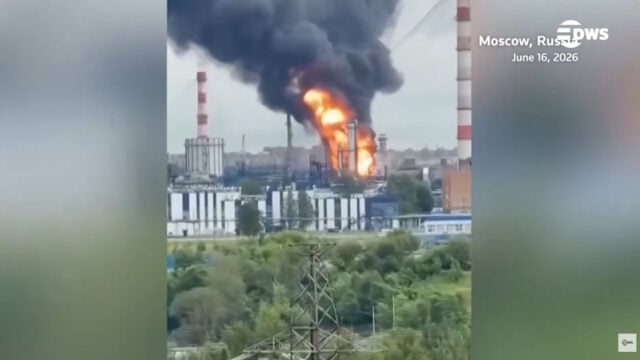
President Volodymyr Zelensky made Ukraine’s next military moves very clear. Ukrainian forces will aggressively target Russian oil refineries. The announcement came right after Russia unleashed fresh missile waves. Moscow has expanded its strikes against Ukrainian civilian infrastructure. Ukrainian cities now face severe power cuts ahead of winter. Zelensky stressed that Kyiv must respond directly to these assaults. “With their attacks on our energy, we must respond,” he noted.
Refineries provide the cash that keeps Moscow’s war machine running. By disabling these facilities, Ukraine intends to choke off Russian revenue. Oil money funds soldiers, tanks, and daily missile production. Kyiv’s long-range drones have already hit plants hundreds of miles away. Recent strikes disrupted production at major facilities across western Russia. Ukraine has developed advanced drones that bypass Russian air defenses. These unmanned systems can strike deep inside enemy territory without warnings. For ordinary Russians, the conflict is no longer a distant event.

Western allies have occasionally voiced concern about this aggressive campaign. Some officials worry that disrupted refining capacity could spike fuel prices. Diesel and crude markets react quickly to refinery outages. The White House previously urged restraint to keep fuel prices stable. Yet Zelensky rejected the idea that Ukraine should hold back. He argued that Ukraine cannot simply endure endless blackout attacks. Without adequate air defense missiles, offensive deterrence remains essential. Kyiv refuses to fight with one hand tied behind its back.
Zelensky emphasized a crucial difference between the two nations’ strategies. Ukraine focuses strictly on economic targets and military logistical hubs. “We will not respond on any civilian objects,” Zelensky stated. In contrast, Russian strikes routinely hit residential zones and power grids. Ukrainian intelligence recently uncovered Moscow’s new winter attack doctrine. The plan reportedly aims to drive civilians from major Ukrainian cities. Bridges, subways, and heating plants have all become regular targets. Hitting refineries offers Ukraine an asymmetric way to fight back.
The economic pressure on the Kremlin is steadily mounting. Repairing complex catalytic cracking units requires specialized foreign equipment. Sanctions make sourcing these industrial replacement parts very difficult. Every burning refinery means less fuel for front-line military transport. It also forces Russia to divert precious air defense systems backward. Moscow must choose between guarding frontlines or protecting fuel depots. That strategic dilemma creates openings for Ukrainian ground troops.
As winter approaches, energy remains the primary battleground of this war. Ukraine refuses to let Russia destroy its power grid without consequence. Zelensky’s message to Moscow and the world is crystal clear. If Russia attacks Ukrainian heat and electricity, its refineries will burn. This high-stakes campaign shows no signs of slowing down anytime soon. Kyiv believes that raising the economic cost is the only path forward.
Sources Used
- The Moscow Times – https://www.themoscowtimes.com/2026/10/03/ukraine-will-hit-russian-refineries-in-response-to-moscows-new-doctrine-of-airstrikes-a93864
- Ukrinform – https://www.ukrinform.net/amp/rubric-ato/4170759-ukraine-to-step-up-strikes-on-russian-oil-refineries-in-response-to-putins-new-doctrine-zelensky.html
- The Kyiv Independent – https://kyivindependent.com/zelensky-defends-ukrainian-strategy-of-targeting-russian-oil-refineries-emphasizes-self-defense/
- The Washington Post – https://www.washingtonpost.com/opinions/2026/09/28/russia-needs-pay-higher-price-attacks-ukraine-europe/
Disclaimer
Artificial Intelligence Disclosure & Legal Disclaimer
AI Content Policy.
To provide our readers with timely and comprehensive coverage, South Florida Reporter uses artificial intelligence (AI) to assist in producing certain articles and visual content.
Articles: AI may be used to assist in research, structural drafting, or data analysis. All AI-assisted text is reviewed and edited by our team to ensure accuracy and adherence to our editorial standards.
Images: Any imagery generated or significantly altered by AI is clearly marked with a disclaimer or watermark to distinguish it from traditional photography or editorial illustrations.
General Disclaimer
The information contained in South Florida Reporter is for general information purposes only.
South Florida Reporter assumes no responsibility for errors or omissions in the contents of the Service. In no event shall South Florida Reporter be liable for any special, direct, indirect, consequential, or incidental damages or any damages whatsoever, whether in an action of contract, negligence or other tort, arising out of or in connection with the use of the Service or the contents of the Service.
The Company reserves the right to make additions, deletions, or modifications to the contents of the Service at any time without prior notice. The Company does not warrant that the Service is free of viruses or other harmful components.