Introduction: The Midnight Pivot
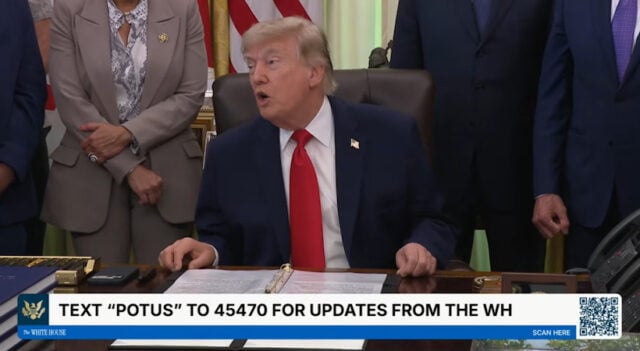
In a stunning geopolitical turn of events, President Donald Trump announced late Thursday evening, June 11, 2026, that he had ordered an immediate halt to all scheduled military strikes and bombings against the Islamic Republic of Iran. The decision represents one of the most sudden and dramatic diplomatic shifts of his presidency, arriving just hours after Trump had publicly threatened to launch devastating strikes against Iran’s domestic infrastructure, warning that the U.S. military would dismantle Tehran’s remaining air defense, radar networks, and potentially take total control of crucial oil hubs like Kharg Island.
Instead of an absolute escalation, the White House has chosen a path of conditional de-escalation, claiming that direct negotiations have yielded a comprehensive “agreement in principle.” Taking to his Truth Social platform, President Trump confirmed the standby order directly to the public:
“Based on the fact that discussions with the Islamic Republic of Iran have been brought to the highest level of Iranian leadership and approved, I have, as President of the United States of America, cancelled the scheduled strikes and bombings against Iran this evening.”
The announcement has sent shockwaves through international diplomatic corridors, global energy markets, and domestic political circles alike. Trump specified that the final pillars of the arrangement have been thoroughly vetted and approved “in both concept and great detail” by an expansive coalition of involved regional powers. However, the administration made it explicitly clear that pressure is not being entirely removed; the heavy U.S. naval blockade surrounding the Strait of Hormuz will remain in full force and effect until a formal treaty is fully finalized and signed by all respective heads of state.
The Path to the Brink: A Timeline of the 2026 Escalation
To fully comprehend the gravity of Thursday night’s operational stand-down, one must look at the highly volatile backdrop of the broader conflict, which originally erupted into open warfare between the United States, Israel, and Iran in February 2026. Over the past three and a half months, the Middle East has experienced soaring energy costs, severe supply chain disruptions, and a fragile, frequently violated ceasefire regime that repeatedly threatened to devolve into an unmitigated regional catastrophe.

The immediate catalyst for this week’s near-miss occurred on Monday, when Iranian forces successfully shot down an American Apache helicopter operating near the contested waters of the Strait of Hormuz. In a historic military first, the two Apache crew members were successfully rescued from the gulf waters by an advanced U.S. naval sea drone—marking the first operational rescue of its kind in American military history.
Despite the bloodless recovery of the personnel, the administration viewed the downing as an unacceptable breach of terms. The timeline below illustrates how rapidly the situation deteriorated over the subsequent 72 hours before the sudden breakthrough:
- Downing of the Apache Helicopter
- Monday, June 8, 2026
- Iranian defense forces shoot down an American Apache helicopter near the Strait of Hormuz. The crew is rescued via a U.S. military sea drone, avoiding immediate casualties but triggering national security meetings in Washington.
- Vance Hints at Diplomatic Space
- Tuesday Morning, June 9, 2026
- Vice President JD Vance signals that the U.S. remains open to a comprehensive nuclear settlement, describing a potential deal as a “home run,” while Trump simultaneously warns that a heavy military response to the helicopter downing is being planned.
- Centcom Outbreak of Exchanges
- Wednesday, June 10, 2026
- U.S. Central Command launches proportional “self-defense strikes” destroying Iranian radar and air defense infrastructure along the coast. Iranian forces retaliate instantly by firing missiles at American airbases across the Middle East.
- The Ultimatum and the Eleventh-Hour Deal
- Thursday, June 11, 2026
- Trump issues a morning ultimatum threatening to strike Iranian domestic targets and seize Kharg Island oil networks. Following intense backchannel diplomacy mediated by regional partners, Trump cancels the planned evening bombings, announcing an agreement in principle.
The rapid shift from intensive, direct military exchanges on Wednesday evening to an absolute suspension of hostilities on Thursday night highlights the high-stakes brinkmanship defining the current administration’s foreign policy playbook.
Inside the “Agreement in Principle”
While the precise legal text of the memorandum of understanding remains under strict wrap, key structural elements of the emerging pact have leaked through intelligence briefs and senior diplomatic correspondence. The agreement aims to permanently terminate the hot war that began in February, while establishing a brand-new framework to handle Iran’s nuclear capabilities.
According to preliminary details reported by regional sources, the draft arrangement operates on a phased quid pro quo system structured to unfold over an initial 60-day window:
| Phase / Component | United States & Allied Actions | Iranian Commitments |
| Immediate Ceasefire | Suspension of all scheduled air strikes, bombings, and offensive operations. | Total halt of missile barrages against U.S. assets, regional bases, and allied territories. |
| Maritime Shipping | Phased drawdown of the U.S. Naval Blockade upon formal signing of the contract. | Immediate reopening of the Strait of Hormuz with guaranteed zero-toll transit for global commercial shipping. |
| Economic Incentives | Structured release of approximately $25 billion in overseas Iranian assets frozen in foreign banks. | Cessation of hostilities and financial/logistical support across proxy networks, notably within southern Lebanon. |
| Nuclear Mandate | Provision of technological verification frameworks and potential assistance with safety protocols. | Acceptance of severe, long-term limitations on uranium enrichment and agreement to dismantle or hand over core stockpiles. |
The nuclear component is arguably the most controversial element of the deal. In a recent broadcast interview, President Trump signaled an unorthodox approach to verifying the elimination of Iran’s weaponization capabilities, hinting that American personnel might work directly alongside local technicians. “If we make a deal that now we’re friendly, we’ll all go together,” Trump remarked. “It’ll be our equipment. We’ll take it out and destroy it, whether it’s on site or whether we take it off site.”
The Multilateral Coalition: Aligning Regional Powers
A standout aspect of this diplomatic breakthrough is the staggering array of international actors involved in bringing both sides to the table. In his public declaration, President Trump went out of his way to list a diverse web of nations that have actively reviewed and approved the concept, including Israel, Saudi Arabia, the United Arab Emirates, Qatar, Turkey, Pakistan, Bahrain, Kuwait, Jordan, and Egypt.
The inclusion of Pakistan is particularly notable. Over the past month, Pakistani military leadership, alongside Prime Minister-led diplomatic teams, has served as a central conduit for backchannel messages between Washington and Tehran. This mediation track succeeded in extending a series of temporary ceasefires throughout late April and May, providing the necessary diplomatic runway for negotiators to work out the highly technical “great detail” of the shipping lanes and asset releases.
Similarly, Turkey and Qatar have acted as critical physical nodes for the talks, hosting neutral-ground summits where American special envoys, including Steve Witkoff and senior adviser Jared Kushner, could review draft proposals away from the media spotlight.
However, getting all of these regional actors to align is a massive challenge. While Gulf states like Saudi Arabia and the UAE are eager to see the Strait of Hormuz stabilized to secure their own oil export revenues, Israel’s security establishment views any deal with deep skepticism. Israeli officials remain highly concerned that a 60-day window might allow regional proxy groups to reorganize along their northern border.
The Vance Doctrine and the European Mission
As the final logistics of the signing ceremony come together, the focus turns toward Vice President JD Vance. White House officials have confirmed that Vance will be traveling to Europe on an official diplomatic tour when the formal signing timeline is officially set.
Vance has emerged as the administration’s primary defender of the deal on the home front. Facing pushback from hawkish factions within Congress and intense questioning regarding whether the U.S. is giving up too much leverage, Vance has maintained an aggressive, America-First defense of the negotiations. Speaking to reporters and networks earlier this week, Vance explicitly noted that the primary goal of the administration’s policy is securing long-term defense assurances rather than managing short-term regional updates.
“Right now, I feel that we are in a position to get a deal that is good for the United States economically and that really does deal with the Iranian nuclear program,” Vance stated during an interview with CBS. “Not just now, not just while Donald Trump is president, but for the long term, to where my kids can say when they’re adults: ‘Iran is not going to have a nuclear weapon.’ That’s the goal of the policy.”
When pressed on whether America’s closest Middle Eastern allies—specifically Israel—were fully on board with the terms of the agreement, Vance offered a candid, pragmatic look at the administration’s priorities:
“I think where the president has been very clear here is that while Israel obviously has some objectives that it has, the United States’ main objective in Iran is to ensure that Iran does not have a nuclear weapon… Now, Israel may like that, they may not like that. But fundamentally, we think this is in the best interest of the United States of America.”
Vance’s upcoming European mission is designed to build a strong international consensus around the deal’s enforcement mechanisms. He is tasked with meeting European leaders—specifically the E3 nations (the United Kingdom, France, and Germany)—to coordinate maritime security handoffs for the Strait of Hormuz and secure binding commitments for snapback economic sanctions should Tehran violate any part of the 60-day enrichment freeze. The administration wants to ensure that when the historic document is officially signed, European allies are ready to support its implementation immediately.
Geopolitical Fallout: Domestic Reactions and Global Markets
The domestic political stakes could not be higher. With the pivotal 2026 midterm elections fast approaching this November, the Trump administration is highly motivated to deliver a major foreign policy victory that halts an active, costly conflict. Trump had previously accused Iranian negotiators of attempting to intentionally stall the peace talks to “outwait” him until after the midterms, hoping a shifting congressional landscape might grant them better terms. By threatening overwhelming military force on Thursday morning before pivoting to an agreement at night, Trump successfully forced an accelerated timeline.
Vance confidently predicted that the final diplomatic accord could “absolutely” be signed and implemented well before voters head to the polls. This timeline would allow the administration to campaign on a platform of successful de-escalation, global energy stabilization, and a demonstrated aversion to entering prolonged foreign conflicts.
Simultaneously, global markets reacted with immediate, volatile swings:
- Crude Oil Futures: Brent crude and West Texas Intermediate (WTI), which had both spiked by over 8% following Wednesday’s naval battles, plunged sharply within minutes of Trump’s Truth Social post, dropping back to pre-escalation baselines as traders priced in the imminent reopening of the Strait of Hormuz.
- Maritime Insurance: Shipping insurance premiums for commercial tankers operating in the Persian Gulf saw a sudden stabilizing correction, relieving mounting pressure on global supply chains.
- Defense Equities: Shares of major American aerospace and defense contractors experienced a minor downward adjustment following a multi-week rally fueled by the specter of a expanded Middle Eastern theater.
Conclusion: A Fragile Peace Hanging in the Balance
Despite the triumphant and confident tone coming out of the White House, seasoned foreign policy analysts warn that the situation remains incredibly fluid and fragile. The deal is effectively an agreement in principle, meaning that while the conceptual boundaries have been drawn, the actual implementation requires absolute precision.
Serious hurdles remain on the Iranian side. Reports monitoring the inner workings of the regime indicate that while top negotiators—including Parliamentary Speaker Mohammad-Bagher Ghalibaf—have been deeply involved in the draft phase, the ultimate execution relies entirely on the final approval of Supreme Leader Mojtaba Khamenei. Iranian state media has continued to broadcast cautious rhetoric, with the Fars news agency emphasizing that management and sovereign monitoring of the Strait of Hormuz must ultimately remain under local discretion, directly contradicting some of Washington’s sweeping free-transit assertions.
Furthermore, international watchdogs are urging extreme caution. United Nations Secretary-General António Guterres expressed deep concern over how close the international community came to full-scale war this week, urging both parties to look past aggressive rhetoric and commit strictly to a permanent ceasefire.
The next few days will be critical. As Vice President Vance arrives in Europe to lay the groundwork for international enforcement, the world will be watching to see if the promised “time and place of the signing” materializes. If the agreement holds, it could mark a historic restructuring of Middle Eastern geopolitics; if it fails, the U.S. military assets currently enforcing the naval blockade stand ready to execute the very strikes that were called off at the eleventh hour.
Sources and Links:
- The Hindu: West Asia war LIVE: Trump says cancelling Iran strikes, flags possible deal
- Anadolu Ajansı: Trump cancels planned Iran attacks, says deal nearly ‘finalized’
- The Guardian: Trump claims peace deal with Iran ‘largely negotiated’ with strait of Hormuz to open
- The Guardian: JD Vance claims US ‘very close’ to peace deal with Iran
- The Guardian: First Thing: US and Iran exchange fire as Vance says deal could be months away
- CBS News: Vance: Iran deal could happen in a week or months from now — but “absolutely” before midterms
- The Times of Israel: Vance: Iran deal a ‘home run for the American people,’ whether Israel likes it or not
- KRDO News: Trump cancels US strikes in Iran and suggests agreement is close
Disclaimer
Artificial Intelligence Disclosure & Legal Disclaimer
AI Content Policy.
To provide our readers with timely and comprehensive coverage, South Florida Reporter uses artificial intelligence (AI) to assist in producing certain articles and visual content.
Articles: AI may be used to assist in research, structural drafting, or data analysis. All AI-assisted text is reviewed and edited by our team to ensure accuracy and adherence to our editorial standards.
Images: Any imagery generated or significantly altered by AI is clearly marked with a disclaimer or watermark to distinguish it from traditional photography or editorial illustrations.
General Disclaimer
The information contained in South Florida Reporter is for general information purposes only.
South Florida Reporter assumes no responsibility for errors or omissions in the contents of the Service. In no event shall South Florida Reporter be liable for any special, direct, indirect, consequential, or incidental damages or any damages whatsoever, whether in an action of contract, negligence or other tort, arising out of or in connection with the use of the Service or the contents of the Service.
The Company reserves the right to make additions, deletions, or modifications to the contents of the Service at any time without prior notice. The Company does not warrant that the Service is free of viruses or other harmful components.