What to look for in the map: Notice how tightly the Strait of Hormuz pinches between Iran and Oman. This narrow bottleneck explains why any military confrontation here immediately threatens the flow of global commerce.
BREAKING: The U.S. is preparing for a significantly expanded military campaign against Iran — flooding Israel with dozens of additional refueling tankers, turning Ben Gurion Airport into a forward base for expanded attacks on Iran, a move Tehran has warned will make Israel a… pic.twitter.com/zEQwLf2ppK
— The Hormuz Report (@HormuzReport) July 17, 2026
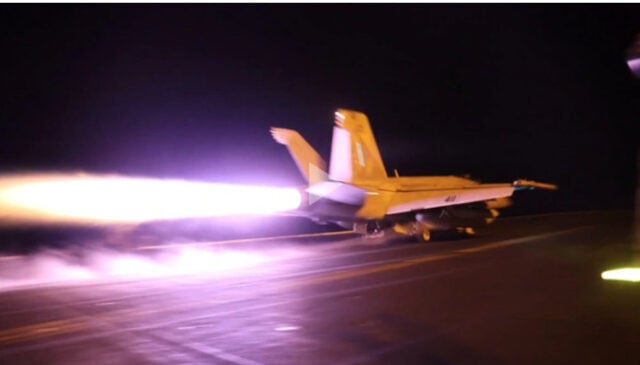
According to US Central Command, the latest wave of strikes targeted key infrastructure. American fighter jets, drones, and warships hit several crucial coastal defense systems. They also targeted cruise missile storage facilities and anti-ship missile sites. Overnight, the American airstrikes expanded to hit major highway and railway bridges. These specific bridges connect vital ports to the central region of Iran. For instance, a traffic tower at the strategic Chabahar port collapsed during the bombing. US officials claim the port was used to facilitate dangerous maritime attacks on tankers.
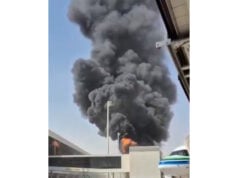
Very Intense activity by the U.S. Air Force near Iran and simultaneously Explosion heard in Sirik, Busher southern Iran. pic.twitter.com/pP49mATlew
— Osint World (@OsiOsint1) July 17, 2026

President Donald Trump faces intense domestic pressure to avoid a prolonged war. However, he recently threatened to target energy plants directly if negotiations do not resume soon. He also floated a twenty percent fee on shipping through the strait. Meanwhile, the human toll in the region is climbing quickly. Iranian health officials reported that the strikes have killed at least thirty-eight people. Over four hundred others have been wounded since the air campaign intensified. The local power grid is also under immense strain. Southern provinces are facing extreme summer heat waves alongside these massive power outages. Citizens are being asked to conserve electricity as infrastructure fails.
Iran’s Islamic Revolutionary Guard Corps is not backing down yet. They have already retaliated by attacking US military positions in neighboring countries. These counterattacks targeted coalition bases located in Bahrain, Kuwait, and Jordan. Tehran also threatened to shut down other critical regional energy export corridors completely. Human rights experts are watching the unfolding situation with deep concern. They warn that hitting civilian infrastructure could potentially constitute a war crime. Still, Washington insists its primary goal is protecting international commerce. The military intends to keep degrading Iranian defenses until the trade routes are secure.
So, where does this wild situation leave us moving forward? Analysts believe a full-scale ground war remains unlikely for now. However, the risk of an accidental miscalculation grows higher each day. The US strongly backs an alternate southern shipping route near Oman. Conversely, Iran demands total jurisdiction over the waters near its own territory. If the current military standoff continues, energy prices worldwide could skyrocket very soon. Both sides are actively testing each other’s geopolitical limits. Finding a quick, peaceful diplomatic solution will be incredibly tough. The global community can only watch and hope for an immediate de-escalation.
Sources and Links:
- U.S. Central Command (CENTCOM): Official Public Release
- The Guardian: World News Coverage
- Air & Space Forces Magazine: National Security Reports
- Military Times: Flashpoint Analysis
- PBS Newshour: World Updates
- The Times of Israel: Middle East Strategy Reporting
Disclaimer
Artificial Intelligence Disclosure & Legal Disclaimer
AI Content Policy.
To provide our readers with timely and comprehensive coverage, South Florida Reporter uses artificial intelligence (AI) to assist in producing certain articles and visual content.
Articles: AI may be used to assist in research, structural drafting, or data analysis. All AI-assisted text is reviewed and edited by our team to ensure accuracy and adherence to our editorial standards.
Images: Any imagery generated or significantly altered by AI is clearly marked with a disclaimer or watermark to distinguish it from traditional photography or editorial illustrations.
General Disclaimer
The information contained in South Florida Reporter is for general information purposes only.
South Florida Reporter assumes no responsibility for errors or omissions in the contents of the Service. In no event shall South Florida Reporter be liable for any special, direct, indirect, consequential, or incidental damages or any damages whatsoever, whether in an action of contract, negligence or other tort, arising out of or in connection with the use of the Service or the contents of the Service.
The Company reserves the right to make additions, deletions, or modifications to the contents of the Service at any time without prior notice. The Company does not warrant that the Service is free of viruses or other harmful components.