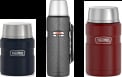
In a move that highlights the critical intersection of household convenience and consumer safety, Thermos L.L.C. has announced a massive recall of approximately 8.2 million food jars and beverage bottles. The recall, coordinated with the U.S. Consumer Product Safety Commission (CPSC), addresses a defect that has led to traumatic injuries, including permanent vision loss. The recall targets the popular “Stainless King” and “Sportsman” lines, products that have been staple items for outdoor enthusiasts, commuters, and students for nearly two decades.
The Scope of the Recall
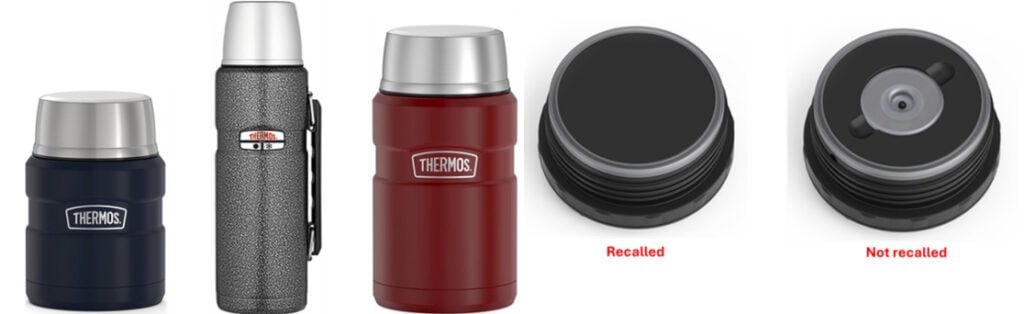
The recall encompasses two primary product types manufactured over a 16-year period. Specifically, it includes the Thermos Stainless King Food Jars (model numbers SK3000 and SK3020) and the Thermos Sportsman Food & Beverage Bottles (model number SK3010). These units were sold in various colors, including matte black, midnight blue, cranberry, and stainless steel.
The sheer volume of the recall—8.2 million units—makes it one of the largest safety actions in the history of the vacuum-insulated container industry. According to the CPSC, approximately 5.8 million of these units are the Stainless King Food Jars, while the remaining 2.3 million are the Sportsman Food & Beverage Bottles. These products were widely available through major retail channels, including Amazon, Target, Walmart, and the official Thermos website, with sales dating back to March 2008 and continuing through July 2024.

Understanding the Hazard: The Physics of Pressure
The hazard identified in this recall is particularly concerning because it occurs during normal use. The issue centers on the container’s stopper. When perishable foods or beverages are stored in these vacuum-insulated jars for an extended period, natural fermentation and heat can lead to a significant buildup of internal pressure.
In most modern insulated containers, stoppers are designed with a pressure-relief valve or a mechanism that allows air to escape gradually as the lid is unscrewed. However, the stoppers in the recalled Thermos units lack this central pressure-relief feature. When a consumer attempts to open a container under pressure, the stopper can forcefully eject like a projectile.
The force of this ejection is high enough to cause serious impact injuries. Furthermore, if the stopper or the rim of the jar breaks during this explosive opening, it creates sharp edges that pose a severe laceration hazard. This combination of “projectile risk” and “sharp-edge risk” makes the defect uniquely dangerous to the face and hands of the user.
Documented Incidents and Life-Altering Injuries
The recall was triggered following 27 reports of consumers being struck by stoppers that ejected with high force. While some reports involved minor bruising or localized pain, others were far more devastating. The CPSC report confirms that medical attention was required for multiple laceration and impact injuries.
Most alarmingly, three consumers have suffered permanent vision loss as a result of being struck in the eye by the ejecting stopper. These life-altering injuries underscore why the CPSC and Thermos are urging consumers to act immediately. When a pressurized lid is released, it travels with enough velocity to cause orbital fractures and internal ocular damage, hazards that are often unexpected when simply preparing to eat a meal or drink a beverage.
How to Identify Recalled Products
Consumers should immediately check the bottom of their Thermos containers to determine if their product is part of this recall. The model numbers are printed on the base of each unit.
- Stainless King Food Jars (16-oz and 24-oz): Look for model numbers SK3000 or SK3020. Only those manufactured before July 2023 are included in the recall.
- Sportsman Food & Beverage Bottles (40-oz): Look for model number SK3010. All units of this model are subject to the recall, regardless of the manufacture date.
Additionally, consumers can identify the recalled stoppers by looking at the center of the underside. If the stopper is a solid piece of plastic with no visible pressure-relief vent or valve in the center, it is likely the defective version.
The Remedy: Replacements and Returns
Thermos L.L.C. has committed to a comprehensive remedy program to remove these hazards from households. The remedy differs slightly depending on which model a consumer owns:
- For Food Jars (SK3000 and SK3020): Thermos will provide a free replacement pressure-relief stopper. To receive the replacement, consumers must stop using the old stopper immediately. Thermos requires owners to dispose of the old stopper and provide a photograph as evidence of disposal to qualify for the free replacement.
- For Sportsman Bottles (SK3010): Because the defect may involve the bottle’s design or assembly in a way that requires a full unit replacement, consumers are asked to return the entire bottle. Thermos will provide a prepaid shipping label for the return and will send a replacement bottle to the consumer at no cost.
Consumers can initiate these claims through the official Thermos support website or by calling their dedicated recall hotline.
A History of Innovation and Trust
Thermos is a brand synonymous with vacuum insulation for over 100 years. Founded in 1904, the company pioneered the use of glass and later stainless steel to maintain the temperature of liquids. For many, a “Thermos” is an essential tool for daily life. The Stainless King line, in particular, was marketed as a rugged, high-performance series capable of keeping food hot for up to 9 hours or cold for 14 hours.
The discovery that a design flaw persisted in such a popular line for 16 years is a significant blow to the industry’s reputation for safety. However, the voluntary recall suggests a commitment to rectifying the error before further injuries occur. It serves as a reminder that even trusted, long-standing products require constant safety auditing as materials and consumer habits evolve.
The Science of Food Safety in Insulated Containers
While mechanical failure of the lid is the primary safety concern, this recall also highlights food safety. Perishable foods, especially those containing dairy or sugar, can begin to ferment within hours if the container’s internal temperature drops into the “danger zone” (between 40°F and 140°F).
Fermentation produces gases like carbon dioxide. In a perfectly sealed, vacuum-insulated environment, these gases have nowhere to go. As the pressure builds, the container effectively becomes a pressurized vessel. Without a relief valve, the only outlet for that pressure is when the lid threads are disengaged. This recall highlights the necessity for manufacturers to include “fail-safe” venting mechanisms in all containers intended for long-term food storage.
The Role of the CPSC in Consumer Protection
The Consumer Product Safety Commission plays a vital role in monitoring these incidents. Under the Consumer Product Safety Act, companies are required to report potential product defects to the CPSC within 24 hours of obtaining information that reasonably supports the conclusion that a product contains a defect which could create a substantial product hazard.
The CPSC’s involvement in the Thermos recall ensures that the remedy is sufficient and that the public is notified through official channels. The agency also manages the “SaferProducts.gov” database, where consumers can report their own experiences with defective products, which often serves as the early warning system for massive recalls like this one.
Legal Rights and Safety Best Practices
For consumers affected by this recall, the primary right is to a remedy that makes the product safe to use. Under federal law, it is illegal to sell, or even resell at a yard sale or online marketplace, any product that has been subject to a voluntary or mandatory recall.
Beyond following the recall instructions, experts suggest several safety best practices for using any insulated food container:
- Avoid Overfilling: Leave space at the top to allow for some expansion.
- Pre-heat or Pre-cool: Using boiling water to warm the jar before adding food helps maintain the safe temperature longer, reducing the risk of fermentation.
- Don’t Store Perishables Too Long: Most manufacturers recommend consuming food within 6 to 12 hours. Storing food for “extended periods” (days) is a primary cause of pressure buildup.
- Listen for the “Hiss”: If a container is difficult to open or makes a loud hissing sound when the seal is broken, point it away from your face immediately.
Conclusion: Prioritizing Safety in the Kitchen
The recall of 8.2 million Thermos Stainless King jars and bottles is a sobering reminder of the potential hidden dangers in everyday kitchen items. With 27 incidents already reported and three cases of permanent vision loss, the urgency of this safety notice cannot be overstated.
If you own a Thermos Stainless King or Sportsman container, take five minutes today to check the model number on the bottom. Stopping the use of a defective stopper could prevent a trip to the emergency room and protect your long-term health. As we rely more on reusable containers to reduce waste, the responsibility falls on both manufacturers to design with “safety-first” engineering and on consumers to stay informed about the products in their cabinets.
Sources and Links:
- United States Consumer Product Safety Commission: Thermos Recalls 8.2 Million Stainless King Food Jars and Bottles Due to Serious Impact Injury and Laceration Hazards
- Thermos L.L.C. Official Support: https://support.thermos.com
- Thermos Official Website Recall Information: https://www.thermos.com
Disclaimer
Artificial Intelligence Disclosure & Legal Disclaimer
AI Content Policy.
To provide our readers with timely and comprehensive coverage, South Florida Reporter uses artificial intelligence (AI) to assist in producing certain articles and visual content.
Articles: AI may be used to assist in research, structural drafting, or data analysis. All AI-assisted text is reviewed and edited by our team to ensure accuracy and adherence to our editorial standards.
Images: Any imagery generated or significantly altered by AI is clearly marked with a disclaimer or watermark to distinguish it from traditional photography or editorial illustrations.
General Disclaimer
The information contained in South Florida Reporter is for general information purposes only.
South Florida Reporter assumes no responsibility for errors or omissions in the contents of the Service. In no event shall South Florida Reporter be liable for any special, direct, indirect, consequential, or incidental damages or any damages whatsoever, whether in an action of contract, negligence or other tort, arising out of or in connection with the use of the Service or the contents of the Service.
The Company reserves the right to make additions, deletions, or modifications to the contents of the Service at any time without prior notice. The Company does not warrant that the Service is free of viruses or other harmful components.