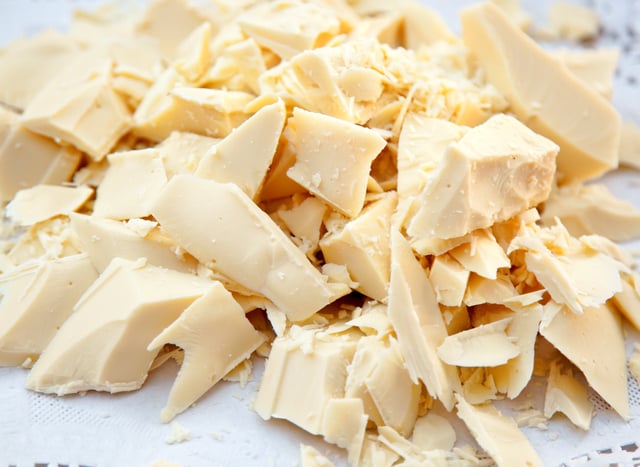
For over a century, the global chocolate industry has rested on a singular, fragile foundation: the Theobroma cacao bean. But as of April 2026, that foundation is no longer just cracking; it is being fundamentally redesigned. What was once considered a fringe movement of “cocoa-free” startups has transformed into a survival mandate for the world’s largest confectionery corporations. From Nestlé’s latest product launches in Germany to Barry Callebaut’s massive industrial pivots, the race to find a viable alternative to cocoa is no longer about novelty—it is about the future of the $120 billion snacking market.
The urgency is driven by a perfect storm of environmental collapse, unprecedented price volatility, and stringent new regulations. While cocoa futures have retreated from the staggering $10,000-per-metric-ton highs of early 2025, the market remains structurally broken. In West Africa, where 70% of the world’s cocoa is grown, harvests for the 2025/26 season are projected to be 10% below historical norms. For the giants of the industry, the “cocoa-free” era isn’t a threat to their business model—it is the only way to save it.
The Economic Catalyst: From Volatility to Permanent Highs
The shift toward cocoa alternatives was accelerated by the “Great Cocoa Squeeze” of 2024 and 2025. During this period, extreme weather events—alternating between parching droughts and torrential unseasonal rains—decimated crops in Ivory Coast and Ghana. This led to a supply deficit that forced manufacturers to rethink their reliance on a single, geographically concentrated crop.
By March 2026, although cocoa futures prices had dropped to approximately $3,100 per metric ton, the damage to the supply chain was already done. Many manufacturers had “hedged” their bets by locking in prices at $6,000 per ton during the peak of the crisis, leaving them with high production costs even as market prices dipped. Consequently, retail chocolate prices in the United States saw a 14.4% increase in the early weeks of 2026 compared to the previous year.

This economic pressure has forced a “Premiumization” of the market. Pure cocoa is increasingly being treated as a luxury ingredient, reserved for high-end bars, while mass-market “chocolatey” snacks are quietly transitioning to hybrid or entirely cocoa-free formulations to maintain price points that the average consumer can afford.
The Technology of Taste: Seed, Grain, and Fermentation
The primary challenge in moving away from cocoa isn’t just flavor—it’s physics. Cocoa is a complex matrix of solids and fats that behaves unlike almost any other substance in the food world. Replicating it requires sophisticated food science.
Planet A Foods and the Power of the Sunflower
One of the most successful players in this space is Munich-based Planet A Foods, which produces an ingredient called ChoViva. Rather than using cocoa beans, ChoViva utilizes a proprietary fermentation and roasting process on local crops like sunflower seeds and oats.
In April 2026, Nestlé Germany officially expanded its portfolio to include the “Nestlé Choco Crossies Snack Vibes” line, which features ChoViva instead of traditional chocolate. This marks a watershed moment: a global titan using a cocoa-free alternative in one of its most recognizable brands. The partnership is powered by a distribution deal with Barry Callebaut, the world’s largest chocolate manufacturer, which has integrated ChoViva into its global supply chain to help other brands navigate cocoa price volatility.
WNWN Food Labs: The Fermentation Pioneers
In the United Kingdom, WNWN (Win-Win) Food Labs has taken a different approach, focusing on the upcycling of barley and carob. By applying traditional chocolate-making techniques—fermentation, roasting, and conching—to these alternative substrates, they have produced a cocoa-free “dark” and “milk” chocolate that claims to have 50% less sugar than traditional mass-market bars.
WNWN’s strategy focuses on the “milk chocolate” experience, where the cocoa flavor is often masked by milk powder and sugar. By using tiger nuts (an edible tuber) to add creaminess, they have mimicked the mouthfeel of dairy-based chocolate while remaining entirely plant-based and cocoa-free.
Voyage Foods and the “Seed-to-Bar” Revolution
In the United States, Voyage Foods has secured significant partnerships with legacy players like The Hershey Company. Voyage’s technology focuses on “deconstructing” the flavor profile of cocoa and rebuilding it using roasted seeds and grains. Their “Cocoa-Free Chocolate” isn’t just a replacement; it’s a hedge against the ethical and environmental risks of traditional sourcing. For a company like Hershey, which recently reorganized under a “ONE Hershey” model to unify its sweet and salty portfolios, these alternatives offer a way to innovate in the “functional” and “multisensory” snacking spaces that younger, Gen Z consumers demand.
The Science of the “Snap”: Replicating Cocoa Butter
The most difficult part of the cocoa bean to replace isn’t the flavor-carrying powder, but the fat known as cocoa butter. This substance is a bit of a scientific overachiever: it stays firm at room temperature but melts perfectly the moment it hits your tongue at 37°C. This unique behavior is determined by the precise arrangement of its fatty acid molecules. While cocoa butter can crystallize into several different patterns, chocolate makers chase the “Form V” structure—the gold standard for ensuring a glossy look and that characteristic crisp snap.
To replicate this, alternative makers use specialized blending of vegetable fats, such as shea or sal, with proteins derived from oats or sunflower seeds. The objective is to mirror the exact melting behavior of the ideal crystal structure, which typically occurs between 32°C and 35°C. If the melting point is even slightly off, the result feels waxy or lacks a clean break. Companies like Planet A Foods have spent years engineering a “fat-protein matrix” that mimics this sophisticated behavior without a single cocoa bean invited to the party.
The Regulatory Squeeze: EUDR and the End of Blind Sourcing
While economics provided the push, the law provided the shove. The European Union Deforestation Regulation (EUDR), set to be fully enforced for large operators by the end of 2025 and for smaller ones by June 2026, has changed the math of cocoa sourcing.
Under the EUDR, any company selling cocoa in the EU must prove that the product did not originate from land deforested after December 31, 2020. This requires high-resolution geolocation data for every single farm in the supply chain. For many smaller farmers in West Africa, providing this data is nearly impossible, leading to fears that they will be “de-linked” from the global market.
For chocolate makers, this creates a massive administrative and legal burden. Cocoa-free alternatives, made from domestic crops like European oats or American sunflower seeds, carry zero “deforestation risk” in the eyes of the EU. This makes them an incredibly attractive option for R&D teams looking to simplify their compliance checklists while still hitting sustainability targets.
Future Outlook: The “Hybrid” Chocolate Bar
As we look toward the remainder of 2026 and into 2027, the industry is not expecting a total disappearance of the cocoa bean. Instead, experts predict a “Hybrid Era.”
1. Mass-Market Hybrids: To keep the price of a standard candy bar under $2.00, manufacturers will likely move toward blends—using 50% real cocoa for flavor and 50% alternative solids and fats for structure and cost-saving.
2. Premium Realism: Pure, single-origin cocoa will become a high-end luxury, similar to fine wine or aged whiskey. Consumers will pay a significant premium for the “authentic” experience of the bean.
3. Functional Confectionery: Alternatives like those from WNWN or Foreverland (which uses carob) will lean into their health benefits, such as higher fiber and lower sugar, creating a new category of “guilt-free” indulgence.
The cocoa bean isn’t going away, but its monopoly on our taste buds is over. The chocolate makers of 2026 are no longer just confectioners; they are bio-engineers and supply-chain architects, building a more resilient, seed-based future for our favorite snack.
Sources Used and Links:
- CoBank Knowledge Exchange: Chocolate lovers shift to premium brands as cocoa prices swing (Published: March 26, 2026)
- The Hershey Company: Unifies U.S. Business Under ONE Hershey Operating Model (Published: March 16, 2026)
- The Hershey Company: Investor Day Strategy – Leading Next Gen Snacking (Published: April 10, 2026)
- Planet A Foods: Nestlé Partnership – Choco Crossies Snack Vibes Launch (Published: March 4, 2026)
- Confectionery Production: Planet A and Barry Callebaut launch collaboration venture at ISM 2026 (Published: February 3, 2026)
- WNWN Food Labs: Product Development and Funding Updates & Yumda Company Profile
- Farmforce: 2025-2026 Cocoa Season Outlook: Challenges and Sustainability (Published: late 2025)
- Luker Chocolate: EUDR Regulation Update for 2026
- World Resources Institute: EU Deforestation Regulation (EUDR) Implementation Insights (Published: April 7, 2026)
Disclaimer
Artificial Intelligence Disclosure & Legal Disclaimer
AI Content Policy.
To provide our readers with timely and comprehensive coverage, South Florida Reporter uses artificial intelligence (AI) to assist in producing certain articles and visual content.
Articles: AI may be used to assist in research, structural drafting, or data analysis. All AI-assisted text is reviewed and edited by our team to ensure accuracy and adherence to our editorial standards.
Images: Any imagery generated or significantly altered by AI is clearly marked with a disclaimer or watermark to distinguish it from traditional photography or editorial illustrations.
General Disclaimer
The information contained in South Florida Reporter is for general information purposes only.
South Florida Reporter assumes no responsibility for errors or omissions in the contents of the Service. In no event shall South Florida Reporter be liable for any special, direct, indirect, consequential, or incidental damages or any damages whatsoever, whether in an action of contract, negligence or other tort, arising out of or in connection with the use of the Service or the contents of the Service.
The Company reserves the right to make additions, deletions, or modifications to the contents of the Service at any time without prior notice. The Company does not warrant that the Service is free of viruses or other harmful components.