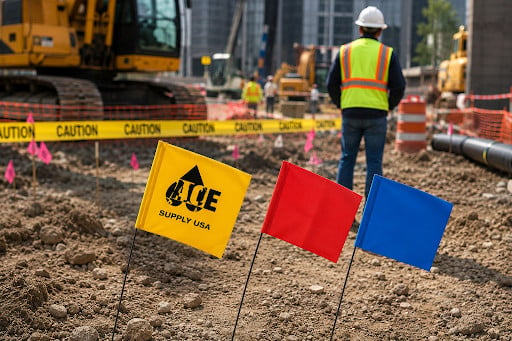
Modern job sites are more active and fast paced than ever before. Construction crews, utility workers, surveyors, landscapers, and contractors often share the same space while working under strict timelines. In these environments, communication needs to be immediate, visible, and easy to understand. Even small misunderstandings can lead to delays, safety concerns, or expensive mistakes.
This is why visual identification tools have become essential across many industries. Markers, signage, labels, and color coded systems help crews stay organized and informed without relying entirely on verbal communication. When workers can quickly identify boundaries, instructions, hazards, or project phases, operations become more efficient and easier to manage.
One area that has seen significant growth is the use of personalized site identification tools. Businesses increasingly want marking systems that not only improve visibility but also reinforce branding, organization, and accountability. This article explores why visual identification matters, how customized field tools improve workflow, and what professionals should consider when selecting marking solutions for demanding outdoor environments.
Why Visual Communication Is Critical on Active Job Sites
Outdoor work environments are filled with distractions and changing conditions. Heavy equipment, loud machinery, weather exposure, and multiple crews working simultaneously can make verbal communication unreliable.

Common Challenges on Busy Sites
- Noise that prevents clear verbal instructions
- Large project areas where teams are spread apart
- Weather conditions reducing visibility
- Constant movement of workers and equipment
- Multiple subcontractors operating in the same zone
Without clear visual systems, workers may struggle to identify important information quickly.
The Role of Visual Identification
Visual markers help simplify communication by providing instant recognition. Workers do not need to stop and ask questions when information is already visible.
Benefits include:
- Faster decision making
- Reduced confusion between teams
- Better hazard awareness
- Improved workflow coordination
- More consistent project organization
These systems become especially important on projects involving underground utilities, temporary boundaries, excavation zones, or phased construction work.
The Evolution of Job Site Marking Systems
Marking systems have evolved significantly over time. What once relied heavily on basic stakes and handwritten notes has expanded into more advanced visual communication tools.
Traditional Marking Methods
Older marking systems often included:
- Wooden stakes with handwritten labels
- Spray paint markings
- Basic colored ribbon
- Chalk lines
While these methods are still useful, they may not provide enough visibility or durability for modern projects.
Modern Improvements
Today’s marking solutions focus on:
- High visibility colors
- Durable weather resistant materials
- Standardized communication systems
- Printed messaging and branding
- Easy identification from a distance
These improvements help crews work faster while reducing the likelihood of miscommunication.
How Customization Improves Organization and Accountability
One of the biggest trends in visual identification is customization. Companies are increasingly using personalized tools to improve organization while reinforcing their professional image.
Benefits of Custom Identification Systems
Customized products help businesses:
- Identify specific crews or departments
- Distinguish projects more easily
- Reinforce safety instructions
- Promote company branding
- Reduce confusion between contractors
For example, a utility company may use different printed identifiers for water, gas, or electrical projects. A landscaping company may use custom markers to separate irrigation layouts from hardscape installations.
Using customized tools also creates greater accountability. When materials are clearly labeled, workers can quickly identify who is responsible for specific zones or instructions.
The Importance of Visibility in Outdoor Environments
Visibility is one of the most important factors in any marking system. Outdoor environments can be unpredictable, and markers need to remain easy to spot under a variety of conditions.
Factors That Affect Visibility
- Rain or fog
- Bright sunlight
- Dirt and mud
- Tall grass or vegetation
- Low light conditions
Features That Improve Visibility
High quality visual markers often include:
- Bright fluorescent colors
- Large printed text
- Weather resistant coatings
- Durable mounting systems
- Flexible materials that withstand movement
When markers remain visible throughout the duration of a project, crews can work more confidently and efficiently.
Using Printed Markers to Reinforce Communication
Printed visual tools provide another layer of communication beyond simple color coding. Instead of relying only on visual recognition, crews can receive direct written instructions on the marker itself.
This is especially useful for:
- Utility identification
- Safety warnings
- Directional guidance
- Company branding
- Site specific instructions
Many professionals now use tools such as custom printed marking flags to combine visibility with clear messaging. These products help communicate important information directly on the job site while also supporting organization and brand recognition.
Advantages of Printed Messaging
- Reduces uncertainty about marker meaning
- Allows for project specific labeling
- Improves communication between crews
- Helps visitors or inspectors identify work areas quickly
Printed identifiers can also help reduce errors by eliminating guesswork.
Industries That Benefit from Customized Site Marking
Customized visual systems are valuable across many industries, not just construction.
Utility and Infrastructure Projects
Utility crews use customized markers to identify underground lines, excavation zones, and service boundaries. Printed messaging helps prevent accidental damage during digging operations.
Landscaping and Irrigation
Landscapers often use custom markers to separate planting areas, irrigation systems, and hardscape zones. This improves organization on larger properties with multiple design elements.
Surveying and Engineering
Survey teams rely on visible reference points that remain identifiable throughout a project. Customized labels help maintain clarity when multiple crews work from the same survey data.
Municipal and Public Works Projects
Cities and municipalities frequently manage overlapping infrastructure projects. Customized markers improve coordination between departments and contractors.
Event Management
Temporary events such as festivals, races, and outdoor markets also benefit from visible identification systems that help guide setup crews and attendees.
Choosing Durable Materials for Long Term Performance
Outdoor marking products need to withstand demanding conditions. Choosing low quality materials can lead to fading, tearing, or poor visibility before a project is complete.
What to Look for in Durable Marking Products
- UV resistance to prevent fading
- Water resistant materials
- Flexible construction to prevent breaking
- Strong attachment systems
- High contrast printing
Why Durability Matters
Durable products help:
- Reduce replacement frequency
- Maintain communication consistency
- Lower long term material costs
- Improve safety throughout the project
Investing in quality materials ensures that markers continue performing even in harsh environments.
Best Practices for Implementing Visual Identification Systems
A marking system is only effective when it is used consistently. Companies should establish clear standards for how markers are selected, placed, and maintained.
Recommended Best Practices
- Use consistent color systems across all projects
- Train workers on marker meanings and placement
- Inspect markers regularly for visibility and damage
- Replace worn or outdated materials immediately
- Document marking standards in project guidelines
Steps for Better Site Organization
- Define visual communication standards before work begins
- Assign responsibility for maintaining markers
- Use printed messaging where additional clarity is needed
- Review markings during daily site walkthroughs
- Update markers as project phases change
These practices help maintain organization throughout the entire project lifecycle.
How Branding Supports Professionalism on Job Sites
Customized identification systems are not just practical. They also contribute to a more professional appearance.
Branded materials help companies:
- Increase visibility with clients and inspectors
- Reinforce professionalism on site
- Create consistency across multiple projects
- Improve public perception during municipal or commercial work
When projects are organized and clearly marked, it reflects positively on the company managing the work.
Conclusion
Visual identification systems have become an essential part of modern outdoor work environments. From improving communication and safety to supporting organization and branding, clear marking solutions help crews operate more effectively under demanding conditions.
Customized marking tools add another layer of value by combining visibility with project specific messaging. Whether used in construction, landscaping, utilities, or public works, these systems reduce confusion, improve accountability, and help projects stay on track.
As job sites continue to grow more complex, the need for reliable visual communication will only increase. Companies that invest in durable, well organized marking systems position themselves for greater efficiency, stronger professionalism, and better overall project outcomes.
Disclaimer
Artificial Intelligence Disclosure & Legal Disclaimer
AI Content Policy.
To provide our readers with timely and comprehensive coverage, South Florida Reporter uses artificial intelligence (AI) to assist in producing certain articles and visual content.
Articles: AI may be used to assist in research, structural drafting, or data analysis. All AI-assisted text is reviewed and edited by our team to ensure accuracy and adherence to our editorial standards.
Images: Any imagery generated or significantly altered by AI is clearly marked with a disclaimer or watermark to distinguish it from traditional photography or editorial illustrations.
General Disclaimer
The information contained in South Florida Reporter is for general information purposes only.
South Florida Reporter assumes no responsibility for errors or omissions in the contents of the Service. In no event shall South Florida Reporter be liable for any special, direct, indirect, consequential, or incidental damages or any damages whatsoever, whether in an action of contract, negligence or other tort, arising out of or in connection with the use of the Service or the contents of the Service.
The Company reserves the right to make additions, deletions, or modifications to the contents of the Service at any time without prior notice. The Company does not warrant that the Service is free of viruses or other harmful components.