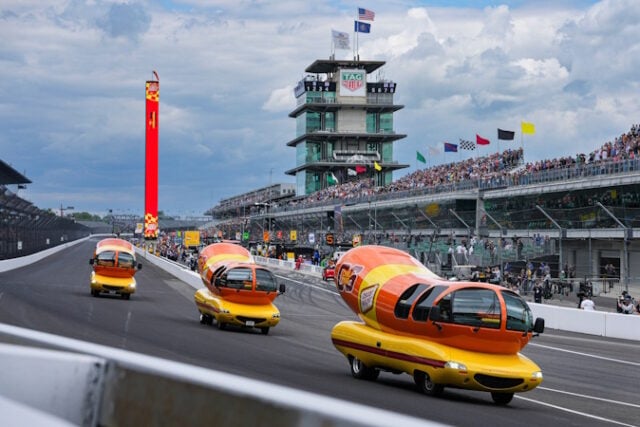
The concept of automotive marketing has evolved significantly since the early twentieth century. From simple hand-painted delivery trucks to high-tech digital mobile billboards, brands have long sought ways to capture public attention on the move. However, few promotional concepts have achieved the enduring cultural footprint and pure human-interest appeal of the Oscar Mayer Wienermobile. First conceived in 1936 by Carl Mayer—nephew of the company’s founder—the vehicle was built by the General Body Company of Chicago to promote the brand’s hot dogs across the local metropolitan area. What began as a singular, quirky, 13-foot-long vehicle where the driver poked out awkwardly from the middle of a hot-dog-shaped body has evolved into a fleet of highly sophisticated, 27-foot-long fiberglass vehicles traveling coast-to-coast.
In a unique twist on this long-standing promotional tradition, Oscar Mayer’s regional marketing teams recently engaged in a high-stakes, competitive “race” across the United States. Rather than a traditional closed-circuit track race, this event structured a cross-country publicity competition. Regional sales and public relations managers competed to generate the highest volume of local news coverage, social media traction, and public engagement within their assigned geographic territories. Driven by specialized brand ambassadors affectionately known as “Hotdoggers,” this competitive journey showcases how mobile brand mascots leverage community engagement to build significant social capital and lasting brand relevance.
The Mechanics of a Mobile Icon
To understand the logistics of a multi-vehicle promotional race, one must first understand the modern makeup of the Wienermobile fleet. Oscar Mayer typically operates up to eleven custom vehicles at any given time. The fleet is divided into distinct operational tiers:
- Full-Sized Models: Six traditional 27-foot-long vehicles, each built on a heavy-duty truck chassis and assigned to cover a massive, multi-state region of the United States.
- Specialty Variants: Five smaller, highly maneuverable versions designed for specific operational tasks and unique terrain, including the food truck variant, the compact WienerMini, the remote-controlled WienerRover, the eco-friendly WienerCycle, and the aerial WienerDrone.
The full-sized Wienermobiles are powered by standard commercial V8 engines, designed more for reliable cross-country cruising and structural integrity than high-performance racing. The body is shaped like a giant hot dog resting in a bright yellow bun, complete with a custom interior featuring mustard-and-ketchup-colored seats, a blue-sky ceiling mural, and a powerful audio system that broadcasts the brand’s historic commercial jingles to awaiting crowds.

For the cross-country publicity race, the six full-sized vehicles were deployed simultaneously into their respective regional quadrants: Northeast, Southeast, Midwest, Central, Southwest, and Northwest. The competition forced regional managers to maximize their vehicles’ schedules, routing them through high-density metropolitan areas, local festivals, charity events, and university campuses.
Strategy and Local Media Capture
Because a direct physical race between giant fiberglass hot dogs on public interstate highways would present severe safety hazards and regulatory violations, the competition was judged entirely on media metrics and public activation. Oscar Mayer’s corporate public relations department has historically leveraged the vehicle’s inherent visual absurdity to secure free, organic news coverage, knowing that local media outlets are eager to run fun, lighthearted human-interest stories.
The strategy behind winning the race relied heavily on proactively distributing localized news releases before the vehicle rolled into each community. Regional teams that managed to coordinate with major morning news broadcasts, secure live-on-air drive-alongs, or land features in high-profile national publications like The Wall Street Journal, USA Today, or The Chicago Tribune earned maximum points in the corporate tally.
[Publicity Tally Framework]
Local News Clipping: 10 Pts | Live Morning Show Segment: 50 Pts | National Print Feature: 100 Pts
Beyond legacy media, the race required intense ground-level activation. When a Wienermobile arrives at a designated stop—such as a university campus or a municipal park—the interaction is managed by Hotdoggers, who are typically recent college graduates selected through a highly competitive national hiring process. These ambassadors are responsible for conducting vehicle tours, distributing iconic Wiene whistles, and managing public crowds. The sheer convenience, accessibility, and novelty of a giant mobile eatery or product distributor allows it to instantly connect with the public, transforming a simple commercial promotion into a shared, memorable community experience.
Parallel Concepts in Vintage Differentiation
The use of highly customized, product-shaped automobiles to gain a competitive edge is a classic example of vintage marketing differentiation. Oscar Mayer was not entirely alone in this space; other major American corporations historically adopted similar mobile marketing tactics to capture consumer eyes during the golden age of automotive advertising.
| Brand | Vehicle Concept | Mechanical Basis | Primary Promotional Goal |
| Oscar Mayer | Wienermobile | Commercial Truck Chassis | Local public relations, community engagement, and jingle broadcasting. |
| Planters | NUTmobile | Custom Car Chassis | Traveling sales representative support, distributing product samples. |
The Planters Peanut Company, for instance, introduced its own custom automobile-mascot, known today as the NUTmobile. Built in the exact shape, contour, and color of a large peanut, the original vehicle was mounted directly onto a standard car chassis, with a trunk modified to carry a vast array of salesmen’s samples to retail locations. Just as the Wienermobile race sought to ignite local sales regions through publicity, vintage marketing contests dating back to the 1920s frequently utilized tight, regional performance metrics to drive division managers toward maximum market penetration.
Cultural Impact and the Joy of “Foodies”
The ultimate success of the Wienermobile race cannot be measured solely by corporate spreadsheets or press clippings. The event taps into a broader, deeply rooted American obsession with mobile food culture and communal experiences. In an era where consumer options are highly digital and often isolated, physical mobile brands bring a tangible, joyful disruption to daily life.
Food trucks and promotional vehicles democratize unique culinary and visual experiences by making them highly accessible to the masses across varying times, locations, and price points. Good food and shared commercial novelties serve as universal social phenomena that actively bind people to their local surroundings. When a crowd gathers around a Wienermobile to receive a plastic toy or snap a photograph, the underlying experience is driven by a subconscious human desire to connect with others through lighthearted, shared moments.
The cross-country promotional race highlights how a well-maintained corporate icon can transition from a simple advertising gimmick into an enduring piece of Americana. By combining the logistical precision of a national corporate fleet with the pure, innocent pleasure of a traveling public relations spectacle, the Wienermobile race achieved its ultimate goal: keeping a ninety-year-old brand fresh, mobile, and universally recognized on the modern American road.
Sources Used and Links:
- ORCA – Online Research @ Cardiff – Semantic Scholar https://pdfs.semanticscholar.org/825d/8dfdb6d29e449c4f16c7bcdfdfa69d1267c6.pdf
- National Academic Digital Library of Ethiopia – Creative Strategy in Advertising http://www.ndl.ethernet.edu.et/bitstream/123456789/48010/1/165.pdf
- National Academic Digital Library of Ethiopia – Vintage Marketing Differentiation http://ndl.ethernet.edu.et/bitstream/123456789/51854/1/41.pdf
- The UTRGV Rider Newspaper https://www.utrgvrider.com/wp-content/uploads/2022/02/TR_021422_A000.pdf
- UiTM Journal of Tourism, Hospitality and Culinary Arts (JTHCA) https://fhtm.uitm.edu.au/images/jthca/Vol13Issue2/Chap_7.pdf
- Digital Commons @ DU – Feasting on Four Wheels https://digitalcommons.du.edu/cgi/viewcontent.cgi?article=1556&context=etd
Disclaimer
Artificial Intelligence Disclosure & Legal Disclaimer
AI Content Policy.
To provide our readers with timely and comprehensive coverage, South Florida Reporter uses artificial intelligence (AI) to assist in producing certain articles and visual content.
Articles: AI may be used to assist in research, structural drafting, or data analysis. All AI-assisted text is reviewed and edited by our team to ensure accuracy and adherence to our editorial standards.
Images: Any imagery generated or significantly altered by AI is clearly marked with a disclaimer or watermark to distinguish it from traditional photography or editorial illustrations.
General Disclaimer
The information contained in South Florida Reporter is for general information purposes only.
South Florida Reporter assumes no responsibility for errors or omissions in the contents of the Service. In no event shall South Florida Reporter be liable for any special, direct, indirect, consequential, or incidental damages or any damages whatsoever, whether in an action of contract, negligence or other tort, arising out of or in connection with the use of the Service or the contents of the Service.
The Company reserves the right to make additions, deletions, or modifications to the contents of the Service at any time without prior notice. The Company does not warrant that the Service is free of viruses or other harmful components.