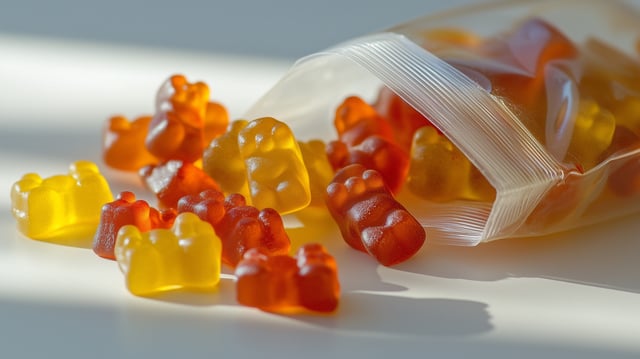
The patient environment is evolving quickly as medical cannabis emerges to play a mainstream part in the management of chronic symptoms. Historically, smoking or vaping has been the predominant method for patients that predominated, but a great behavioral change has taken place. More patients than ever are completely abandoning the use of inhalation and switching to cannabis-infused food and drink. Infused products are no longer a new player but a vital one in the therapeutic landscape, offering relief to those battling debilitating conditions. The need for longer-lasting therapeutic windows, lung-safe alternatives, and precise dosing controls is driving this uptake.
1. Gastrointestinal Processing & The 11-Hydroxy-THC Factor
The primary reason patients opt for oral routes of delivery over inhalation is human metabolism. Smoking or vaping puts cannabinoids straight into the bloodstream through the lungs and thus makes results almost immediate, but they decrease rapidly. This short lifespan requires frequent re-dosing, which can be annoying and disruptive throughout the day or night for a patient with chronic round-the-clock neuropathic pain or muscle spasticity. As a result, many people exploring alternatives, including those researching THC gummies UK options, are often interested in longer-lasting effects from orally consumed cannabinoid products.
Gastrointestinal absorption and liver processing are slow, and therapeutic action becomes evident in 45 minutes to 2 hours after a dose. The downside, though, is huge for those who suffer from chronic illnesses: the relief window is huge and can be felt throughout the body for 8-c continuous hours. The delivery is smooth and continuous, rather than the abrupt peaks and sharp crashes that are commonly associated with smoking use of traditional medical pharmaceuticals.
2. Respiratory Health, Clean Delivery, and Market Shifts
Another major factor driving patients to ingest is the critical priority of lung preservation. However, a considerable segment of users of medical marijuana belongs to the category of elderly people or people with weak immune systems or who have other respiratory ailments, such as asthma and COPD. In their case, breathing in the hot smoke or vapor cloud will be both useless and dangerous.

Although the process of vaporization does not lead to any formation of carcinogens due to direct burning of cannabis, it may nevertheless irritate the body through localized heating, drying up of mucous membranes, and causing coughing, which will only weaken the already physically challenged condition of the body.
As standard medical programs mature internationally, patients are actively looking for professional, mainstream form factors. Individuals seeking trusted alternative solutions frequently look toward mature markets to see how standardization works. Taking a precisely measured gummy or a small piece of dark chocolate feels familiar, clean, and directly aligned with standard daily vitamin or supplement routines.
3. Real Statistics: Understanding Patient Preferences by the Numbers
Recent statistics on the macroeconomics of cannabis consumption and patient intake surveys indicate a definite trend: products for ingestion are quickly gaining market share over traditional smokable flowers in response to increasing and diversifying patients’ needs.
As revealed by comprehensive statistics of 2025 and 2026 collected by prominent monitoring services such as Flowhub and New Frontier Data, patients consume cannabis for certain reasons related to managing basic quality-of-life issues. This trend is clearly seen in the market; the global cannabis edibles market reaches $21.23 billion in 2026 thanks to the high CAGR of low-dosage and specialized therapy formulations.
The following table breaks down the key consumer data points, showing why modern patients are moving away from traditional inhalation methods:
| Patient Wellness Metric | Statistical Reality & Impact | Clinical / Market Context |
| Top Reason for Use: Relaxation | 64% of active consumers utilize cannabis primarily for physical and mental relaxation. | Focuses on reducing overall autonomic nervous system hyperarousal. |
| Top Reason for Use: Stress Relief | 59% of patients integrate cannabis to actively reduce daily psychological stress. | Highlights a steady shift away from traditional pharmaceutical anxiolytics. |
| Top Reason for Use: Anxiety | 52% target explicit anxiety management as their primary goal. | Requires long, predictable therapeutic windows to prevent rebound panic. |
| Top Reason for Use: Pain | 48% rely on cannabis to manage daily chronic pain and structural inflammation. | Heavily favors the extended, systemic relief profile of 11-Hydroxy-THC. |
| Top Reason for Use: Sleep Support | 45% use cannabis specifically to address insomnia and improve sleep architecture. | Edibles are preferred overnight to prevent waking up from pain or sleep disruption. |
| Edible Dosing Preference | 42% of consumers prefer strict low-dose options containing 10mg or less. | Highlights the massive trend toward careful microdosing (2.5mg – 5mg) for daily functionality. |
| Demographic Growth Shift | 46% increase in past-month usage among adults aged 65+ over a rolling 2-year period. | Older demographics overwhelmingly reject smoking and choose oral or sublingual options. |
4. Overcoming the Bioavailability Challenge: Emerging Technical Solutions
While the long-lasting effects of edibles are a massive benefit, the slow onset time can sometimes be a challenge. If a patient is hit with a sudden, intense spike of breakthrough pain or a severe muscle spasm, waiting up to two hours for a traditional edible to pass through the stomach and kick in simply isn’t practical.
To bridge this gap, modern formulations are leveraging cutting-edge science to fundamentally change how quickly our bodies absorb cannabinoids. The most significant breakthrough is nano-emulsification.
As a result, such particles become soluble in water and thus do not have to wait for their processing in the liver – the moment when they start to dissolve starts directly from the moment of contact with mucosa. Such a method cuts the normal onset time to a mere 15 to 30 minutes. This kind of combination of inhalation rapidity and smoke-free and sustained ingestion makes such modern medicines a great tool for dealing with physical pain immediately.
Conclusion: The Structural Shift in Patient-Centered Care
The clear preference for ingestible options represents a permanent, structural evolution in how medical cannabis is viewed and integrated into daily healthcare routines. By trading the unpredictable, short-lived, and lung-irritating effects of smoking for the steady, long-lasting, and precise nature of oral ingestion, patients are successfully treating cannabis like standard medicine.
As regulatory frameworks continue to stabilize and open up internationally, individuals looking for clean, verified alternative therapies—such as those exploring premium thc gummies uk options—can count on getting consistent, expertly calibrated products. Driven by advanced technological breakthroughs like nano-emulsification and a deeper medical understanding of how our livers process cannabinoids, edibles have solidified their place as a safe, highly effective, and deeply respected choice for long-term patient relief.
Disclaimer
Artificial Intelligence Disclosure & Legal Disclaimer
AI Content Policy.
To provide our readers with timely and comprehensive coverage, South Florida Reporter uses artificial intelligence (AI) to assist in producing certain articles and visual content.
Articles: AI may be used to assist in research, structural drafting, or data analysis. All AI-assisted text is reviewed and edited by our team to ensure accuracy and adherence to our editorial standards.
Images: Any imagery generated or significantly altered by AI is clearly marked with a disclaimer or watermark to distinguish it from traditional photography or editorial illustrations.
General Disclaimer
The information contained in South Florida Reporter is for general information purposes only.
South Florida Reporter assumes no responsibility for errors or omissions in the contents of the Service. In no event shall South Florida Reporter be liable for any special, direct, indirect, consequential, or incidental damages or any damages whatsoever, whether in an action of contract, negligence or other tort, arising out of or in connection with the use of the Service or the contents of the Service.
The Company reserves the right to make additions, deletions, or modifications to the contents of the Service at any time without prior notice. The Company does not warrant that the Service is free of viruses or other harmful components.