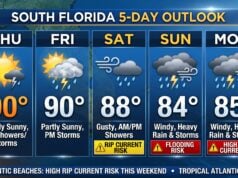
The 2026 Atlantic hurricane season officially starts June 1, and forecasters are already sounding alarms. AccuWeather predicts 3 to 5 direct U.S. impacts this year, with record-warm ocean temperatures fueling rapid intensification. Fewer total storms does not mean less danger. The 1992 season only produced seven named storms, and one of them was Hurricane Andrew.
For South Florida homeowners, the math is simple: whatever is sitting in your yard, garage, or driveway when a storm arrives becomes either debris or a projectile. That is why a growing number of residents from Kendall to West Palm Beach are scheduling dumpster rentals weeks before peak season, not after the damage is done.
The Pre-Storm Cleanup Most People Skip
Most hurricane prep checklists cover the basics. Stock water and batteries. Board up windows. Check your roof. All necessary. But there is a step that falls between “routine maintenance” and “emergency mode” that too many homeowners ignore: clearing accumulated junk, yard waste, and bulky debris before the storms roll in.
South Florida’s subtropical climate means vegetation grows aggressively year-round. By late spring, many properties have overgrown branches, dead palm fronds, broken fencing, old patio furniture, and garage clutter that has been piling up since last season. Under normal conditions, it is an eyesore. During a Category 1 or stronger hurricane, it becomes a liability.

A loose patio set, a stack of old lumber, or a pile of yard trimmings can turn into airborne hazards at wind speeds above 75 mph. Even items that seem too heavy to move, like old appliances or concrete pavers, can shift and cause structural damage during storm surge or flooding.
Why Curbside Pickup Falls Short
Miami-Dade, Broward, and Palm Beach counties all offer bulk waste collection, but the service has real limits. Pickup schedules vary by municipality. Some areas only collect bulk items once or twice a month. Others require you to schedule in advance and wait.
When a named storm enters the forecast cone, demand for municipal waste services spikes. Everyone scrambles at once, and pickup schedules fall behind. If you are relying on the city to haul away three truckloads of tree trimmings and old furniture the week before a storm, you are gambling.
A roll-off dumpster solves the timing problem. You set the delivery date, load it on your schedule, and have it hauled away before the weather window closes. No waiting for a scheduled pickup that may or may not come in time.
What South Florida Homeowners Are Tossing Before Storm Season
The pre-hurricane cleanout typically targets a few key areas around the property.
Yard and landscaping debris. Dead branches, palm fronds, root balls from pulled shrubs, old mulch, and overgrown vegetation. South Florida trees grow fast, and the material they shed accumulates faster than most homeowners realize. Trimming trees and removing weak limbs before a storm is one of the most effective ways to protect your home.
Garage and shed cleanouts. Years of accumulated junk, broken tools, old paint cans, and unused furniture. If a garage door fails during a hurricane, everything inside becomes part of the problem. Clearing out what you do not need reduces risk and frees up space for what matters, like your generator, emergency supplies, and vehicles.
Outdoor furniture and fixtures. Rusted patio sets, broken grills, cracked planters, deteriorating fencing. These items should be secured or removed entirely before a storm. If they are already past their useful life, tossing them in a dumpster is faster and cheaper than trying to strap them down.
Construction and renovation leftovers. South Florida has no shortage of ongoing home projects. Leftover drywall, tile, lumber scraps, and old fixtures from a bathroom remodel do not need to be sitting in your carport when a tropical system is bearing down.
Timing Matters More Than You Think
Here is the pattern that plays out every year: a tropical system forms in the Atlantic, the forecast cone brushes South Florida, and suddenly every homeowner in the tri-county area wants a dumpster, a generator, and a roofer, all on the same day.
Demand for roll-off rentals surges once a storm is named. Companies get booked solid. Delivery windows shrink. Prices can spike.
Homeowners who schedule their cleanout in May or early June avoid that crunch entirely. You get better availability, more flexible scheduling, and the peace of mind that comes from knowing your property is clear before the first advisory is issued.
Trash Daddy Dumpsters offers flat-rate roll-off rentals across South Florida with next-day delivery, making it easy to knock out a pre-season cleanout on your timeline instead of scrambling when a storm watch drops.
Pair Your Cleanout With a Full Prep Checklist
A dumpster rental handles the debris side of hurricane prep, but it works best as part of a broader plan. While you have the momentum going, knock out these items too:
Review your insurance coverage. Standard homeowners policies do not cover flood damage. That requires a separate policy, and most have a 30-day waiting period. If you have not reviewed your coverage recently, now is the time. South Florida Reporter has a solid breakdown of what storm damage is and is not covered by standard policies.
Get your finances in order. Hurricane deductibles in Florida are often calculated as a percentage of your home’s insured value. That can mean thousands out of pocket. Having a dedicated emergency fund and a financial plan for storm season is just as important as boarding up windows.
Inspect and reinforce your roof. Small cracks or loose shingles can become catastrophic leaks under hurricane-force winds and rain. A pre-season inspection is cheap insurance. Get the full rundown on roof prep if you have not had yours checked recently.
Gather the right tools. A torque wrench for hurricane shutters, a chainsaw for downed limbs, a caulk gun for sealing gaps around windows. Having the proper tools on hand before a storm saves critical time.
Know what to do after the storm passes. If your property does take a hit, the recovery process involves documentation, insurance claims, and careful cleanup. Familiarize yourself now with the steps to take after hurricane damage so you are not figuring it out under stress.
The Bottom Line
Hurricane prep is not just about what you buy. It is about what you remove. Every piece of junk, every dead branch, every broken fixture you clear from your property before June reduces risk during the storm and speeds up recovery after it.
South Florida homeowners who have been through a major hurricane know this firsthand. The ones who cleared their yards beforehand had less damage, less cleanup, and a faster return to normal life. The ones who did not spent weeks dealing with debris that could have been handled in a single weekend with a roll-off dumpster.
The 2026 season is shaping up to be another year where preparation separates the resilient from the overwhelmed. Do not wait for the first tropical advisory to start clearing your property. The time to act is now.
Disclaimer
Artificial Intelligence Disclosure & Legal Disclaimer
AI Content Policy.
To provide our readers with timely and comprehensive coverage, South Florida Reporter uses artificial intelligence (AI) to assist in producing certain articles and visual content.
Articles: AI may be used to assist in research, structural drafting, or data analysis. All AI-assisted text is reviewed and edited by our team to ensure accuracy and adherence to our editorial standards.
Images: Any imagery generated or significantly altered by AI is clearly marked with a disclaimer or watermark to distinguish it from traditional photography or editorial illustrations.
General Disclaimer
The information contained in South Florida Reporter is for general information purposes only.
South Florida Reporter assumes no responsibility for errors or omissions in the contents of the Service. In no event shall South Florida Reporter be liable for any special, direct, indirect, consequential, or incidental damages or any damages whatsoever, whether in an action of contract, negligence or other tort, arising out of or in connection with the use of the Service or the contents of the Service.
The Company reserves the right to make additions, deletions, or modifications to the contents of the Service at any time without prior notice. The Company does not warrant that the Service is free of viruses or other harmful components.