A medical appointment may be only 10 miles away, yet the trip can feel much longer for an older adult. South Florida heat, sudden rain, and heavy traffic can turn a routine ride into a tiring part of the day.
For seniors, getting to the doctor is not just about finding a driver and leaving on time. Families also need to think about hydration, mobility, waiting areas, road delays, and the return trip home. A little planning can make the journey calmer and help the patient arrive ready for the appointment.
Why Travel Conditions Can Affect Seniors More Than Other Passengers
Many older adults feel the effects of heat and physical strain more quickly than younger passengers. The Centers for Disease Control and Prevention states that adults aged 65 and older are more prone to heat-related health problems.
A senior may also be managing a chronic condition, recovering from a procedure, or taking medication that affects how they feel during the day. Add a long walk across a parking lot or a delayed pickup, and a simple trip can become exhausting.

The ride itself matters too. A patient who arrives hot, tired, anxious, or uncomfortable may have a harder time focusing on questions for the doctor. They may also be less prepared for a physical therapy session, diagnostic test, or treatment.
This is why families should plan the entire journey, not only the minutes spent on the road.
South Florida Heat Can Make the Trip Exhausting Before It Starts
South Florida residents are used to warm weather, but familiarity does not remove the risk. Stepping from an air-conditioned home into strong heat and humidity can be uncomfortable within minutes.
The hardest part may happen before the vehicle even moves. A senior might need time to lock the door, walk down a hallway, use a ramp, or wait near the curb. If the pickup area has no shade, that short wait can feel much longer.
Heat can also affect the arrival process. Large medical buildings often have distant parking areas, busy entrances, or long indoor hallways. A patient may reach the front desk already tired.
Families can reduce heat exposure with a few simple steps:
- Schedule morning appointments when possible.
- Ask the driver to cool the vehicle before the passenger gets inside.
- Use a shaded or covered pickup area.
- Keep water available unless the patient has been told to limit fluids.
- Avoid asking the senior to wait outside for the ride.
- Bring a light sweater, since medical offices can feel cold after outdoor heat.
It is also smart to check how the senior feels before leaving. Are they dizzy, unusually tired, confused, or feeling unwell? Do not ignore those signs just because the appointment is on the calendar.
Heavy Rain Can Turn Curbs and Parking Lots Into Obstacles
South Florida rain often arrives quickly. A bright morning can become a wet afternoon with little warning, and the National Weather Service Miami-South Florida has documented several local urban flooding and heavy rainfall events.
Rain creates more than a visibility problem. Wet sidewalks, slippery curbs, standing water, and uneven pavement can be difficult for seniors who use canes, walkers, or wheelchairs.
Think about the number of small tasks involved in entering a vehicle during a downpour. Someone has to open the door, manage an umbrella, protect any paperwork, handle mobility equipment, and help the passenger sit down safely. It is a bit like trying to carry groceries while walking across a moving floor. Every task becomes harder at the same time.
A wheelchair user may face another issue: the nearest accessible entrance may be blocked by water or traffic. A walker can also become slippery when its grips and wheels get wet.
Before a rainy-day appointment, families should:
- Check the weather forecast before leaving.
- Allow extra time for boarding and unloading.
- Ask whether the medical building has a covered entrance.
- Keep towels or a dry cloth available for mobility equipment.
- Avoid rushing the passenger across wet pavement.
- Call the medical office if flooding or road closures may cause a delay.
Sometimes the safest choice is to wait a few minutes for the heaviest rain to pass. Being slightly late is usually better than asking a senior to hurry across a slippery surface.
Traffic Delays Can Affect More Than Arrival Time
South Florida traffic can be unpredictable. A crash, roadwork, bridge opening, or heavy rain may add time to a trip that looked simple when the appointment was booked.
A traffic delay does not only affect punctuality. It can also interfere with meals, medication schedules, restroom needs, and the senior’s energy level. A passenger who expected a 25-minute ride may become uncomfortable when the trip takes an hour.
Arriving late may lead to a shorter visit or a rescheduled appointment. Yet leaving far too early is not always the best answer either. Long waits in a medical office can be tiring, especially for a patient who has pain, limited mobility, or anxiety.
The goal is to build a reasonable time buffer. Families can check Florida 511 for real-time traffic information, incidents, cameras, and travel times before the ride begins.
The return trip deserves the same attention. Medical visits do not always end on schedule. A test may take longer than expected, the doctor may run behind, or the patient may need extra time to collect prescriptions and instructions.
Heat, Rain, and Traffic Can Create a Chain Reaction
Weather and traffic problems rarely stay separate.
Imagine a senior has a 2:00 p.m. appointment. Heavy rain slows traffic, so the vehicle arrives later than expected. The usual entrance is crowded, and the passenger has to wait while another drop-off area is found. By the time the senior reaches the office, they are tired, damp, and stressed.
One delay can knock over the next problem like a row of dominoes.
Families can reduce this risk by thinking about each stage of the trip:
- Leaving the home
- Reaching the vehicle
- Boarding safely
- Traveling to the appointment
- Entering the medical building
- Waiting for the visit
- Returning home
When one step needs more time or assistance, the whole schedule should reflect it.
Plan the Journey Around the Seniors’ Needs
Many families use a personal car for medical visits, and that may work well for a senior who can enter the vehicle easily and walk from the parking area. Other passengers need more support.
A standard car may not be comfortable for someone who uses a wheelchair, has trouble bending their knees, cannot walk long distances, or feels weak after treatment. Family caregivers may also find it difficult to lift mobility equipment or manage a busy medical building alone.
Non-emergency medical transportation can be an option for planned appointments when the passenger does not need emergency care. South Florida families can consider CallTheCare (https://www.callthecare.com/) when arranging rides for seniors with different mobility and transportation needs.
When booking a ride, clearly explain the passenger’s needs. Does the senior use a cane, walker, or wheelchair? Can they climb steps? Will someone travel with them? Is the pickup location covered? These details help reduce surprises on appointment day.
For a medical emergency, call 911 rather than using a scheduled transportation service.
A Simple Appointment-Day Checklist for Families
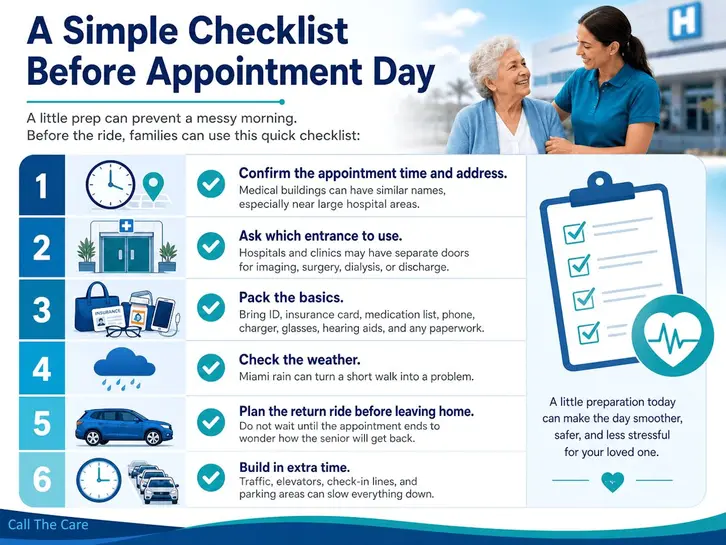
A checklist can help families avoid last-minute problems, especially when the weather is uncertain.
Before leaving home:
- Confirm the appointment time and address.
- Check which building entrance the patient should use.
- Review the weather forecast and current traffic.
- Pack identification, insurance information, and medical paperwork.
- Bring medications or a medication list when needed.
- Confirm that the senior has the right mobility aid.
- Charge the patient’s phone or bring a charger.
- Plan the return ride before the appointment begins.
During the trip:
- Keep the vehicle at a comfortable temperature.
- Avoid rushing the senior while entering or leaving.
- Watch for signs of dizziness, fatigue, confusion, or discomfort.
- Contact the medical office if a major delay occurs.
- Keep water and personal items within easy reach when appropriate.
After the appointment:
- Collect prescriptions, discharge instructions, and personal belongings.
- Ask whether the senior feels weaker or more tired than before.
- Allow extra time for the trip home.
- Make sure someone is available to help at the destination if needed.
The checklist does not need to be complicated. Even a short note on a phone can prevent a forgotten walker, missed pickup, or stressful search for the correct entrance.
Choose a Vehicle That Fits the Passenger
The right vehicle can make a major difference during hot, wet, or congested travel conditions.
A senior who walks with light assistance may be comfortable in an ambulatory sedan. A wheelchair user may need a vehicle with a ramp or lift. Someone who cannot sit upright comfortably may need a different transportation setup.
Climate control matters in South Florida. So does space for mobility equipment. A crowded vehicle can make it harder for a senior to sit comfortably during a long traffic delay.
Families may want to review an accessible non-emergency medical transportation fleet before booking a ride. Looking at the available vehicle types can help them ask better questions and choose an option that fits the passenger.
The vehicle should match the senior’s real needs, not the easiest option to book.
Plan for the Journey, Not Just the Appointment
Heat, rain, and traffic are normal parts of life in South Florida, but they can make medical travel harder for seniors. Families who check the forecast, allow enough time, choose suitable transportation, and prepare for the return trip can reduce much of that stress.
The appointment may be the reason for leaving home, but the journey affects the whole day. When the ride is planned around the senior, everyone arrives better prepared.
Disclaimer
Artificial Intelligence Disclosure & Legal Disclaimer
AI Content Policy.
To provide our readers with timely and comprehensive coverage, South Florida Reporter uses artificial intelligence (AI) to assist in producing certain articles and visual content.
Articles: AI may be used to assist in research, structural drafting, or data analysis. All AI-assisted text is reviewed and edited by our team to ensure accuracy and adherence to our editorial standards.
Images: Any imagery generated or significantly altered by AI is clearly marked with a disclaimer or watermark to distinguish it from traditional photography or editorial illustrations.
General Disclaimer
The information contained in South Florida Reporter is for general information purposes only.
South Florida Reporter assumes no responsibility for errors or omissions in the contents of the Service. In no event shall South Florida Reporter be liable for any special, direct, indirect, consequential, or incidental damages or any damages whatsoever, whether in an action of contract, negligence or other tort, arising out of or in connection with the use of the Service or the contents of the Service.
The Company reserves the right to make additions, deletions, or modifications to the contents of the Service at any time without prior notice. The Company does not warrant that the Service is free of viruses or other harmful components.