Breakdowns in the Gulf: A Sudden Kinetic Escalation
The global energy sector received a stark reminder of the extreme fragility of Middle Eastern peace during the final week of June 2026. Just days after Washington and Tehran had finalized a landmark 60-day Memorandum of Understanding (MOU) on June 17 designed to permanently end their multi-month war, the diplomatic framework nearly collapsed under the weight of fresh kinetic exchanges. A sudden outburst of tit-for-tat maritime violence in and around the Strait of Hormuz shattered the brief period of relative stability, forcing financial institutions to rapidly price back in a heavy geopolitical risk premium.
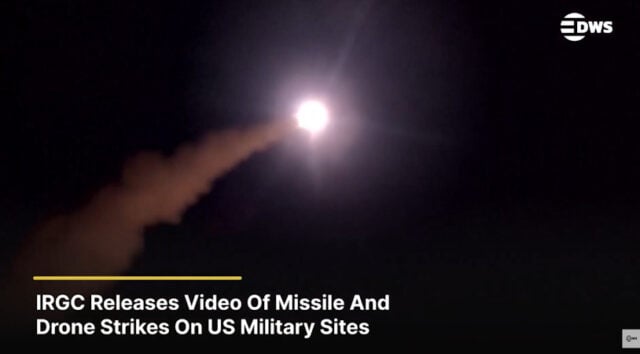
The rapid unraveling began out of nowhere in the shipping lanes off the coast of Oman. What was supposed to be a structured transition toward a formal peace treaty instead morphed into a high-stakes military standoff, marked by drone strikes, heavy naval retaliation, and an explicit declaration from Tehran asserting total operational authority over the world’s most critical energy chokepoint. While an eleventh-hour agreement brokered via backchannels has successfully forced both sides to stand down for now, the underlying structural instability has drastically altered the near-term outlook for global oil futures and macroeconomic stability.
Chronology of the June Crisis
To understand how close the international community came to a renewed full-scale theater of war, it is necessary to examine the exact progression of events that occurred over an intense 72-hour window.

The Battle for the Strait: Tehran’s Claims of Sovereign Control
The most significant geopolitical shift of this latest flare-up is not the physical damage inflicted by the air strikes, but rather the explicit strategic doctrine enunciated by the Iranian Ministry of Foreign Affairs. Following the June 26 American strikes near Sirik, Iranian leadership discarded any lingering adherence to international maritime norms regarding transit passage. Tehran openly announced that its naval forces would henceforth independently oversee, inspect, and regulate all commercial and military traffic attempting to traverse the Strait of Hormuz.
This aggressive assertion of absolute sovereignty strikes at the core of the international maritime order. By warning neighboring Gulf Cooperation Council (GCC) nations against aligning with Washington or assisting Western naval coalitions, Iran has attempted to establish a de facto security umbrella across the seaway. U.S. officials, including Vice President JD Vance, immediately condemned the move, stating that while the U.S. has honored every component of the mid-bench ceasefire agreement, further attempts to forcefully disrupt the free flow of commerce will be met with overwhelming defensive violence.
The strategic objective of Iran’s claim is clear: by asserting complete control over the physical throat of global oil transit, Tehran seeks to gain maximum leverage before final-stage economic and nuclear negotiations occur. However, this tactic effectively transforms a regional security dispute into a direct threat against international supply chains, altering how maritime insurance firms and logistics conglomerates assess the safety of regional waters.
Quantitative Impact on Crude Oil Benchmarks and Energy Futures
The immediate consequence of the June 25 drone attack and the subsequent American counter-strikes was an instantaneous upward spike across global energy indices. Commodity traders, who had spent the previous week liquidating long positions under the assumption that the June 17 MOU would hold, were caught completely flat-footed by the return of active hostilities.
As news of the burning cargo ship and the subsequent CENTCOM bombardment hit international wires, front-month futures experienced heavy volume buying. Brent crude futures jumped by 50 cents, or 0.69%, settling at $72.49 a barrel on early market openings. Simultaneously, West Texas Intermediate (WTI) crude futures witnessed an even sharper upward trajectory, climbing 73 cents, or 1.05%, to settle at $69.96 a barrel.
The anxiety rippling through the energy futures complex is deeply tied to the geographic realities of global consumption. As highlighted by international shipping metrics, more than a quarter of all global maritime oil trade flows directly through the narrow corridor that Iran now claims to govern. The vast majority of this volume is bound for industrial hubs across Asia, meaning that any sustained disruption or arbitrary enforcement of passage by the IRGC would instantly trigger a localized energy shortfall in major manufacturing economies, creating a secondary economic shockwave across global supply chains.
Financial Markets and the “De-escalation Premium” Reversal
The volatility was not confined strictly to the physical oil barrels; it spread rapidly into broader financial market futures. During the height of the exchanges on June 26 and 27, S&P 500 and Nasdaq-100 futures dipped significantly as asset managers moved capital out of cyclical equities and into traditional safe havens, such as gold and short-term U.S. Treasuries. The primary fear gripping institutional investors was a structural return to the high-inflation, low-growth dynamic that plagued the global economy during the opening phase of the war earlier in 2026.
| Financial Indicator | Peak Conflict Shock (June 26–27) | Post-Announcement Stand-Down (June 28) |
| Brent Crude Premium | Geopolitical risk premium surged by over $1.50/bbl | Risk premium partially compressed upon Doha news |
| WTI Crude Baseline | Testing the psychological $70 threshold | Stabilized just under $70 following truce extension |
| S&P 500 Futures | Erased a week of gains on fears of wider Gulf escalation | Recovered losses; flat-to-positive ahead of weekly open |
| Maritime War Risk Rates | Multiplied significantly for vessels transiting the Omani coast | Rates frozen at elevated levels pending technical talks |
The rapid reversal occurred late on Sunday, June 28, when independent news outlets confirmed that both capitals had agreed to an emergency stand-down. The sudden contraction of the geopolitical risk premium illustrated how intensely automated trading algorithms and institutional desks are reacting to real-time diplomatic signaling. While equity futures have fully clawed back their initial losses, market analysts note that a true stabilization cannot occur until the deep structural disagreements regarding the application of the original MOU are formally resolved.
The Doha Pivot: A Tense Stand-Down and the Road to Qatar
As the current ceasefire extension holds, the focus has completely shifted from military maneuvers to the upcoming emergency diplomatic summit. The two adversaries have agreed to skip previously scheduled technical talks in Switzerland, choosing instead to dispatch high-level delegations to Doha, Qatar, on Tuesday, June 30, 2026. The shift in venue and agenda underscores the sheer gravity of the Hormuz standoff. What was intended to be a routine implementation meeting for the June 17 peace memorandum has been completely repurposed into an existential crisis-management session.
The core breakdown behind the recent violence stems from intense mutual distrust regarding the unfulfilled conditions of the interim agreement. Iranian officials, including Mehdi Fazaeili from the Office of Preservation and Publication of the Works of Iran’s Supreme Leader, publicly stated that Tehran’s reluctance to participate in scheduled discussions stemmed from Washington’s failure to provide verified access to previously frozen international funds. From the Iranian perspective, if financial sanctions relief is not actively implemented, the underlying conditions of the truce are null and void, thereby justifying their aggressive posture in the shipping lanes.
Consequently, the June 30 Doha talks represent a critical crossroads for the international economy. The United States enters the summit demanding an absolute, verifiable cessation of all Iranian interference with commercial shipping and an explicit retraction of Tehran’s claims of sovereign control over the Strait of Hormuz. Iran, conversely, will refuse to yield its newfound maritime leverage unless it receives immediate, ironclad guarantees regarding banking access and asset unfreezing. While the guns have temporarily fallen silent across the Persian Gulf, the financial and energy worlds remain completely hostage to the diplomatic high-wire act about to unfold in the Qatari capital.
Sources and Links:
- The Guardian: US and Iran trade strikes as both sides accuse the other of endangering ceasefire
- Fox News Digital: US strikes Iran after Strait of Hormuz cargo ship attack as ceasefire tensions escalate
- The Times of Israel: US, Iran agree to halt Hormuz attacks, hold talks about strait in Qatar on Tuesday — report
- The Hindu: West Asia war LIVE: U.S., Iran agree to halt attacks and hold talks in Doha on June 30, report says
- The Times of India: Watch: US releases footage of retaliatory strikes on Iran military sites
Disclaimer
Artificial Intelligence Disclosure & Legal Disclaimer
AI Content Policy.
To provide our readers with timely and comprehensive coverage, South Florida Reporter uses artificial intelligence (AI) to assist in producing certain articles and visual content.
Articles: AI may be used to assist in research, structural drafting, or data analysis. All AI-assisted text is reviewed and edited by our team to ensure accuracy and adherence to our editorial standards.
Images: Any imagery generated or significantly altered by AI is clearly marked with a disclaimer or watermark to distinguish it from traditional photography or editorial illustrations.
General Disclaimer
The information contained in South Florida Reporter is for general information purposes only.
South Florida Reporter assumes no responsibility for errors or omissions in the contents of the Service. In no event shall South Florida Reporter be liable for any special, direct, indirect, consequential, or incidental damages or any damages whatsoever, whether in an action of contract, negligence or other tort, arising out of or in connection with the use of the Service or the contents of the Service.
The Company reserves the right to make additions, deletions, or modifications to the contents of the Service at any time without prior notice. The Company does not warrant that the Service is free of viruses or other harmful components.