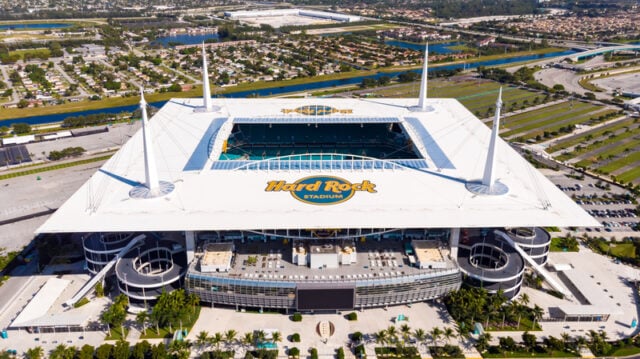
Hard Rock Stadium hosts some of South Florida’s biggest events, from Miami Dolphins and Miami Hurricanes football to major concerts, Formula 1 and international sporting events. But for first-time visitors, one of the most important parts of the day happens before they ever reach the gate: figuring out how to get there.
The stadium is in Miami Gardens, not downtown Miami or Miami Beach, and event-day traffic can change quickly as thousands of vehicles approach the same area. Parking location, road closures, police traffic control and even the direction you approach from can all affect the final part of the trip.
The good news is that a little planning goes a long way. Whether you are using official stadium parking, a private parking location or rideshare, knowing where you are actually going before you leave can make arrival much easier.
Know Where Hard Rock Stadium Is Before You Start
Hard Rock Stadium is located in Miami Gardens in northern Miami-Dade County. That matters because many visitors staying in Miami Beach, downtown Miami, Hollywood or Fort Lauderdale may be traveling from very different directions.

A navigation app can give you a general drive time, but that estimate may not reflect conditions near the stadium once event traffic builds. The final few miles are often where normal driving conditions give way to heavier traffic, controlled intersections and event-specific routing.
Instead of thinking only about the stadium address, start with the location where you actually need to park or be dropped off.
Choose Your Parking or Transportation Plan Before You Leave
There is no single arrival option that works best for every visitor. The right choice depends on the event, your parking location, how far you are comfortable walking and how much flexibility you want after the event.
Official stadium parking is one option. If you already have an official parking pass, follow the arrival directions associated with that pass and the stadium’s event-day instructions. Different lots can have different approaches, so the route that works for one parking area may not be the best route for another.
Private parking in the surrounding Miami Gardens area can also be an option. Before booking, look at the exact address, walking distance and arrival directions. A local Hard Rock Stadium parking guide can help first-time visitors understand parking choices, walking distances and event-day arrival considerations before getting on the road.
Rideshare is another possibility, but pickup and drop-off locations can vary by event. Check the transportation information for your specific event rather than assuming a driver can drop you off directly at the stadium entrance.
Do Not Simply Put Hard Rock Stadium Into GPS
This is an easy mistake to make, especially for a first visit.
If you are parking somewhere other than the stadium property, your navigation destination should be your actual parking address, not Hard Rock Stadium. Driving toward the stadium first and then trying to reach a private lot can put you on the wrong side of traffic controls or force you to circle back through congestion.
The same idea applies to official parking. Use the directions provided for the lot on your pass rather than treating the stadium’s general address as the destination.
Before leaving, save the parking address and any specific arrival instructions on your phone. Screenshots can also be useful if you need to pull up the information quickly.
Google Maps and Waze Are Helpful, but Police Control the Road
Navigation apps are useful for getting across South Florida, but event day is different from a normal drive through Miami Gardens.
As traffic builds, police and event staff may control intersections, restrict turns or redirect vehicles. A route that your phone considers the fastest may not be available when you reach it.
Use Google Maps or Waze as a guide, but be prepared to follow posted signs and instructions from officers once you enter the event traffic area. If an officer directs traffic differently from your navigation app, follow the officer.
The Turnpike Is Not Automatically the Best Route
The Florida Turnpike is closely associated with Hard Rock Stadium because of its proximity to the property, but that does not mean every visitor should automatically use it.
The best approach depends heavily on where you are parking. Official stadium pass holders should follow the stadium’s directions for their assigned lot. Visitors using private or neighborhood parking may find that approaching from the east or west makes more sense for their specific location.
The important thing is to choose the route based on your parking destination, not simply because the Turnpike appears closest to the stadium on a map.
How Early Should You Arrive at Hard Rock Stadium?
For a major event, earlier is usually easier.
Your arrival time should take into account when your parking area opens, when stadium gates open and the size of the event. A regular football game, major concert and Formula 1 weekend can all create different traffic patterns.
For the largest events, giving yourself several hours of breathing room can be worthwhile when the parking and event schedule allow it. Arriving early means you are less likely to spend the final minutes before kickoff or showtime watching the clock from inside your car.
It also gives you time for the walk from parking, security screening and finding your section once you enter the stadium.
Remember That Parking Is Only Part of the Arrival
Getting the car parked does not mean you are in your seat.
Depending on where you park, there may still be a walk to the stadium. Then you need to reach the appropriate entrance, pass through security and make your way to your section.
That extra time is easy to underestimate when planning a first visit. A parking location that is a 10- or 15-minute walk away can still be very convenient, but that walking time should be part of your arrival plan rather than an afterthought.
Save the Important Information on Your Phone
Before leaving your hotel or home, make sure you can quickly access the information you will need throughout the day.
That includes your event tickets, parking pass or reservation, parking address, walking directions and any event-specific transportation instructions.
It is also worth saving your vehicle location after you park. When the event ends, the area can look very different in the dark with thousands of people walking away from the stadium at the same time.
Plan the Trip Back Before the Event Starts
Most people spend a lot of time planning how they will get to Hard Rock Stadium and very little time thinking about how they will leave.
If you parked, remember the direction you walked from your vehicle and save the location. If you used rideshare, know where the post-event pickup area is supposed to be. If you are meeting friends after the event, choose a meeting point before everyone gets separated.
Expect some congestion after a large event. Tens of thousands of people are leaving at roughly the same time, so patience and a little preparation help.
A Better Hard Rock Stadium Arrival Starts Before You Get in the Car
The easiest Hard Rock Stadium trips are usually the ones planned before event traffic begins.
Know where you are parking. Navigate to that location rather than simply to the stadium. Leave enough time for traffic, walking and security. Keep your tickets and parking information easy to access. And once you get close to the stadium, expect event-day traffic controls to take priority over the route on your phone.
Hard Rock Stadium is one of South Florida’s biggest event destinations. Getting there does not have to be the stressful part of the experience. A little local planning can make the difference between rushing toward the gate and arriving with enough time to enjoy the event.
Disclaimer
Artificial Intelligence Disclosure & Legal Disclaimer
AI Content Policy.
To provide our readers with timely and comprehensive coverage, South Florida Reporter uses artificial intelligence (AI) to assist in producing certain articles and visual content.
Articles: AI may be used to assist in research, structural drafting, or data analysis. All AI-assisted text is reviewed and edited by our team to ensure accuracy and adherence to our editorial standards.
Images: Any imagery generated or significantly altered by AI is clearly marked with a disclaimer or watermark to distinguish it from traditional photography or editorial illustrations.
General Disclaimer
The information contained in South Florida Reporter is for general information purposes only.
South Florida Reporter assumes no responsibility for errors or omissions in the contents of the Service. In no event shall South Florida Reporter be liable for any special, direct, indirect, consequential, or incidental damages or any damages whatsoever, whether in an action of contract, negligence or other tort, arising out of or in connection with the use of the Service or the contents of the Service.
The Company reserves the right to make additions, deletions, or modifications to the contents of the Service at any time without prior notice. The Company does not warrant that the Service is free of viruses or other harmful components.