The Versailles Pact and the Iranian Conflict
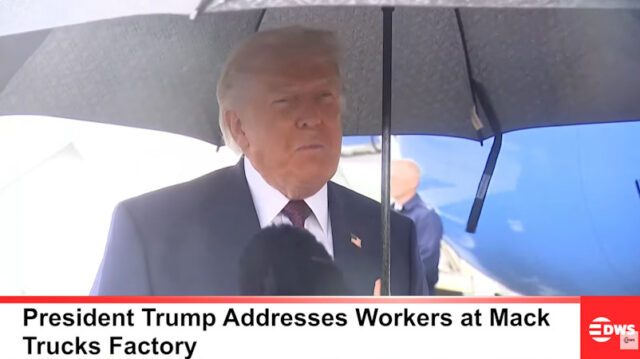
President Donald Trump took the stage in eastern Pennsylvania on Tuesday for his first major public address outside Washington since brokering an interim agreement to halt the military conflict with Iran. Speaking to an audience of manufacturing workers, the president sought to define the terms of a short but highly disruptive war that began on February 28, 2026. While foreign policy analysts have questioned the long-term durability of the 14-point Versailles memorandum signed last week, Trump declared absolute victory over the Iranian regime.
Reflecting on the vocabulary of the conflict, Trump noted that advisors had pressured him to temper his rhetoric. “Todd said, ‘Please call it a conflict,’ right as opposed to the word war—he didn’t like the word war,” Trump shared with the crowd. “But it’s sort of a conflict, it’s a military operation.” Regardless of the terminology, the president maintained that aggressive U.S. and Israeli actions were entirely justified to neutralize an imminent nuclear threat, asserting that a failure to act would have resulted in a catastrophic regional war orchestrated by what he described as “mentally ill, sick people.”
The Battle Over Nuclear Inspectors
A pivotal element of the ongoing diplomatic fallout is the future of Iran’s nuclear infrastructure. Following the signing of the interim accord, which established a 60-day window to negotiate a permanent settlement, questions emerged regarding how the international community would verify compliance. Trump addressed these concerns head-on by detailing the administration’s demands for absolute transparency, supported by an official directive sent to International Atomic Energy Agency (IAEA) Director-General Rafael Mariano Grossi to clear the path for American personnel.
Trump downplayed the immediate leverage held by Tehran regarding its stored nuclear material. He argued that the regime’s highly enriched uranium stockpile is effectively neutralized under the current enforcement framework.

“It’s not valuable,” Trump claimed, insisting that Tehran has no viable means of accessing or weaponizing the material under the watchful eye of the coalition.
The administration’s strategy centers on inserting U.S. nuclear inspectors directly onto Iranian soil to oversee the dilution of enriched uranium. While the transition has faced logistical delays—including Vice President JD Vance postponing a ceremonial diplomatic trip to Switzerland to manage ongoing technical negotiations—Trump reassured his supporters that American inspectors would successfully enter Tehran to ensure compliance with the disarmament framework.
The Algae War and Vandalism at the Reflecting Pool
Moving from international brinkmanship to domestic infrastructure, Trump pivoted to a highly specific, deeply personal grievance: the ongoing cosmetic and structural crisis at the Lincoln Memorial Reflecting Pool. Ahead of the nation’s upcoming 250th anniversary celebrations, the administration commissioned a $14.2 million no-bid renovation project to waterproof the historic monument and paint its concrete floor a custom hue designated “American Flag Blue.” Instead of a pristine monument, however, the capital was met with a murky green algae bloom and a rapidly peeling polyurethane lining.
Trump fiercely rejected reports from engineering experts who blamed shallow water, early summer sunlight, and chemical imbalances for the rapid growth of Desmodesmus algae. Instead, the president claimed the site had been intentionally targeted by political saboteurs. He told the Pennsylvania crowd that “vandals” had used box-cutters to slice a massive 250-to-350-foot slit into the bottom of the pool’s rubberized lining to humiliate his administration.
Reflecting Pool Project Status:
- Renovation Cost: $14.2 million no-bid contract
- Target Hue: "American Flag Blue"
- Current Issue: Intensive algae growth & peeling paint
- Executive Action: 6 individuals arrested; law enforcement investigating
The president announced that six individuals have already been arrested by federal authorities in connection with the alleged property damage, warning that those found guilty would face “years in jail” under strict federal monument protection laws. In a striking display of administrative messaging, Trump highlighted a recent social media statement from his own Department of the Interior, which sought to link his domestic infrastructure battles with his foreign policy achievements. The department had claimed that National Park Service workers were actively vacuuming up the dead algae from the bottom of the pool “just like the destroyed Iranian Navy resting on the bottom of the Persian Gulf.” Trump concluded the topic by threatening to launch massive lawsuits against ABC News and other mainstream networks for what he deemed false and unfair coverage of the engineering mishap.
Dark Tankers and the Mechanics of Global Oil Prices
The intersection of foreign military operations and domestic pocketbook issues formed the core of Trump’s economic messaging. The conflict in the Persian Gulf had severely choked traffic through the Strait of Hormuz—the vital maritime corridor responsible for more than 25 percent of global oil trade—causing energy costs to surge and driving the national average for a gallon of gasoline over three dollars.
To counter this vulnerability, Trump revealed what he characterized as a highly classified, nighttime maritime operation conducted by the United States military to maintain global energy liquidity during the height of the naval blockade.
“Do you know, millions of barrels of oil has come out?” Trump told the factory workers. “And that’s why it’s at $85, $90 a barrel instead of $250. We took out the other night, 22 ships late at night with no lights, because they don’t have any radar, because we blasted the crap out of it.”
Trump leveraged these falling crude oil metrics to address recent, stubborn Consumer Price Index data that pinned annual domestic inflation at 4.2 percent. In a characteristically unorthodox economic assessment, the president declared, “I love the inflation.” He explained to the crowd that he viewed the high inflation data favorably because it was fundamentally a transient byproduct of temporary wartime energy spikes. With the Versailles ceasefire successfully signed, Trump promised that global oil supplies would quickly shift from a shortage to a daily surplus exceeding five million barrels, causing domestic fuel prices to “drop like a rock” back to the historic lows seen during his first term. Trump reduced summary economic reactions to a simple phrase: “Oil down, stocks up.”
Shifting Gears at the Mack Trucks Facility
The choice of venue for Tuesday’s address underscores the administration’s acute awareness of the political headwinds facing the country. The motorcade arrived at the sprawling Mack Trucks assembly plant in Macungie, Pennsylvania, located within the state’s intensely competitive 7th Congressional District. The region represents a vital political battleground where incumbent Republican Representative Ryan Mackenzie is fighting a fierce challenge from Democrat Bob Brooks ahead of the high-stakes November midterm elections.
Pennsylvania 7th District Campaign Context:
- Venue: Mack Trucks Assembly Plant (Macungie, PA)
- Workforce Size: Approximately 2,800 active employees
- Incumbent: Representative Ryan Mackenzie (R)
- Challenger: Bob Brooks (D)
- Local Economic Factor: Recall of 150 workers following 2025 tariff layoffs
The factory floor provided Trump with the ideal visual backdrop to pitch his broader jobs-and-reindustrialization agenda to the blue-collar workers who form the bedrock of the “Make America Great Again” movement. The facility, which employs roughly 2,800 workers, has faced a volatile economic landscape; market uncertainty and retaliatory tariffs had forced the layoff of approximately 170 workers in 2025, though Mack spokesperson Kimberly Pupillo confirmed that nearly 150 of those employees had since been successfully recalled to work.
By highlighting a recently awarded $47 million military manufacturing contract for heavy-duty dump trucks, Trump attempted to shift public attention away from foreign entanglements and back to domestic economic patriotism. The effort comes at a critical moment for the White House, as a June Associated Press-NORC Center for Public Affairs Research poll revealed that only about one-third of American adults currently approve of Trump’s stewardship of the national economy. By linking manufacturing contracts to global stability, the president closed his Pennsylvania tour by urging workers to look past current inflationary pressures and trust his administration’s architecture for long-term industrial growth.
Sources and Links:
- Associated Press: From peace talks to Pennsylvania: Trump visits Mack Truck facility
- PBS News / YouTube: WATCH: Trump claims US is taking out ‘millions of barrels’ of Iran oil, calls inflation data ‘great’
- PBS News / YouTube: Oil prices PLUMMET after Trump signs Iran agreement
- Newsweek: Donald Trump admits gas prices will be ‘a little high’ due to Iran War
- The Guardian: Trump administration compares reflecting pool algae battle to Iran war
- NOTUS (News of the United States): Vance Says Nuclear Inspectors Will Enter Iran
- The Times of Israel: Trump downplays need to reach Iran’s stockpile of enriched uranium
- TribLIVE: Vance delays trip to Switzerland to lead new U.S. talks with Iran on its nuclear program
- WDRB / Associated Press: AP News Summary: Trump says 6 people have been arrested for damaging the Reflecting Pool
Disclaimer
Artificial Intelligence Disclosure & Legal Disclaimer
AI Content Policy.
To provide our readers with timely and comprehensive coverage, South Florida Reporter uses artificial intelligence (AI) to assist in producing certain articles and visual content.
Articles: AI may be used to assist in research, structural drafting, or data analysis. All AI-assisted text is reviewed and edited by our team to ensure accuracy and adherence to our editorial standards.
Images: Any imagery generated or significantly altered by AI is clearly marked with a disclaimer or watermark to distinguish it from traditional photography or editorial illustrations.
General Disclaimer
The information contained in South Florida Reporter is for general information purposes only.
South Florida Reporter assumes no responsibility for errors or omissions in the contents of the Service. In no event shall South Florida Reporter be liable for any special, direct, indirect, consequential, or incidental damages or any damages whatsoever, whether in an action of contract, negligence or other tort, arising out of or in connection with the use of the Service or the contents of the Service.
The Company reserves the right to make additions, deletions, or modifications to the contents of the Service at any time without prior notice. The Company does not warrant that the Service is free of viruses or other harmful components.