If you have been watching the World Cup lately, there is a very high chance your heart rate has spent a significant amount of time in the danger zone. International sports tournaments have a funny way of doing that to us. One minute you are jumping on your couch celebrating a last-second goal, and the next you are staring blankly at the screen, completely heartbroken, wondering how a simple game could completely ruin your entire week.
It turns out the team over at Taco Bell noticed this collective emotional rollercoaster, and they decided that regular old marketing just wouldn’t cut it this year. Instead of just running standard commercials during the commercial breaks, they are trying something way more empathetic—and a little bit chaotic. They are officially giving away “emotional support tacos” to help fans cope with the extreme highs and lows of the tournament.
It is a massive global campaign that blends real-world street marketing with mobile gaming, and honestly, it is a masterclass in how modern brands are trying to win our loyalty by inserting themselves directly into the moments we care about most. Let’s break down exactly what this campaign looks like, why it is happening right now, and the clever business strategy hiding beneath all that nacho cheese.
Welcome to the L.O.C.O.S. System
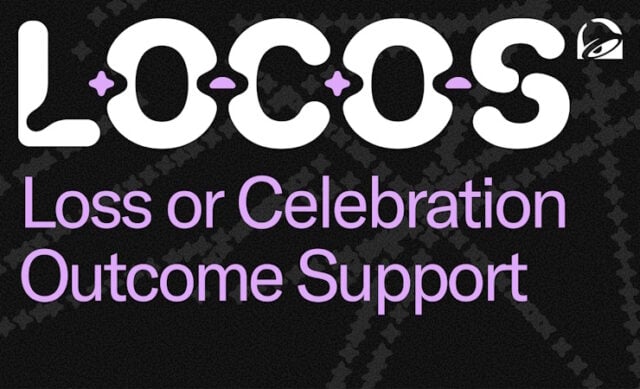
The entire initiative revolves around an incredibly clever, tongue-in-cheek acronym: L.O.C.O.S., which stands for “Loss Or Celebration Outcome Support.” It is a beautifully dramatic name for a pretty simple concept: whether your favorite team wins a historic victory or suffers a devastating, soul-crushing defeat, Taco Bell wants to be the comfort food you turn to.

The campaign is running globally from now through July 13, completely mirroring the absolute peak intensity of the World Cup schedule. If you are already a member of their mobile rewards program, the campaign manifests as a highly gamified experience right inside the app. When you log in, you get access to personalized challenges and interactive elements that give you chances to win exclusive merchandise, free food, and various other digital prizes.
But Taco Bell isn’t keeping this strictly digital. They know that real fandom happens out in the physical world, in bars, living rooms, and stadium plazas. Because of that, they are deploying a fleet of taco trucks, setting up massive in-person giveaways, and launching specialized hyper-local delivery programs directly tied to match days.
“L.O.C.O.S. takes an existing fan behavior and builds a global platform around it, giving Taco Bell a bold new way to show up for fans in moments they care about most.”
— Taylor Montgomery, Global Chief Brand Officer at Taco Bell
The rollout strategy here is completely synchronized with the actual tournament drama. For instance, on June 25, Taco Bell launched major in-person physical activations in both New York and Los Angeles. That date wasn’t picked out of a hat—it perfectly coincided with the U.S. men’s national team playing its high-stakes final group stage match against Türkiye.
If you happen to be across the pond, they are doing the exact same thing. On June 27, the brand is taking over parts of London with major activations to align perfectly with England’s massive face-off against Panama. The brand isn’t stopping there, either. They have mapped out similar physical and digital rollouts across a handful of other massive, soccer-obsessed nations, including Spain, Brazil, Australia, and Canada.
The Art of the ‘Ambush’
From a pure marketing strategy perspective, what Taco Bell is doing here is incredibly slick. In the advertising world, there is a concept known casually as ambush marketing—which means finding a creative way to associate your brand with a massive cultural event without actually paying the hundreds of millions of dollars required to be an official corporate sponsor.
Official FIFA World Cup sponsorships cost an absolute fortune, and the regulations around what non-sponsors can say or do are notoriously strict. By framing their entire campaign around the emotional state of the fans rather than the official trademarks of the tournament itself, Taco Bell completely bypasses those limitations. They aren’t sponsoring the tournament; they are sponsoring your feelings.
Think about it: sports fandom is one of the last remaining places in modern culture where millions of people are completely united, paying attention to the exact same thing at the exact same second. It is a pre-built community of deeply passionate consumers. By showing up with free food right when those emotions are peaking, Taco Bell transforms from a corporate fast-food chain into a relatable friend who is right there in the trenches with you, celebrating the wins or helping you process the losses.
The Real Goal: Boosting the App
While giving away free tacos to emotional sports fans sounds lighthearted and fun, make no mistake—this is a heavily data-driven play designed to supercharge the digital ecosystem of Taco Bell’s parent company, Yum Brands.
To get your hands on these rewards and participate in the L.O.C.O.S. ecosystem, you have to download the Taco Bell app and sign up for their loyalty program. That is the real prize for the brand. Once you are in that digital ecosystem, they can send you personalized offers, study your buying habits, and keep you coming back long after the World Cup trophy has been handed out.
And if you look at their recent financial data, you can see exactly why they are pushing so hard in this direction. Take a look at how well their digital strategy has been paying off lately:
| Performance Metric | Recent Q1 Financial Results |
| Yum Brands Total Digital Sales | Nearly $11 Billion |
| Digital Sales Mix | 63% of all total orders |
| Taco Bell Loyalty Sales Growth | 30% increase year-over-year |
| Taco Bell Same-Store Sales Growth | 8% increase |
These numbers are absolutely massive for the quick-service restaurant (QSR) industry—which is really just a fancy insider term for the fast-food sector. An 8% jump in same-store sales means Taco Bell is wildly outperforming almost all of its direct competitors right now.
Christopher Turner, the CEO and Director of Yum Brands, explicitly noted during a recent call with Wall Street investors that aggressively expanding these loyalty programs is the absolute core of their long-term strategy to scale their digital business. When nearly two-thirds of your entire business is happening through digital channels, an app download isn’t just a gimmick—it is the lifeblood of your company’s future growth.
What Comes Next?
Perhaps the most interesting piece of information tucked away in Taco Bell’s rollout plans is that this isn’t a one-time thing. The brand has already stated that it views the L.O.C.O.S. framework as a permanent, global marketing platform it intends to reuse.
Once the World Cup wraps up in July, they plan to adjust the program’s parameters and deploy it during other major pop-culture moments, award shows, reality TV finales, and other massive sporting events. It turns out that tapping into our collective anxiety and celebration is an evergreen business model. So, whether your team moves on to the knockout rounds or heads home early on the next flight, at least you can secure a little bit of comfort in the form of a crunchy taco.
Sources Used
- Marketing Dive Article: Taco Bell gives away emotional-support tacos as World Cup nerves run high
Disclaimer
Artificial Intelligence Disclosure & Legal Disclaimer
AI Content Policy.
To provide our readers with timely and comprehensive coverage, South Florida Reporter uses artificial intelligence (AI) to assist in producing certain articles and visual content.
Articles: AI may be used to assist in research, structural drafting, or data analysis. All AI-assisted text is reviewed and edited by our team to ensure accuracy and adherence to our editorial standards.
Images: Any imagery generated or significantly altered by AI is clearly marked with a disclaimer or watermark to distinguish it from traditional photography or editorial illustrations.
General Disclaimer
The information contained in South Florida Reporter is for general information purposes only.
South Florida Reporter assumes no responsibility for errors or omissions in the contents of the Service. In no event shall South Florida Reporter be liable for any special, direct, indirect, consequential, or incidental damages or any damages whatsoever, whether in an action of contract, negligence or other tort, arising out of or in connection with the use of the Service or the contents of the Service.
The Company reserves the right to make additions, deletions, or modifications to the contents of the Service at any time without prior notice. The Company does not warrant that the Service is free of viruses or other harmful components.