Electrical safety is one of the most overlooked aspects of home maintenance. Most homeowners expect their wiring, outlets, and circuit breakers to work reliably without giving much thought to the condition of the system behind their walls. However, electrical components can deteriorate gradually, household power demands continue to increase, and environmental conditions can create additional risks. Recognizing early warning signs and understanding when an electrical system needs professional attention can help prevent equipment damage, costly repairs, and potentially dangerous failures. In Fort Myers, heat, humidity, salt air, and severe storm conditions make proactive electrical maintenance particularly important.
Your Electrical System Can Age Without Obvious Symptoms
Wiring and electrical components can deteriorate even when everything appears normal. Connections may loosen, insulation can become damaged, and moisture can contribute to corrosion. Meanwhile, air conditioning, kitchen appliances, home offices, EV chargers, and smart devices can place heavier demands on circuits than the original installation was designed to support.
Flickering lights, warm outlets, buzzing switches, and repeated breaker trips can indicate loose connections, overloaded circuits, or damaged wiring. A breaker that trips repeatedly is not simply an inconvenience to reset; it may be responding to a fault that needs investigation.
Storm Preparation Requires More Than Power Strips
Severe weather creates electrical risks before, during, and after a storm. Lightning and utility disturbances can damage electronics, while flooding may expose wiring, outlets, and service equipment to water. Damage may not be obvious when power returns.

Plug-in surge protectors help protect individual devices, but do not replace evaluation of the home’s electrical system. Ask whether whole-home surge protection, grounding, and the service panel need review. A generator must use properly installed transfer equipment; an improper connection can send electricity back into utility lines and endanger workers.
For homeowners preparing for storm season, a professional Fort Myers electrician can assess whether the electrical system, generator connection, and protective devices are suitable for local conditions. The goal is to identify vulnerabilities before severe weather makes repairs urgent.
Older Homes May Have Modern Demands but Outdated Capacity
A renovated house may still have an outdated electrical system. New lighting, refrigeration, workshop equipment, or an EV charger may have been added without reviewing circuit capacity.
The installation may no longer match household demand. Older panels, deteriorated wiring, inadequate grounding, or missing required protection can create safety concerns. Age alone does not prove wiring is unsafe, but it makes understanding the system and past renovations important.
A load assessment can help determine whether the service and circuits can support current and planned equipment. This is more useful than repeatedly replacing breakers or relying on extension cords to compensate for too few outlets.
DIY Repairs Can Hide Problems Behind a Working Switch
Some tasks may appear straightforward, but work involving wiring, connections, panels, or unidentified circuits can be dangerous.
An outlet may work despite incorrect wiring. A loose termination can overheat behind a wall plate, while a ceiling fan may be attached to a box not designed to support it. These problems are not always visible after installation.
Online instructions cannot assess wiring condition, verify capacity, or establish local code requirements. Avoid repairs beyond your competence. If you notice burning smells, sparks, shocks, or hot outlets, stop using the equipment and seek qualified help. Leave and contact emergency services if there is smoke or fire.
Choose Upgrades That Solve the Underlying Problem
Improvements should address actual needs. Depending on the assessment, work may include panel replacement, dedicated appliance circuits, required GFCI or AFCI protection, outdoor-rated equipment, surge protection, or an EV charging circuit.
The solution depends on the cause. Repeated trips may indicate an overloaded circuit, faulty appliance, or wiring issue. Outdoor outlets may be exposed to moisture or lack suitable protection. Installing a larger breaker without checking wire and circuit ratings is unsafe.
Ask the electrician to explain the findings, the recommended work, and any alternatives. A clear explanation helps distinguish necessary safety improvements from optional convenience upgrades.
Know the Warning Signs That Deserve Attention
The Electrical Safety Foundation International identifies warning signs such as frequently tripping breakers, flickering lights, buzzing sounds, hot or discolored outlets, and burning odors. Its home wiring safety guidance is a useful reference for recognizing conditions that warrant a professional inspection.
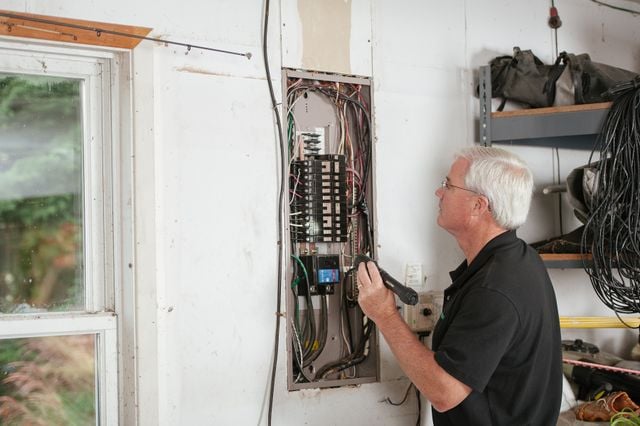
Do not touch exposed wires or attempt to investigate a hot panel yourself. If an outlet or switch feels hot, smells burnt, sparks, or gives someone a shock, stop using it. Where it is safe to do so, keep people away from the affected area and arrange a prompt assessment. Repeatedly resetting a breaker without identifying the cause can allow a hazardous condition to continue.
Inspections Are Most Valuable Before an Emergency
Inspections are useful beyond buying or selling. Consider an assessment before renovations, after water intrusion, when adding high-demand equipment, or when an older system has no reliable documentation.
Ask for the panel, grounding, visible wiring, protective devices, and major appliance circuits to be reviewed. After a storm or flood, do not assume equipment is safe because it looks dry or power has returned. Ready.gov’s power outage guidance explains precautions involving generators and damaged equipment.
Keep records of completed work, permits, equipment details, and recommendations for upgrades. These details help another professional understand the system and prevent projects from overlooking previous changes. They are useful when planning renovations, comparing estimates, or checking whether a repair addressed the concern.
Make Electrical Safety Part of Routine Home Care
Careful homeowners notice recurring trips, unusual sounds, damaged cords, warm outlets, and changes after new appliances are installed. They avoid overloaded receptacles and permanent reliance on extension cords.
Electrical safety is not about worrying over every flicker. It means recognizing warning signs, understanding system limits, and using qualified professionals for work involving wiring and protective equipment. A timely assessment can reveal problems while repairs can still be planned. Maintenance that reflects household demand and local weather helps prepare a home for everyday use and unexpected disruptions.
Disclaimer
Artificial Intelligence Disclosure & Legal Disclaimer
AI Content Policy.
To provide our readers with timely and comprehensive coverage, South Florida Reporter uses artificial intelligence (AI) to assist in producing certain articles and visual content.
Articles: AI may be used to assist in research, structural drafting, or data analysis. All AI-assisted text is reviewed and edited by our team to ensure accuracy and adherence to our editorial standards.
Images: Any imagery generated or significantly altered by AI is clearly marked with a disclaimer or watermark to distinguish it from traditional photography or editorial illustrations.
General Disclaimer
The information contained in South Florida Reporter is for general information purposes only.
South Florida Reporter assumes no responsibility for errors or omissions in the contents of the Service. In no event shall South Florida Reporter be liable for any special, direct, indirect, consequential, or incidental damages or any damages whatsoever, whether in an action of contract, negligence or other tort, arising out of or in connection with the use of the Service or the contents of the Service.
The Company reserves the right to make additions, deletions, or modifications to the contents of the Service at any time without prior notice. The Company does not warrant that the Service is free of viruses or other harmful components.