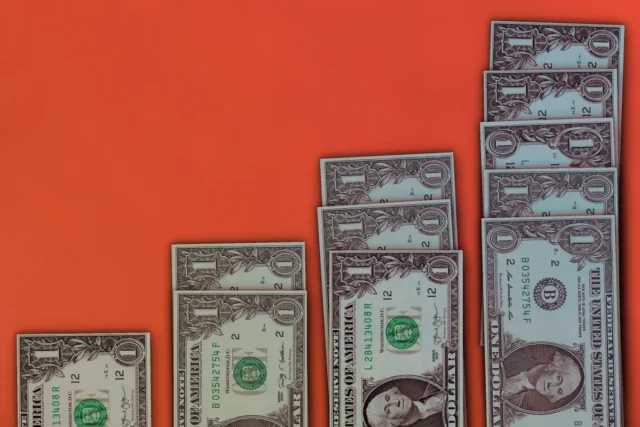
The share of Americans who believe the U.S. is in a recession is steadily growing.
Two-thirds of Americans say they’re worried about a recession in the U.S., while 61% incorrectly believe we’re already in one, according to a recent survey by The Harris Poll and The Guardian.
Must Read
- You’re probably eligible to save money on car insurance. Compare rates for your ZIP code with this free — and fast — tool from Money.
- Meet your financial goals faster: Take this free, no-obligation quiz to get matched with an advisor today.
- These 6 hacks can help seniors save money on things they’re already buying.
The U.S. has not experienced an official recession since 2020. Back then, the economy ground to a halt at the onset of the COVID-19 pandemic. But for a growing share of Americans, it feels like a recession is here again thanks largely to stubbornly high prices.
The survey found that political affiliation plays a noticeable role in that belief, but the feeling is present across party lines.

For example, 72% of respondents who identify as Democrats believe the U.S. is in a recession. That share is 61% of independents and 50% for Republicans. The notion has grown across all groups since the previous survey over the summer.
The latest results are based on a survey of 3,993 U.S. adults who were polled between Sept. 24 and Oct. 3.
Why we’re not in a recession (even if it feels like it)
Many Americans are feeling the sting of reignited inflation and higher interest rates, largely due to the economic effects of the war in Iran.
According to Mark Zandi, chief economist at Moody’s, the war has cost the average American household about $2,000 since it began in February due to higher gas and energy prices, higher borrowing costs due to increased interest rates and higher taxes due to additional military spending.
These increased costs are putting more pressure on household budgets, adding to the financial strain many folks are feeling. In the Guardian-Harris survey, gas, grocery and living expenses were the most important issues facing respondents.
But that does not necessarily mean the U.S. is in a recession.
The National Bureau of Economic Research, or NBER, is the group that makes the official call once it sees “a significant decline in economic activity that is spread across the economy and lasts more than a few months,” according to its website. In effect, that typically consists of two quarters of declining gross domestic product, or GDP.
And NBER has not made that call. In fact, the U.S. GDP grew 2.2% in the second quarter of the year and is expected to expand 3.5% in the third quarter — a sign of a growing (not shrinking) economy.
This disconnect between what everyday Americans are feeling and what economic data shows is sometimes referred to as a “vibecession.” The disconnect may also just boil down to definitions. Colloquially, people use the term “recession” to describe an economy that isn’t doing great for a number of reasons.
But a recession simply isn’t declared based on the financial strains facing everyday Americans.
No matter how widespread that strain may be, if it isn’t noticeably affecting GDP, it isn’t technically a recession.
Disclaimer
Artificial Intelligence Disclosure & Legal Disclaimer
AI Content Policy.
To provide our readers with timely and comprehensive coverage, South Florida Reporter uses artificial intelligence (AI) to assist in producing certain articles and visual content.
Articles: AI may be used to assist in research, structural drafting, or data analysis. All AI-assisted text is reviewed and edited by our team to ensure accuracy and adherence to our editorial standards.
Images: Any imagery generated or significantly altered by AI is clearly marked with a disclaimer or watermark to distinguish it from traditional photography or editorial illustrations.
General Disclaimer
The information contained in South Florida Reporter is for general information purposes only.
South Florida Reporter assumes no responsibility for errors or omissions in the contents of the Service. In no event shall South Florida Reporter be liable for any special, direct, indirect, consequential, or incidental damages or any damages whatsoever, whether in an action of contract, negligence or other tort, arising out of or in connection with the use of the Service or the contents of the Service.
The Company reserves the right to make additions, deletions, or modifications to the contents of the Service at any time without prior notice. The Company does not warrant that the Service is free of viruses or other harmful components.